Animals use colour strategies in all kinds of ways to avoid being detected, eaten or to express themselves in some way. Some creatures can see colours we can’t, like infra-red and ultraviolet, which are not on the ‘visible spectrum’ of light. The visible spectrum is defined as what we can see as humans. For animals, and some people, the range of colours they can see vary from this ‘default’ setting. So let’s have a look at some of the ways animals can use colour.
Camouflage Strategy
The obvious, and best known reason animals have the colours and coat patterns they have is to blend in to their environment. Blending in is advantageous for both predator and prey species. This is why you see a lot of browns and greys in the colouration of many species. Colour strategies involving camouflage are a huge part of why animals look the way they do.
Octopus on the sea floor
Of course some species can actually change their colouration to blend in. A lot of octopus and squid species are extremely skilled at this, as are chameleons but we’ll get into them a bit more later. They have specialised chromatophore cells that can change what wavelength of light the skin reflects, which changes the colour. Chromatophore cells are the cells containing pigment, such as melanocytes, the cells in human skin that contain melanin.
Disruptive colouration uses contrasting markings that don’t repeat to break up the outline of an animal or hide features like their eyes to hide in their environment. This is employed by a lot of cats, the spots or stripes helping them blend in to get close to their prey without being spotted, as well as ambush predators and prey species.
A flat-tailed horned lizard blocking its shadows
Some species can stop themselves from producing shadows to hide. The horned lizards found in North America can flatten their bodies against the ground, the fringing along their sides disrupting the shadows and allowing them to blend in to the ground.
Decorating themselves with material from the environment can help with blending in and hiding their body parts. Decorator crabs employ this, covering their body with sponges. The Ghillie suit used by military snipers uses this same principle.
Underwater Camouflage
Jellyfish with a transparent body
Transparency is another method, particularly seen in marine animals such as jellyfish. Their bodies are gelatinous with a similar refractive index to sea water so they are almost invisible. This is a trade-off as it means their mobility is poor. Another cool example are glass frogs, which are transparent around their main body, which helps them blend in to the environment around them.
A lot of fish have reflective scales, called ‘silvering’ which uses guanine crystals to give a reflective surface. The marine hatchet fish is a notable example of this. For deep sea fish, ultra black colouration absorbs light and allows the animal to hide in the depths. This is used by anglerfish, which improves the effectiveness of their bioluminescent lure to attract prey into their ambush.
Mimicing another object involves both colour and body shape. Either to hide or to lure prey into an ambush. A lot of insects mimic leaves or twigs to hide in the plants they live in. Some preying mantises make themselves look like flowers to attract insects.
Danger! Warning! Aposematism Strategies
Some animals have colouration that makes them stand out, instead of blending in. This is called aposematism, and the idea is that the animal is noticed and avoided by potential predators. Colour is used to warn that the animal is dangerous and not worth eating.
The colours used are often the same, with combinations of red, yellow, black and white employed. We use these same colours for warning signs. Wet floor signs, stop signs, police tape!
A coral snake showing it’s bright warning colours
The colours can indicate a number of things, from tasting bad like the cinnabar moth, foul-smelling like skunks, aggressive like honey badgers, or venomous like the coral snake. Aposematism works because either predators have the instinct to avoid animals with these colours or they have learned the hard way to avoid them.
Some species will mimic this kind of colouration to fool predators into avoiding them. Batesian mimicry is where an edible animal looks like a dangerous one such as hoverflies who resemble bees but have no sting. Müllerian mimicry means a number of species that resemble each other and are dangerous, so they’ve evolved in a similar way. This kind is common among bees and wasps, who are capable of stinging.
Chameleons, Nature’s Mood Ring – Communication Strategies
Anyone who grew up in the 80s or 90s will remember ‘mood rings’, the cheap rings with a gem that changed colour to indicate your mood. They weren’t exactly accurate but chameleons have this ability and it works really well.
Panther Chameleon in Sapporo Maruyama Zoo, Japan
While they do use their colour changing abilities to blend in, the main purpose for colour changing is to indicate their mood and feelings. The males are more flamboyant than the females but they can display a wide range of colours.
Bright greens and yellows or blues usually indicate a happy chameleon. Black indicates anger, fear or distress. Reds and oranges can indicate excitement or readiness to mate. Again this is down to the presence of guanine crystals within the skin cells. Changing the distance between these nanocrystals shifts the wavelengths of light reflected and thus changes the colour of the skin.
It’s such a cool ability, and it’s surprising how quickly the change happens. As a vet, I treated a few chameleons and they’re one of my favourite reptile species. The black colour means pain or anger, and it can be localised. If you give a chameleon an injection or if they have a wound, the skin around the area will turn black.
Other reptiles have some capability for this colour change. Bearded dragons can turn their beard black and puff it out if they feel threatened. But none are more spectacular than the chameleon.
Looking for Love?
The most common reason for bright and flamboyant colours in animals is for selection of suitable mates. Most notably this happens with a lot of birds, you only need to look at the different kinds of bird-of-paradise and the peafowl. These colour strategies can make them more vulnerable to predators in exchange for sex appeal!
A Handsome Peacock
Peafowl have dramatic sexual dimorphism (where the male and female look different). Peacocks are brightly coloured with the distinctive massive fan tail, while peahens are brown and drab looking.
You could spend hours looking at the different species of bird-of-paradise and see the fabulous fashion styles of the males compared to the females. They put on elaborate displays to impress the females enough to be allowed to mate with them.
Another favourite of mine is the eclectus parrot. These birds have such dramatic sexual dimorphism that they were believed to be different species at one point. The males are bright green with red and blue highlights and an orange beak, while the females are red and purple with a black beak.
Thanks for Reading!
As you can see, the animal world uses colour strategies in so many ways. It’s a really interesting topic and worth considering if you are featuring creatures in your writing. Or designing your own. So have a think about the creatures environment, role in the ecosystem and diet before deciding which colours you should use.
So, we discussed last time the difference between prey and predator, and how this impacts animal behaviour and physiology. Different species employ different strategies to ensure their species survives, and nowhere is that more apparent than in reproduction.
I know in school, lots of people spent this part of biology making crude jokes and stuff, but it really is a wildly interesting subject. No other system of living things is more varied than reproductive systems. Essentially every species has a different system. So let’s have a look at some examples.
Good at Multiplying – Rabbit Reproduction Strategy
A joke in Zootopia that probably went over most kids heads, but it’s well known that rabbits are good at making more rabbits. Does, female rabbits, reach sexual maturity between 3 and 8 months of age and can concieve at any time of the year for the rest of her life.
They are induced ovulators, meaning that the mating process causes the ovaries to release eggs. The gestation period is short, around a month. The young are born blind and helpless, and are kept in the nest underground, only feeding once or twice a day. She leaves them to feed.
The doe can get pregnant again the next day after giving birth. In theory, they can have 12-13 litters per year. With the young reaching maturity in a few months, it’s no wonder that left unchecked, rabbits reproduce exponentially. Just ask Australia!
I’m not joking, either. Rabbits were introduced to Australia and New Zealand by European settlers, and having no natural predators, they multiplied and are considered a huge pest due to damage done to crops. Infectious diseases were deliberately introduced to try to control their numbers.
So that’s one strategy – overwhelming numbers means that odds are, at least a few offspring will live long enough to reproduce. Even if there’s a high rate of mortality from predation and disease. It only takes a couple of buns to make more. So high reproduction rates ensure the species continue to exist.
Safety In Numbers – Herd Reproduction Strategy
Another common strategy is staying within the herd or flock. It’s rare to find prey species that live solitary lives. Most ruminants like deer, giraffes, cattle, goats and sheep will live in a large group or herd. This has a number of benefits for their offspring.
Firstly, more eyes and ears mean it is harder for predators to go unnoticed and sneak up on the group. If all the adult animals are keeping an eye out, the offspring will be safer. Young animals can stay near the group and will be harder to isolate.
These kinds of animals have young that are precocious, meaning they are quite mature at birth. Capable of standing, walking and running within hours of being born. They are born with their eyes and ears open. They are capable of keeping up with the adult animals of the herd if something happens.
Embryonic Diapause
You ever wish you could hit the pause button on life? Well, some animals can do that for developing embryos. Embryonic diapause means the mother can halt cell division in the blastocyst (a very early embryo) and delay implantation into the uterus wall.
Why would they want to do this? Often it is to ensure the offspring are born at the best time of year for factors like availability of food and temperatures. This gives the offspring the best possible chance of survival. Some species always have a period of diapause but for others it happens in response to day length and controlled by melatonin production in the pineal gland.
Species that have been observed to employ this strategy include marsupials such as kangaroos, bears, rodents and mustelids (weasels, skunks and badgers.) It is very common among insects, fish and other non-mammalian vertebrates.
Essentially the mother can pause the pregnancy or development of the embryo until it suits her better. Not something humans can really do but it is a good strategy for ensuring survival of the offspring.
Nests and Burrows
A common strategy in smaller prey species, hiding the offspring away in burrows or nests puts them out of reach of predators. The nest may be well hidden or defended by adult animals.
A lot of reptiles will bury their eggs. Sea turtles are a famous example of this. They go onto the beach, lay their eggs and bury them in the sand to keep them safe until they hatch. Once they hatch, the young ones must make the trek from nest to the water safely. This period of travel makes them vulnerable to predation of course, but they employ the overwhelming numbers strategy too.
Hiding evidence of newborn animals is another essential part of this. Contrary to popular belief, eating the placenta is a behaviour that has nothing to do with extra nutrition for milk production. Basically all animals that have a placenta do this, even herbivores.
So why? To hide the evidence of a newborn animal. That’s it. Simple as that. Giving birth is a messy business, there’s blood and amniotic fluid and stuff and it gets everywhere. Licking off the newborn and eating the placenta helps remove the scents and hide it.
Different Reproduction Strategies
So we can see there’s a few different ways that animals will endeavour to protect their young and ensure their survival. Direct parenting varies by species but it really depends on the environment and the predators in question.
Many prey species employ a few of these strategies. It’s really interesting to compare the differences, I think. Being able to pause development to ensure the young are born at the optimal time of year is really clever. Hiding young away, or keeping them safe within a large herd. Just reproducing at high rates, like rabbits do.
Of course, if you are creating your own creatures, you should consider this factor. How often do they reproduce and how to they ensure their offspring survive long enough to reproduce themselves? Bottom line is the need for survival of the species, so you need to have an idea how they approach this.
Thanks for reading, I hope you found this helpful. As always, any questions or thoughts, leave them in the comments. If you want some advice or help working through ideas, I’m happy to be of assistance. Subscribe to see more like this, and find me on my social media channels for behind the scenes.
I’m back with another creature feature for writers. Today we are looking at prey vs predators. I will discuss the difference between prey and predatory animals, and how this affects their behaviours and physiology. There’s a lot of interesting biology going on here, so let’s get into it.
Predators
Predators are defined by their feeding behaviour, where they kill and eat another organism. It is different from scavenging or carrion eating, meaning they eat animals that are already dead, although many predatory animals do this as well.
There are two main types of strategy predators use to hunt their prey. Ambush predation means they lie in wait, often hidden or camouflaged and strike when the prey passes by their hiding place. Crocodiles are a great example of this, as they hide in the water, and catch animals as they stop to drink.
The other method is pursuit predation, where the predator will stalk the prey and give chase. Sometimes this is solitary, other species work as a group such as we see with wolves and hyenas. Team work makes the dream work, at least if you want to take down larger prey animals!
Predators are often opportunists, taking advantage of weakened or injured animals in a group of prey. Or seeking out younger animals that can’t spot them or evade them as quickly.
Predatory species have a huge number of different adaptations to aid them in getting their prey. I’ll cover the details in a future article. They employ sharp teeth and/or claws, speed, strength and camouflage techniques to be able to hunt. Their senses are geared towards making hunting easier as well.
Wild predatory species are used to not eating every single day and consume as much as possible at each meal to keep them going until their next catch. For this reason, many of these species are not fed every single day when kept in captivity such as zoo collections.
Prey
Prey species have two main aims in their lives. To avoid being eaten, and to reproduce enough to ensure their species continues. Prey species have a number of adaptations and tricks to keep themselves safe.
Prey animals almost always live in large groups or herds, because there’s safety in numbers. A large group means more eyes, ears and noses on alert for nearby predators. It also helps if you can run faster than another member of your group.
A lot of prey species will either hide when predators are active or flee. A lot of the larger animals like goats, deer, wildebeest, giraffes and other ungulates have speed on their side. Their offspring must be able to get up and walk within hours of birth, to ensure they can keep up with the herd.
Smaller prey species will often hide underground in burrows or warrens, where their predators may not be able to reach them. Especially if they have young, as they are more vulnerable to predation.
You may hear people touting the ‘benefits’ of eating the placenta after birth because animals do it. I’m afraid the reason for this isn’t because of any nutritional benefit. It’s because the mother wants to hide any evidence that there are newborn animals around, to protect them from predation. That’s why, so you really don’t need to eat your placenta if you don’t want to. I promise.
Why Not Both?
You might be surprised to learn that some animals are both prey and predator. I know, I know, Zootopia/Zootropolis made it clear it was one or the other. But plenty of animals are both, and this means there behaviour reflects this.
Want an example? You might well have one or two of these fuzzy little chaos gremlins yourself. Yup, I’m talking about cats. I mean, all cats are cats, but specifically I mean small cats, including Felis domesticus. Cats prey on small rodents, birds, house spiders and hair ties. But larger predators can and will hunt cats, especially if you live somewhere where there are wolves, larger cats or really big snakes.
Why does it matter? Because a lot of feline behaviour we find odd, is reflective of the dual role that cats play. If you ever wondered why your cat likes to sleep inside your sock drawer, or hide in that cardboard box… this is why. The reason a lot of cats bite if you rub their belly, is because they feel vulnerable.
The cat-nap, or cats being light sleepers is another indication. They need to be able to be alert to flee or fight at any time, especially when they are vulnerable. This can be the reason for them burying their droppings in the litter tray too.
Plenty of other species fit in to the ecosystem as both prey and predator. Seals are another example, as they eat fish but are also a common prey species for polar bears and orcas. Welcome to the real circle of life, it’s not as cute as Mufasa would have us believe. Nature is beautiful, but brutal.
Why Does This Matter?
A number of reasons. All animal behaviours are geared towards survival and reproduction. Survival meaning finding food, water and shelter. Reproduction obviously means mating, rearing offspring and the species continues to exist. Every aspect of their behaviour and physiology is designed to maximise these things.
It can help in real life, if you have behaviour problems with a pet. But as a writer, it’s also quite important if you are going to include animals in your stories, whether real world ones or magical, mythical ones. If you are creating your own, you need to figure out where they fit in to the ecosystem of your world.
Over the coming weeks I’ll discuss some of these strategies in more detail, with real world and possibly fictional examples of things that demonstrate these points. Even if you don’t believe in the Theory of Evolution (which is called that because there’s plenty of scientific evidence it is a thing, by the way), there’s no denying that each species has its role to play.
I hope you find this useful when considering the creatures to include in your world. There will always be a prey vs predators scenario somewhere in the ecosystem so it’s worth considering how to include it. For more useful tips on creatures, check out my quick tips. Subscribe for more and check back regularly as the website will be updated monthly with new information for you. I also talk about this kind of thing on my YouTube channel, focusing on gaming.
Episode two opens on some tiny newborn puppies, which do look fairly realistic to me. I’ve seen my fair share of newborn puppies. I cringed when one gets put in the incinerator, then we see the sign stating all newborns weighing under 10 ounces must be incinerated. We get no explanation. So where in the wasteland are we? It’s an Enclave facility, although this isn’t stated outright.
We see Dr Siggi Wilzig push the scales so it goes over the 10oz mark, then the puppy is branded CX404. Wilzig has clearly become fond of this particular dog. The door says “Behavioral Engineering,” which is something we know the Enclave do. There’s a glimpse of a gurney with a large green hand sticking out from under the sheet. Fallout gamers will know this is probably a supermutant.
A montage of CX404 growing up shows she is a dogwith a mind of her own, rather like all the iterations of Dogmeat in the games. He keeps a space for the dog hidden in the broken wall. She clearly cares for Wilzig as she defends him readily.
Wilzig injects something into his head, and it’s clearly painful. We have no idea what it is at this point in time.. Note the use of whiskey as an anaesthetic. When they discover he’s keeping CX404 hidden, he defects from the Enclave. I’m not sure where this is in the world because there is snow on the ground, so it can’t be that close to where our main characters are.
Vault-Tec Plan D for Death
Lucy is exploring and she goes into a ruined house to find a family of skeletons seated around the dining table, including a little one in a high-chair. A reminder for the viewers, that millions of people died. She finds a bottle on the table, with a skull and crossbones on it, the international symbol of ‘poison’. The label says “Vault-Tec Plan D, Econo Savings Pack.”
‘The most humane product Vault-Tec ever created.’
What is Plan D, you might wonder. Well, the D clearly stands for ‘Death’. They are cyanide pills and they are banana flavoured, apparently. Honestly, I’d hate banana to be the last thing I taste before I go out. This is an economy pack, so presumably plenty for the whole family. Places in the Vaults were insanely expensive. There were some exceptions to this. Most people paid huge amounts of money for the privilege of being experimented on.
But this is Vault-Tecs solution for people who couldn’t afford a place in a Vault. Here’s a cheaper option, just kill yourself quickly and painlessly. It may not seem like it to those who haven’t played the games, but this is very on-brand for Vault-Tec.
Giant Roaches…?
When Lucy first meets Wilzig, he doubts she is willing to do what she must do to survive. This meeting at her camp gives us a lot of insight. Wilzig mentions the radroaches and how they have changed from the pre-War cockroaches, showing us how dangerous wildlife has become in this world. Wilzig urges Lucy to go home, and tells her she will need to adapt to life on the surface if she plans to stay up here.
“Question is, will you still want the same things… when you have become a different animal altogether?”
This quote really carries a lot of weight. It really highlights the story of pretty much every Fallout protagonist. Venturing into the wasteland changes a person, in so many ways. Those who cannot adapt will succumb to the dangers of the wasteland, and the wasteland does not care.
Wasteland Wildlife
We cut back to Maximus who is now on the Vertibird with Knight Titus. Maximus tries to make conversation with Titus, who replies by telling Max to clean his codpiece. This tells us a lot about the attitude of many members of the Brotherhood, and the hazing and bullying. It’s so disrespectful and shows a complete lack of care.
Wilzig and CX404 are in a forest near what looks like a toxic waste dump site. He stops to rest, but becomes concerned when the dog brings a disembodied human hand to him. We hear a growl and then it cuts away. This episode teaches us about the dangers of the wasteland.
The next scene is in the same location, but with Titus and Maximus, where they find evidence of Wilzig. Then they see all the bones and realise something is up. Titus sends Max to look further in, to ‘test his bravery’. We get a nice “it’s behind you” moment with what looks like a mangy bear. This is a Yao Guai. They are ghoulified and mutated black bears and can be very dangerous.
I’d like to note that this bear shows real intelligence. It goes for Titus’ assault rifle first and destroys it. This tells me that this Yao Guai has fought with people before and probably won. It also highlights the animal’s intelligence. If they are ghoulified, it’s likely that the bear has been around for a long time, possibly since pre-War. It also seems to know how to use brute force to remove the power armor.
A Real Turning Point
Maximus manages to kill it, which is quite impressive that a 10mm can take one down with a couple of headshots. But this is an important turning point for Maximus. Titus is badly injured and is clearly bitter about how bad the wasteland is. He demands a stimpak, which is a healing item that isn’t really explained in this or in game. He throws out plenty of abusive language, telling Maximus the Brotherhood will hang him.
Maximus points out that the Knights are supposed to make the world better, and that he believes Titus is not worthy of the power armor. Max makes a decision at this point, and sits down to watch Titus die. He could help Titus, but he chooses not to.
There’s a Two-legged Animal…
Max is trying out the power armor for the first time. The armor is basically a walking tank. It takes some getting used to, indeed in Fallout 3 and New Vegas you must be trained to use the power armor. Also the use of music is absolutely spot on. This scene has “It’s A Man” by Betty Hutton over it, and it’s perfect. The vast majority of songs used in the show are also in one of the games, and are perfectly thematic. The use of music in the show is absolutely perfect every time.
Maximus collapses a wall and realises the extra strength the armor gives him. He intervenes in a fight between two men. We can see Max is enjoying this extra power. The man with the fedora is a bit odd, but we’ll get back to him later. The other man is scared but tells us the reason for the fight was the weird guy was doing things to his chickens. I don’t know if this was intentionally a reference to South Park. There’s an old episode from 1998 titled Chickenlover. Certainly that’s what came to my mind, and Fallout is full of easter eggs and cheeky nods to other pop culture.
Filly – Wasteland Civilisation
Lucy finds her way to Filly, and it’s her first look at wasteland “civilisation”. The market place is built from old vehicles and planes. We see people wearing some interesting outfits and selling things like ‘dog meat’ and roasted iguana on a stick. It looks like a proper Fallout town. It’s reminiscent of Megaton, Diamond City and even Junktown. It’s all cobbled together from what is there, rusty vehicles, old neon signs and other scrap.
We see The Ghoul sitting in a chair, like he’s waiting for something. Inside ‘Ma’s Rarities’ Lucy learns what wastelanders really think about the Vault Dwellers. Again Lucy is urged to go back home to her vault. Keep the comment about “all ten fingers” in mind for later. Lucy is struggling to understand the attitude of the shop owner. She is clearly upset and disheartened by what she learned.
Wilzig arrives in Filly with the dog, and surprises Lucy with how much he knows about her Vault. Ma June interrupts Lucy’s questioning. Then The Ghoul makes his move. Everyone is looking for this man that escaped the Enclave, there’s a bounty from six agencies. The Brotherhood are also looking for him.
The fight begins, and it is more of the brutal and over the top violence we know and love. This scene serves to highlight how skilled The Ghoul is, and how conflicts work in the wasteland. Lucy’s intervention is hilarious, it clearly comes straight out of the Vault Dweller’s Survival Guide.
Wasteland Medicine
Luckily Maximus turns up just in time to intervene and save Lucy from being shot. He distracts The Ghoul and allows Ma June and Lucy to sort Wilzig out with a prosthetic leg. This is absolutely brutal, but this is wasteland medicine. Jim’s Limbs is a great pun though. It’s agreed that Lucy will help Wilzig get to Moldaver, after some debate. Ma June knows her way around the Pip Boy and gives Lucy the location.
The scene where The Ghoul gives CX404 a stimpack and heals her is adorable. It shows a very different side to him, and this care for a dog will make more sense later. It’s a sweet little moment though, maybe he feels a little guilty for injuring her.
Just My Head
Lucy and Wilzig stop near what looks like a crashed satellite which is red and bears the hammer and sickle symbol. The initials CCCP suggest this could be a Chinese satellite, so presumably it came down after the bombs fell.
It’s obvious Wilzig won’t survive. He tells Lucy to take only his head to Moldaver and reveals he’s taken one of Vault-Tec’s Plan D cyanide pills. Banana flavoured, apparently. So Lucy is set on her main quest, beginning with decapitating this man. He hands her a Ripper, which is basically a mini chainsaw. He took the cyanide so she could wait until he was dead.
Wilzig reveals that he knows who Lucy is but he dies before she can get an explanation. Lucy is clearly disturbed and upset, but she braces herself and gets on with it. The Inkspots come in just in time, another classic Fallout song.
Final Thoughts
Episode two was great, it really set up the main plotline with everyone looking for Dr Wilzig. It’s also the first time our three main characters encounter each other. There’s some foreshadowing of things to come. There are important events for both Maximus and Lucy. Lucy realises that she is naïve about the surface and will have to learn quickly to make it.
Maximus makes the choice to let Knight Titus die, proving he is out for himself first and foremost. Also given the actor who plays Titus is known to be racist and misogynistic, it’s good to see the bear doing what’s right. I found that quite satisfying. As I mentioned, I like how the yao guai went straight for Titus’ gun, really highlighting the bears intelligence. They are called yao guai after a creature from Chinese mythology. Descendants of people held in Chinese internment camps gave them this name. I will be covering them in more detail in my Science of Fallout series on YouTube so look out for that. Otherwise, have fun exploring the wasteland.
Games have many ways to tell you their stories. Most RPGs and narrative games open with a cutscene to introduce the inciting incident and give some background.
Dragon Age Origins opens with the history of the darkspawn and the Blight. Fallout games open by telling us about the bombs and how people survived in the Vaults. Players need context, especially in the first game of a series.
Some opening cutscenes are better than others, of course. If you don’t give the player enough information, it can be hard to get them to care about the main storyline. Equally, too much exposition can get boring and tedious. As much as I love Fallout New Vegas, I think the opening cutscenes give us too much information about the NCR and the Legion.
We could learn this in the early game, to my mind. We meet NCR soldiers in Primm, and could easily get a bit of detail about the NCR from talking to them. When we reach Nipton and talk to Vulpes Inculta, we could get a brief rundown of who the Legion are. This would be more impactful, since we would just see a bunch of Roman cosplayers coming out of the town hall. But we were told about them before, so it’s less of a surprise.
It was a bold choice for Benny to shoot you in the head at the beginning of the game. It’s unexpected, because it would be a very short game indeed if this was fatal. Skyrim does something similar with a dragon saving the protagonist from execution.
Dialogue
Like novels, movies and plays, dialogue is a huge part of storytelling in games. Pretty much every RPG that has ever existed requires you to find information by talking to every NPC you can find. A lot of this dialogue is for flavour, which improves immersion, but you will find secrets and important details through this method in most RPGs.
An example from Fallout New Vegas is Rotface. He’s a ghoul you will find in Freeside, easily overlooked. However, if you pay him one bottlecap (the currency of Fallout) he will give you a random tip or some gossip. He has hints which aid the player in certain side quests. For example, the NCR send the player to assassinate a man called Pacer.
Pacer is The King’s second in command, the gang who run Freeside, and is problematic for the NCR. Rotface will tell you that Pacer uses Jet but has a heart condition. Getting this tip allows you to spike Pacer’s Jet stash with another drug, Psycho, which will kill him. No-one will know who did the deed, it’s a proper sneaky way to assassinate someone.
A lot of RPGs have the option to speak to important characters and ask questions. These dialogue trees can be very involved and you will learn a lot about the world and the characters. Dragon Age and Mass Effect are both great for this. The party camp or the Normandy is a place to regroup and you can go around and chat to your companions. You get to know them, their opinions on your choices and alter their disposition towards you. You can even initiate romance with some of them!
Games Tell Their Stories
These are the more direct ways games tell their stories. They are effective for the most part, but a balance needs to be found. If you don’t give enough information, the player will lose interest. However, it’s possible to overdo it and a massive exposition dump can turn the player off too.
Next time we’ll talk about the less direct methods, such as collecting lore and environmental storytelling. What do you think about cutscenes in games? Do you have a favourite? Or is there one you dislike? Let me know in the comments!
Let’s talk about storytelling in gaming. A lot of video games tell a story in some fashion. These stories can be extremely simple and linear, or they can be massively long and complex. One of the more important aspects of video game stories is that you, as the player, can ‘choose your own adventure.’
Who remembers the ‘choose your own adventure’ books? Where you made a decision at the bottom of the page, and the book told you to turn to a specific page. Thus you got a different story every time based on making different choices. This is how most video game stories work too. It is something players value, especially in role-playing games and narrative focused action games.
Why Story Matters
Just like watching a movie or reading a novel, a compelling and engaging story makes a huge difference in games. After all, if you make a video game, presumably you want people to buy it and play it. So you need to keep players interested and engaged to keep them playing your game.
People play video games for much the same reason as they enjoy reading fiction or watching movies and TV shows. They want an experience, an escape from their real lives for a while. The main difference is that gamers are actively involved, controlling the protagonist’s actions and making decisions.
If a story is boring, or seems like nonsense, this breaks the immersion and the player loses interest. They may stop playing, and probably won’t buy the sequel. So it’s important that narrative driven games have a storyline that players want to follow. Of course, some games like Tetris don’t really need a complex plot.
Mundane Simulation Games
There has been a huge rise in simulation games in recent years. It’s fascinating that games where you repeatedly carry out a mundane task have become so popular. As an example, Power Wash Simulator, developed by FuturLab and published by Square Enix, has overwhelmingly positive reviews on Steam. Unsurprisingly, the point of the game is to power wash things and clean them.
There is a story, a simple one but it’s enough to flesh out the game and make it feel interesting. You are opening a power-washing business and you start by cleaning your work van. You then get new jobs after each one you take on, and during the jobs you get text messages to add a little flavour. There’s an upgrade system, where you spend money you’ve earned on buying better power-washing equipment and clothing. So it sounds boring and mundane, you’re just power-washing things, but its very relaxing to play and satisfying to clean up all that dirt. Little bits of flavour text allow you to get to know the world of the game and keep it interesting. So it’s clear that you don’t always need a big complex storyline to keep players interested.
Fallout has been out for a while now, therefore it’s long past time for me to share my thoughts. Did Bethesda retcon Fallout New Vegas? I’ll be answering this question with my thoughts. This is a general review of the series and a discussion of the “retcon” of Fallout New Vegas and controversy among certain groups of Fallout fans. It does include some discussions of lore from the games and my opinions on the supposed retcon of Fallout. I will follow it up with an in-depth review of each episode.
The Official Poster for Fallout on Amazon Prime
This is a new medium for the Fallout series, and the latest in a long line of adaptations of video games. Video game adaptations have varying levels of success, from the questionable Street Fighter movie (a guilty pleasure of mine even if it is terrible) to The Last of Us. Fallout has been around for a long time and has millions of fans across the world. Be warned, there will be heavy spoilers ahead in this detailed review. If you’ve not watched yet, firstly, why? Secondly, go do that then come back to me.
Finished Watching? Great!
We all know adaptations can be very hit and miss, especially for established fans. Look at the MCU, the Deadpool movies, DC Universe and the X-Men movies. I’ll never forgive the hours spent in the cinema watching Batman V Superman. Lots of people are called Martha, it’s not that deep. I really wish for a specific amnesia that would just remove that experience from my brain.
Anyway, the point is, when the show was first announced, I was cautiously optimistic about it. I love the Fallout series, if you haven’t already guessed by now. I was excited for this new kind of Fallout story, but there was a risk of it being a disaster.
I’m a huge fan of Cats the Musical, I have been for 20 years. Yet, I still have not been able to bring myself to watch the 2019 CGI movie. I mean, if Andrew Lloyd Webber hated it, what chance did I have? So, I was worried about the same thing happening to Fallout.
Luckily, it didn’t happen. I loved every minute of it, and I firmly believe it fits in nicely to this universe. Now, I am aware of the supposed “retcons” and I don’t agree that they even exist. It’s certainly possible some people are unable to understand the difference between implications and stated facts. I’ll get into this, as it comes up.
The Chalkboard: A Retcon Or Not?
Chalkboard in the Classroom of Vault 4
I think some people who are criticising the show don’t seem to have watched it and are simply parroting the same statements they’ve heard elsewhere on the internet. You know, the “Bethesda hates New Vegas and they have completely ruined the story of New Vegas because it says 2277 on the chalkboard.” Apparently, they missed the arrow leading from 2277 to the mushroom cloud, meaning the explosion took place sometime after 2277.
Todd Howard has confirmed that the nuking of Shady Sands took place after the events of New Vegas. Remember that the show takes place in 2296, which is 15 years after New Vegas and 9 years after Fallout 4. A lot can change in such a time frame. A lot can change in a month. Literally every Fallout protagonist drastically changes part of the Wasteland in the space of a few months.
Obviously some of this is open to interpretation by viewers and fans. Guess what? That’s on purpose. Any good storyteller knows to omit certain details and let the audience reach their own conclusions. The NCR were not in great shape after the events of New Vegas, even if they got to keep the Dam. We don’t know exactly when the bombing happened, nor do we know how old our two non-ghoul protagonists are.
Characters and Karma
Fallout 3’s Karma Icons
On to my overall thoughts. As I said, I loved it and have watched it several times since April. The story is interesting, and the three main characters are brilliantly written. I saw someone mention how each of them represents different Karma archetypes from the games, and I wholeheartedly agree with this interpretation.
Lucy being the good karma, Maximus the neutral karma and The Ghoul the evil karma. They each have their own motivations and intentions, and their interactions over the course of the series really work. I love how Lucy is naïve about how the wasteland works and she struggles with how selfish people are. I love how naïve Maximus is about things like sex, clearly the Brotherhood don’t bother teaching their aspirants sex-ed.
The Ghoul is obviously not naïve about anything, but he’s got a couple of centuries of experience on the other two. He’s been through the wringer and around the block a few hundred times. He’s clearly fighting off the feralization process, more successfully than many other ghouls. Sure, he seems to keep a good supply of these ‘vials’ to stave off the process but I think there’s more to it than that. We’ll get into the details later.
NCR and The “Fall Of Shady Sands”
NCR Sign From Ranger Station Charlie, Near Novac
We can see that things haven’t gone well for the NCR, especially once we learn of the fate of Shady Sands. Again, this isn’t a retcon, because NCR was doomed to fail. Caesar thought so, Mr House thought so, Chief Hanlon thought so and Ulysses thought so too. NCR wasn’t this perfect utopia of democracy where everyone was happy and there were no issues. We know this, you can’t avoid hearing how exhausted and war-weary the NCR army is.
“Patrolling the Mojave almost makes you wish for a nuclear winter,” is Fallout’s “I used to be an adventurer like you, then I took an arrow in the knee” meme. Get too close to a large group of troupers and you’ll hear an entire chorus of the line. These soldiers are tired. The NCR bases across the Mojave are not doing well. It’s obvious in New Vegas to almost everyone but the NCR brass, that they have bitten off more than they can chew.
There are issues back home, corruption and bribery from the brahmin barons. Unrest and dissent, because citizens are beginning to chafe under the investments made in the name of holding the Dam. Mr House is so determined to make sure President Kimball survives his visit to the Dam because if he is assassinated, then House will take the blame for NCR losing the territory and NCR citizens will not come and spend their caps.
The Fall of Shady Sands
That means, to my mind, that the “fall” of Shady Sands is pinpointed as the point where political and social issues reached the point where the nation state of NCR began to fail. It really doesn’t matter what happened at the second Battle of Hoover Dam, even if the NCR won that fight, it’s entirely feasible that something happens afterwards that cements the downfall of Shady Sands and the NCR.
Then of course, Hank MacLean comes along and wipes the city from the face of the earth and really cements the end of Shady Sands and NCR. This isn’t a new concept either, and all it takes is a visit to Camp Searchlight in the Mojave. Or Megaton after an evil Lone Wanderer is done with it. Or the Institute once the Sole Survivor is done destroying it. The Courier can literally nuke both NCR and Legion at the end of Lonesome Road.
Vault-Tec – Did They Drop The Bombs?
Vault-Tec Bilboard as seen in Fallout 4
With that in mind, it’s not outside the realm of possibility that a Vault-Tec junior executive knows how to get his hands on some nuclear weapons. Barb Howard clearly states that Vault-Tec is prepared to drop the bombs themselves. It isn’t enough to confirm that Vault-Tec started the war, but I interpret it as her stating that the company is willing and able to do it.
This means that Vault-Tec must have access to the means to start a nuclear war, so they must have stockpiles somewhere that their higher-ups know how to access and use. It’s clear that Vault-Tec have their own agenda and everything we learn proves that Vault-Tec see themselves as the only suitable leadership for humanity post-War. They want to be in control of everything and anyone who will not fall in line will be removed.
The Big Meeting With Investors
Robert Edwin House – CEO of RobCo
Some people are up in arms about the people present at the big meeting with Barb and Bud. I disagree, we know most of these companies have already got business relationships with Vault-Tec and government and military contracts. Rob-Co tech is used in all the Vaults. Vault-Tec has connections to Big MT, so Frederick Sinclair being present makes sense.
Vault-Tec is using their vaults to test out technology for space travel and colonisation of other planets, so working with REPCONN makes sense too. West-Tek are a big contributor to wartime tech, including the Power Armor and FEV.
Additionally, we know that every experiment they mention took place in one of the Vaults. We know that Mr House has lofty goals in mind, using New Vegas to raise funds and start R&D with a view to launching colony ships into space. Cut and unused content from the cancelled ‘Van Buren’ project suggests the US Government and subsequently the Enclave had the same idea and the real purpose of the Vaults was to test different things to inform this plan.
It’s entirely possible that Vault-Tec took on Project Safehouse in order to secure government funding and support. They have their own agenda entirely which they did not share with the government. We see official instructions from Vault-Tec informing Overseers to only take orders from Vault-Tec and not US military or government personnel.
Vault-Tec absolutely could have been lying to the government and would have control over what systems the Enclave could have access to. They could easily have their own stuff hidden away and kept secret from everyone but the top level executives. That’s part of the interest, some stuff isn’t explicitly told so we have to figure it out ourselves.
Anti-Feral Serum Vials
The Ghoul – played by Walton Goggins
The other “retcon” I’ve seen is the anti-feral vials that The Ghoul uses and trades Lucy for. When we first see his grave, there are IV bags hanging above it. It’s not clear to me if they are supposed to be this substance, or if it’s just Rad-Away. Rad-Away is labelled clearly in Fallout 4.
There’s no cure or way to prevent ghouls turning feral in the games, so this is the ‘retcon’. It’s similar to the whole issue with Jet, invented post-War by Myron, according to Fallout 2. Fallout 4 mentions Jet existing pre-war. It’s possible that Myron rediscovered how to make it, or improved it. The anti-feral serum, only referred to as ‘vials’ in the show, does prevent the feralization process.
I don’t believe this is a true retcon, because we don’t know how long this substance has existed. The most recent installment of the game, Nuka World, features a story about park workers who became ghouls and eventually turning feral, one by one. Rachel leaves to find a cure, but fails, and kills herself before she becomes feral.
That doesn’t mean that nobody has discovered something that helps since then. Nine years is plenty of time for someone to discover it, especially a ghoul who has had a couple of hundred years to study organic chemistry and ghoul physiology. Maybe it’s been around a little while and hasn’t reached the east coast yet.
What Are Your Thoughts?
That’s my view on the supposed “retcons” that some people are complaining about. Based on what we know from the games, the TV show fits in nicely to my mind and is absolutely compatible with the lore of Fallout New Vegas. They haven’t even indicated which of the four endings is ‘canon’ and they probably won’t. It just bothers me when people keep repeating the same things without really looking at the facts that we can verify from the show, the games and other official sources.
What do you think? Did you enjoy the TV show? Do you think I’m wrong about the ‘retcon’ of Fallout New Vegas? As always, I encourage respectful discussion in the comments. To read more about Fallout New Vegas, I’ve got some articles discussing the story, starting here. To see where I’m getting my information from, I have a series covering the main story on YouTube, here.
Welcome to my in-depth review of Episode One of Fallout. The first episode of Fallout on Prime has a lot of heavy lifting to do. Obviously a lot of the audience will be fans of the game, that’s a given. However, there’s going to be a lot of viewers who don’t play games and are unfamiliar with the universe of Fallout. This means that the first episode has to introduce the world, its history and the setting. As well as that, it must introduce our main characters, tell us a bit about them. It must set up the inciting incident of the new story it’s going to tell.
Fallout has a divergent timeline to ours, from the 1950s, where technology moved in a different direction. It focused on harnessing atomic energy. Resource wars came to a head in 2067 and the US spent a decade fighting against China, before the bombs fell on the morning of the 23rd of October, 2077. The TV show takes place in 2296, almost 220 years after the bombs fell. That’s a lot of history to cover.
Of course it would be easy to fall into the info-dump trap and spend an hour explaining everything that happened. Get Ron Perlman to read a summary of the history of Fallout. His voice is great, but this would probably turn off viewers, especially those who know the lore well and those who are just watching to see what it’s about. Instead, the show does a great job of introducing this world and gives us enough to start reaching some conclusions about what is going on. It does not overload us with information.
The Prologue: The End
We begin with “The End”. An odd place to start, perhaps, but the Fallout universe is post-apocalyptic science fiction so of course it begins with the end of the world. We open on a kids birthday party, with a man dressed as a cowboy showing off some rope skills and posing with a horse. Immediately it’s clear that this isn’t our modern world, the TV is not in colour and looks old. The fashion looks dated as well, very much 1950s style. Yet we see a domestic robot ready to serve.
War and Nuclear Attack Fears
Fallout has a very 50s “World of Tomorrow” vibe with clothing and music, which I love. We can see that the technology is more advanced than what we have in some ways, but it is also behind in other ways. We also get little hints about the war and fear of nuclear attack. Which the mother quickly hides by turning off the radio and changing the TV channel.
“…negotiations were scheduled to continue today as the White house had no comments about the President’s whereabouts.”
Radio announcement heard in the opening of Fallout on Prime
We hear this just before the radio is turned off. It’s clear that people are asking where the President is, and are not reassured by the lack of any comments from the White House.
“… between America and her adversaries crumbled this morning in Anchorage, Alaska. The spectre of nuclear war facing this nation for ten long years is finally…”
News on tv in opening of Fallout on Prime
One would assume the above quote ends in ‘over’ but the TV is turned off by the mother before we can hear the rest of it. Later, the weather anchor on TV stops his report, saying “I can’t do the weather when I don’t even know if there’s going to be a next week.” The mother mentions only thinking happy thoughts today and changes the channel for the kids to watch “Grognak the Barbarian”. Yes, that’s a Conan reference, Fallout is full of references and easter eggs to other media.
There is forced cheerfulness but there’s clearly concern about the future and the outcome of the long war with China. Everyone’s drinking and celebrating, socialising happily. Watch how quickly it changes when the first shockwave hits and the host refuses to let anyone other his own family into the fallout shelter under the house. He punches the other man, their friendship dissolving suddenly in the face of nuclear devastation.
Cooper Howard
We also learn a bit about the cowboy entertainer, Cooper Howard. His daughter Janey is helping him at the party. The dads mutter about him working birthday parties because he has alimony to pay. This indicates he is separated from his wife or going through divorce. He refuses to do the ‘thumbs up’ gesture he’s apparently famous for.
One of the men calls Cooper a ‘Pinko’, a term I had never heard of. It was used a lot during the Cold War in the 60s. It’s a derogatory term for someone that is left-leaning, socialist or light communist. Red is the colour we all know is associated with communism. We can deduce that there’s a lot of anti-communist feelings, due to the war against China, a communist country. So, a ‘Pinko’ would be like diet communist, or commie-lite.
Thumbs Up: Why Didn’t You Do It?
Janey asks her dad about the thumbs up gesture, and he reluctantly explains. The idea is, if you see a mushroom cloud from a nuclear bomb, you hold up your thumb. If the cloud is smaller than your thumb you are safe and should run in the opposite direction. If the cloud is bigger than your thumb, don’t waste your energy running. This isn’t accurate, but the advice gets around. Cooper mentions being told this in the Marines, so we also know he’s a veteran.
We see Cooper on his horse, with his daughter heading for the hills while the other guests panic and flee. It’s a great opening, in my opinion. It tells enough about the state of America at this point in time and shows the end of the world. It doesn’t get bogged down in all the details or dump a megaton of exposition.
There’s a lot of fun little easter eggs for game fans though. Such as Nuka Cola and Sunset Sarsaparilla bottles on a table. We see Grognak the Barbarian and the Ruby Ruins on TV. Of course, it’s also easy to assume that this was just an introduction to the universe. Of course all the people in the opening will be long dead when we’ve moved ahead 219 years. Keep that in mind.
Lucy: Vault 33
Lucy spends a bit of time introducing herself, essentially reading out her resume over the top of scenes of her life within the Vault. We can see everyone wearing the same blue and gold jumpsuits. There’s no long explanation of what the Vaults are, but we find Lucy is looking for a husband, but cannot marry anyone in 33 as she’s related to all eligible bachelors. There’s a Triennial trade with Vault 32 which is not really explained either.
“My reproductive organs are intact, my hygiene well maintained and yet I have been unable to find a suitable marriage partner. At least one I’m not related to. And we have rules about that for a reason.”
Lucy MacLean, Vault 33 Dweller
This highlights an issue with all of the closed off Vaults and any isolated community of people. Eventually without new blood coming in, the group will either need to engage in incest or die out. The Vaults are supposed to keep humanity alive to recolonise the surface when they deem it safe to do so, after all. They want heterosexual marriages to ensure ongoing population management, but obviously do not want to risk inbreeding. So they have this trade program where a ‘breeder’ can be traded to another vault in exchange for resources such as seeds and machine parts. Like a dowry, I suppose.
There is obviously some incestuous relationships going on, as we see from a few comments Lucy makes and a conversation with Chet, the gate manager. Chet is Lucy’s cousin, so they can’t marry, although he confesses he loves her and it seems everyone knows this. Lucy responds in an interesting way:
“Messing around with your cousin, it’s all well and good for kids, but it’s not a sustainable long-term sexual practice, you know?”
Vault 32 Meeting
They meet with the dwellers from Vault 32, which is connected to 33 by a tunnel leading from the farm area. They look a little different, if you look closely at them. A bit less clean-cut than the Vault 33 folks, and more scarred. It’s unclear if anyone notices this, but the eagle-eyed viewer might get the hint something’s amiss. Especially when they’re seated at the wedding reception and intermingled.
Lucy’s brother, Norm, has definitely got a high Intelligence stat. He says nothing, but it looks like he suspects something is up. Even as Hank talks about what might be on the surface, as he explains that Lucy’s kids will be able to recolonise the surface. This is what the dwellers know, that they keep a population going through the generations for Reclamation Day, when they will go up to the surface and recolonise it.
This is reflected in Lucy’s first conversation with her new husband. Again, it’s quite an odd one for a blind-date arranged marriage. She opens with “What’s your sperm count?” before going on to point out that “sperm is pretty important in perpetuating America.” It’s kind of laughed off and brushed aside.
Wedding Gifts and Hand-Me-Downs
Indeed when she shows Monty to their new living quarters, she talks about the hand-me-down items they’ve been gifted, such as a blender. You will also notice that she writes her name and the date on the inside of the wedding dress. The Vaults have limited space so there’s no room for large scale fabric manufacturing or fashion boutiques.
A lot of things are hand-me-downs in the Vaults. We see this in Fallout 3’s opening too, when you attend your 10th birthday party and receive a Grognak the Barbarian comic book from Amata. She proudly states it has no missing pages and that she got it from her father’s old things. Nobody in Vault 101 is writing and printing new comics, so most non-food gifts must be like this. The same would go for things like wedding dresses.
Back to Lucy, she is clearly not shy when it comes to sex and seems quite content. It’s only afterwards that she begins to suspect all is not as it seems. When Monty acts a bit odd, like wiping himself on the curtain (which is gross and weird). When he uses the blender as a glass for water, she gets up and grabs her Pip-Boy. This is a wrist mounted computer that has many functions, one of which is a Geiger counter.
Lucy Is A True Fallout Protagonist
The thing I like about Lucy is that she isn’t a damsel in distress. She’s a positive and kind person, for sure, but when Monty attacks, she doesn’t hesitate and is quite capable of fighting back. She’s smart and resourceful, making good use of the aforementioned blender to fend him off. She will kill and injure if she needs to, and that qualifies her to be a Fallout protagonist.
Wounded, she grabs a stimpak before going to help the others against the raiders. She goes straight to the armory, but she grabs the syringer and gets to work, knocking out a handful of raiders. She’s willing to fight for her family and her vault.
Gratuitous Violence Is Essential In Fallout
Viewers might find the violence graphic and over the top, if they haven’t played the games. It is. Absolutely. Which is how it should be in Fallout. The classic games had some comical death animations and a dark sense of humour with the descriptions of combat outcomes. In the modern games, you have the hilarious death cameras and the Bloody Mess perk.
I especially enjoyed the scene with Chet and the raider, who charges at him. Chet lets the door close on said raider, which obliterates him in spectacular fashion. It’s brilliant and very Fallout. This gratuitous violence juxtaposed with “Some Enchanted Evening” by the Castells.
That’s the essence of playing Fallout, over the top violence with some classic 50s music in the background! Then we get to our inciting incident for Lucy’s story. Lee Moldaver, who led the raiders into Vault 33, takes Hank MacLean with her by force. This is a typical Fallout plotline. You lose something important, a dad, a child or a platinum chip.
Maximus: The Brotherhood of Steel
We go to meet our next main character, Maximus. It’s obvious that this group are military of some kind from the uniforms and dogtags. There’s clearly some bullying going on as well. Immediately there’s some hints of indoctrination when Dane says “Flesh is weak but steel endures.” This is a phrase they clearly hear and say often.
Game fans will know quickly that this is the Brotherhood of Steel we’re dealing with, and clearly some kind of training facility. It’s unclear where this is but they’ve obviously either built or taken over a military base. The aspirants are sitting in a lecture, where the Scribe spells out what the Brotherhood are without excessive exposition. They collect, study and protect technology.
Once the Prydwen arrives and we see the Knights in their Power Armor, the usual flashy show of force the Brotherhood are so fond of, we know something’s going on. Aspirant Dane is summoned and chosen to be a squire to Knight Titus. They seem excited to be going on this mission, and we see that Maximus is angry and jealous of them. (The character is non-binary and they/them pronouns are used in the show, even the Brotherhood can respect pronouns without drama. So you can do it too.)
The next morning, Dane has been injured by razorblades stuck inside their boots. This is a real thing used as a bullying/hazing tactic. Maximus is dragged off and blamed for this. We cut away before it’s clear what is going to happen to him.
Back to Vault 33
Vault 33 efficiently clean up the mess of bodies, blood and damage from the raider attack. Lucy is treating her stab wound with a skin stapler, which is odd as the Vault should have a doctor but it does show she’s tougher than she might appear.
The surviving vault dwellers hold a meeting, but nobody wants to hear about going to the surface to look for Hank. Norm tells Lucy that the council don’t want to find him, because they like being in charge. Lucy resolves to go out and find her father, getting Norm and Chet to help her get to the Vault’s external door. Again, this is a defining moment from the games, when you leave the starting area.
It’s also a defining moment for Lucy’s character arc. She’s never been outside Vault 33 before, so she has no idea what to expect. It takes guts to venture out into an unknown world like this. As part of the heroes journey in any story, a key point is when the protagonist makes the choice to follow the thread of the story. A decision to pursue their goal. This is that moment for Lucy, and she is off to explore the wasteland. We see in the distance a Ferris wheel on a pier and can deduce that Vault 33 is located in Santa Monica.
There’s a sweet little moment when Lucy and Norm hug before she leaves the Vault. It’s clear that family matters to her. Even though Norm seems uninterested in most things, he obviously loves his sister. It’s lovely to see, because the rest of this segment shows a very clinical approach to the aftermath of such a violent incident.
Outside the Vault
Lucy steps outside, blinded by the strong sunlight. This is again a callback to the games, as a similar thing happens at the beginning of Fallout 3, Fallout New Vegas and Fallout 4. It’s almost a cliché now. The first thing she sees on the ground is bones and skeletons. Human bones. Plenty of other debris and stuff as well, but it again serves to highlight that millions of people died in the Great War.
The Vaults were only able to save about 0.1% of the population of America. Millions died on the surface. There are many fun and comical moments in the games and in the show, but there’s a lot of darkness too. A large number of skeletons are outside the Vault door at 33. You see the same in Fallout 3, outside Vault 101. Skeletons, with picket signs saying “Let us in, assholes,” and “We’re dying.”
The opening of Fallout 4 is similar. We start in the Pre-War and run to the Vault. We pass a group of people, your neighbours, who don’t get in. Not even the sales rep gets in. You get in and your spouse asks what’s going to happen to those people outside the gate. The answer? They’re going to die. Brutal, but that’s the truth. Sure enough, when you leave Vault 111 again, there’s a bunch of human skeletons lying around near the gate.
Lucy looks around, and steels herself for the journey ahead. She has no idea where to go, but her optimism is enough for now. She’s determined to find her father. She chooses to keep going.
Maximus, Again
We then cut back to Maximus, who is being interrogated and threatened with execution. We get a bit more of an idea about what the Brotherhood are like. Maximus ends up being given Dane’s position as Squire to Knight Titus. Which he’s quite happy about. An interesting quote from the Scribe (I’m assuming Head Scribe but we don’t really know who he is).
“Violence is merely a tool. We use it to bring order to the wasteland. But violence against a Brother of Steel is a sign of weakness.”
This tells us plenty about what the Brotherhood believe and how they view violence. They seem to have become even more cult-like since we last saw them. The branding ceremony and everything seems to be new. There’s incense and ceremony, which really feels like zealotry or religious fanaticism.
They are taking orders from the Commonwealth, which is the area around Boston in Massachusetts. So quite far away, and it does suggest that the East Coast chapter are now working with the West Coast chapters of the Brotherhood. They had separated in 2277 in Fallout 3, but when Arthur Maxson took over and brought the Brotherhood to the Commonwealth, things had changed. It’s interesting and I’ll talk more about this later.
The mention of the Enclave prompts one of the aspirants to ask if the Enclave is real. The Enclave came from remnants of the US Government, and have been defeated a couple of times in the games. The Oil Rig was destroyed during Fallout 2, with only a handful of the remnants living in the Mojave area by 2281. Raven Rock and Adams Air Force Base would have been destroyed by the events of Fallout 3 and Broken Steel. We’ll see a bit more of them in the next episode.
The Ghoul
A new location. It’s unclear exactly where this is, but Honcho mentions California, suggesting they are not in California. Even so, he knows of Lee Moldaver, she did say that everyone knows who she is. Except us, but we’ll learn more about her later. These three men dig up The Ghoul, and this might be a new viewers first time seeing one.
Ghouls are irradiated humans, instead of dying of radiation sickness, they have mutated. This causes some physical deformities, loss of skin, noses and hair, but they are healed by radiation and live extended lifetimes. Some ghouls end up with too much damage to their brains and become ‘feral’, mindless and aggressive to anything non-ghoul around them. It also seems that eventually all ghouls will become feral as time goes on. I’ll get into the ghoul ecology eventually in detail.
The Junk Jet – A Classic Fallout Weapon
It’s funny to see the Junk Jet being used with doll parts as ammo. This is a game reference, unsurprisingly. In Fallout 3 you could get schematics to make a weapon called the Rock-It Launcher, which used miscellaneous items like books, pre-war money and garden gnomes as ammunition. You could even fire cutlery and dishes from it. In Fallout 4 there’s a similar weapon known as the Junk Jet which let you fire junk items. Not the best weapon, but certainly highly entertaining to use garden gnomes to kill people.
I was also amused at the bit about how feral ghouls can’t abide chickens. I have no idea where this comes from. There’s not a lot of instances of chickens in the games and when there is, any feral ghouls seem to attack most things equally. I guess it’s just a funny bit, especially when The Ghoul picks up the chicken and the guys panic. I assume he just overheard their conversation before they dug him up.
We get some more gratuitious and over the top violence, which shows us that The Ghoul is really quite skilled in combat. He doesn’t give much away but seems angry that Honcho knows where he’s from, ‘originally’. This is alluding to who The Ghoul was before he became a ghoul, i.e. before the war. Most of the ghouls you meet in Fallout were alive before the war.
Who Is The Ghoul?
We still don’t quite know who The Ghoul is, unless you are astute and recognise Walton Goggins eyes and voice! Sure enough, he says a line that is a callback to the very opening of the episode.
“Us cowpokes, we take it as it comes.”
Indeed, this is Cooper Howard. Missing his hair and nose, his voice a bit more rough perhaps as well. Now we know, the opening wasn’t just a show of what happened when the bombs fell. It is important to one of our main characters. Cooper is still around, as a ghoul. We know he had a daughter, and a wife at one point. We know he was famous pre-War, and a veteran.
My Overall Review of Fallout Episode One
Overall, I love this episode. I think it really gives just enough information for newcomers to the series to grasp what’s going on, while still giving a compelling start to the new story. We get some background details and some good foreshadowing. There’s no huge exposition dump, which would run the risk of being boring and putting viewers off. But there’s also lots of little hints and references for fans of the games to notice.
I love the three main characters. They are definitely fitting into the good, neutral and evil karma archetypes, which echoes the karma system from the games. In Fallout 3 and New Vegas, you have a karma level which changes based on your actions. You lose karma for stealing and murder, and you gain karma by helping people or giving to charity. The classic games had a reputation system too so people would know if you did something horrible and wouldn’t trust you.
The Three Karma Archetypes
Lucy is optimistic and clever, but she’s not completely incapable of fighting or killing if she has to. After all, every single mainline Fallout game lets you play as a male or female character, even the first game from 1997. We’re not going to lean into the sexist ‘damsel in distress’ who is too dainty to get blood on her hands or afraid to defend herself. The wasteland is an unforgiving place, full of dangerous creatures, dangerous people and dangerous environments. Lucy may be naïve about the surface, but she’s not incapable.
Maximus is the neutral karma character, he’s clearly having a tough time with the bullying and whatnot but there’s definitely some selfishness there too. He says he did not cause Dane’s injury but asks if he was wrong for wanting it to happen to them. Considering they are the only person who acts friendly towards Maximus, it’s quite horrible to wish them ill, you know? Yet, Maximus gets what he wanted in the end. That’s the definition of the neutral karma, a very mercenary approach where you do what benefits your own goals first before thinking about others.
The Ghoul is the evil karma character. Does that mean he’s a bad guy? Kind of. He’s clearly got his reasons and his motivations, which we will learn about through the series. He has no issues with killing or injuring people to get what he wants. He’s savvy and skilled, and he’s opportunistic. Is he the kind of guy that would detonate the bomb in Megaton? Yeah, I think he is, if it would get him closer to his goals or benefit him in some way to do so.
Thank You For Reading My Review of Episode One
If you want more information on the Fallout universe, subscribe below. You can also find videos on my YouTube channel covering a lot of the worldbuilding and storylines from Fallout. You can see my playlist on the Vaults here. For more articles on writing and on Fallout, check out my latest posts here.
One method of indirect storytelling in games involves finding bits of lore in the world. Examples include notes or voice recordings. Books, journals and emails on computers as well. This lore is not essential to the story, only giving background and additional details. This makes the world seem more real and adds interest to the game.
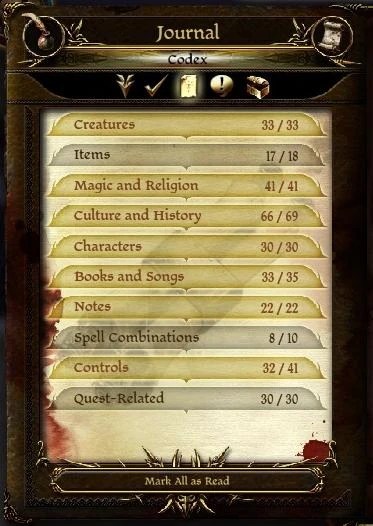
It can be handled in different ways. For example, Dragon Age Origins has a codex where notes and books are recorded in your codex. You can read it at any time. This lore can lead you to secrets and side quests.
In Fallout, you store notes in your Pip-Boy on paper or holotape. They point to unmarked side quests. In the Elder Scrolls games there are books you can find and read, and store in your player home.
All of this expands on the history and details of the game world. It’s usually optional but for players like me who love exploring and learning everything about the lore, it’s a huge part of the appeal of these games.
Side Quests
I’ve mentioned side quests a few times. So, what are they? Side quests are extra quests that are not essential to progress the main story. They result in extra small stories, and reward the player with experience points, money or items. They can also improve your reputation in games that have some kind of reputation system, which can affect other parts of the story.
For example, in Old World Blues in Fallout New Vegas, you can do a handful of simple side quests with the brains of the Think Tank. You can use your stats and skills to befriend all of the brains other than Dr Klein. You don’t have to, but if you do, it opens up the option of a peaceful resolution at the end of the main story. If the four of them are on side, you can talk Dr Klein down and avoid fighting them.
There’s a common meta joke about video game protagonists being overly helpful. That every time you visit a new town, you go around and fix all the problems of the people in that town. A lot of RPG gamers are completionists who want to get everything that the game has to offer and will spend hours avoiding the main plot. Side quests and side stories improve immersion too, as the player is spending more time engaging with and learning about the game world.
Thanks for reading. Next time we’re going to explore environmental storytelling and other ways games use indirect storytelling methods. Don’t forget to subscribe to get an update every time a post goes live!
I’m starting a new series of posts about storytelling in gaming. A lot of RPG plots follow the classic three-act structure of storytelling. This is for a good reason, as the structure is a common way to build and pace a story, regardless of the format it will be published in. Additionally, they often follow a version of the ‘Hero’s Journey’ plot structure.
Video games provide a unique form of storytelling, as it is absolutely a ‘choose your own adventure’ kind of thing, especially with roleplaying games (RPGs). Many games have diverging storylines too, depending on choices made by the player. There’s varying degrees of success with this.
The three act structure is laid out as the beginning, middle and end. The beginning is the first quarter of the plot and serves to introduce the world and the main character, as well as introducing the conflict and beginning to build the tension. It should end with a major event that pushes the main character to commit to the story.
The middle part is the second and third quarters of the plot, and the ‘meat’ of the story. Tensions build and the stakes are raised, with a major event at the midpoint of the story. There’s often a period of recovery after this, before a third major event that forces both sides to decide to pursue the final confrontation.
The third act is your ending. This is where we get the climax or resolution which answers the story question. The final confrontation happens and we find out if the main character achieves their story goal. There will then be some kind of winding down of the story afterwards. It is important that the ending makes sense and doesn’t rely on out of character behaviour or a deus ex machina solution.
How to Evaluate A Storyline
Over the next few posts, we are going to dive into the plots of some of my favourite RPGs, looking at how the game follows this structure. As well as evaluating and analysing the plot. We’ll look at the strengths and weaknesses of each plot, and how well the game tells the story.
The questions to answer are about the main character, what their goal is and how it shifts as the story progresses. How do we work out who the villain is? How the plot answers the overall themes of the game. What are the consequences of the final resolution?
We’ll look at motivation, for both the main character and the player. How well each game follows the “show, don’t tell” rule of writing. How we learn the information needed to decide how to approach the game.
We’ll evaluate issues with the plot, like contrived circumstances forcing the player to do something they may not wish to do. Deciding who are the good guys and the bad guys. Whether the main character, the protagonist, is a hero or not. Does the player have the freedom to roleplay morality the way they want to.
Which Games Are You Going to Cover?
Glad you asked! I’ll be starting with my two favourite franchises, Fallout and Dragon Age. I love these games for different reasons, but I love them both a lot. Fallout has such a rich background and so much freedom of choice and how to shape the post-apocalyptic world. Dragon Age has some really amazing well-developed characters. So hopefully you’ll join me on this journey.
I’ll be starting with the Fallout series, as the TV show is just around the corner and I’m very excited about it. I have an introductory video on my YouTube channel and I will be supplementing this blog with videos talking about some of the things I’ll be writing about so if you’re interested, I hope you’ll join me. My channel can be found here.