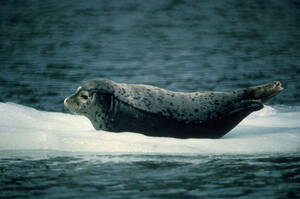

I’m continuing my coverage of Scottish Mythology with the Selkies. Selkies are shapeshifters, an entire subgroup of mythological creatures that can change form. Often they have a human or human-like form and can change into something else. The change may be voluntary but it may not be, as is sometimes the case with werewolves.
The name comes from the Scots word for seal. It can be written as ‘silkies,’ ‘sylkies,’ or ‘selchies.’ The Scots language doesn’t have standardised spelling for most words. They are the seal folk and they are associated with the northern isles of Scotland: Shetland and Orkney. They also feature in many Celtic and Norse myths and stories are also told of them in Iceland and Ireland.
What Are Selkies?
Selkies are sometimes conflated with the finfolk and merfolk. In the Gaelic languages they are named as mermaids, most of the time.
Like many mythological creatures, especially in Scotland, they have a duality to their nature. They can be friendly and helpful to humans, but they are also capable of being dangerous or vengeful.
Selkies live as seals in the sea and shed or remove their skin to become human on land. They are depicted as beautiful and seductive in human form. Many stories involve them having romantic or sexual relationships with humans.
Many stories involve coercion or trickery, into marrying a human. Usually the human steals and hides their seal skin so they can’t return to the sea. This leaves them trapped in an unhappy marriage, unless they can find their skin and escape. Here’s an example from Orkney.
Male selkies exist and are handsome and seductive to human women. They tend to look for women who are unhappy with their lives, such as those married to fisherman who are at sea for long periods of time.
Superstitions About Selkies
Unsurprisingly, folk stories like this create superstitions. For example, there is a common belief that killing a seal would result in misfortune. This is why people living on the isles would only kill seals during hard times, if they had no other option.
One tale involves crofters grazing their sheep. It is common on the islands for crofters to have communal grazing for their livestock instead of fenced off fields. One man put seven sheep on the largest holm and killed a seal on his way home.
That night, all of his sheep disappeared, while the other crofter’s animals were safe and unharmed. It suggests that the selkies took the sheep as revenge.
Similar stories of seal shapeshifters are found across the world. A similar creature exists in Swedish legend and the Chinook people of North America have a similar tale of a boy who turns into a seal. Iceland also has a lot of selkie-type stories. If the story includes any offspring of a selkie and a human, the child is born with physical characteristics like webbed fingers.
Origins of Selkie Myths
The likely origin of these myths came from the early days of settlements when health conditions and congenital abnormalities were blamed on fairies or changelings. Before people had scientific explanations for these things, they would be attributed to deities or the supernatural.
The tales of seals removing their skins likely originated with early settlers in Scotland encountering Finnish and Sami women who wore sealskin clothing. They removed it and let it dry, when it got waterlogged. There is also lore that suggests selkies are supernaturally formed from the souls of drowned people.
Selkies have made frequent appearances in films and books. They have seen a resurgence in popularity in the last few years with novels and films featuring them. I love that, as long as the origins of the myths are preserved and respected.
Leave a Reply