Too Hot, Too Cold or Just Right
Just like Goldilocks and the Three Bears taught us, for life to exist things need to be just right. Temperature regulation in animals is essential. Bodily functions and physiological processes require specific temperatures to work properly. Too hot or too cold, and these functions will fail.
Our planet is at the perfect distance from the sun to have temperatures capable of sustaining life. We have liquid water and an oxygen rich atmosphere which only exists because the temperature is perfect, more or less. There is a temperature gradient where it is hottest around the equator and coldest at the poles. Climate change is also creating a shift in the average temperatures.
Living things function due to a whole range of biochemical reactions which need specific temperatures to be effective and efficient. The specific temperatures needed depend on species and the function in question. For example, many mammals have external testicles because sperm generation is more efficient at temperatures a couple of degrees below the normal body temperature.
Ecosystem Adaptations
The various ecosystems in the world are well adapted to their native environment. Species have evolved all kinds of ways to maintain their optimum temperature. That’s why a polar bear couldn’t survive in the Sahara Desert. Climate change is impacting this, as global temperatures rise. We have many species under threat of extinction, if not extinct already.
For other species, the climate shift might be beneficial. A current example is two different species that live in the Atlantic Ocean. The Atlantic Horseshoe Crab is declining in number as the ocean warms. In contrast, Atlantic Blue Crabs are thriving and their numbers are actually increasing.
So what does this mean? One of my goals with these articles is to help fellow writers understand various factors in the natural world. That way when you are including animals in your writing, whether they are real, mythological or original, they can fit into the right ecological niche. Let’s start with some definitions.
Definitions
- Thermoregulation: physiological or behavioural methods for regulating the body temperature.
- Endotherm: organisms that can generate their own body heat through their metabolism – colloquially referred to as ‘warm-blooded.’
- Ectotherm: organisms that rely on external heat sources to keep their body temperature where it should be and regulate it through behaviours – colloquially ‘cold-blooded.’ It can be used interchangeably with poikilotherm but there are distinctions. Ectotherms generally want to stay at a constant temperature and use the environment to maintain it.
- Poikilothermic: this is another term used to describe ectothermic organisms. It comes from the Greek word poikilos which means ‘various’ or ‘spotted.’ There is some crossover with ectotherms but poikilotherms are species that seek to vary their temperature dependent on physiological needs. Most reptiles, amphibians and fish fit this category. Mammals that are poikilothermic include the naked mole-rat and sloths.
- Hyperthermia: A physiological state where the body temperature is too high from external means like an abnormally high environmental temperature or failure of the body’s cooling mechanisms. Heat stress or heat stroke are clear examples. Hyperthermia is dangerous as many enzyme reactions fail above a certain temperature and it can result in damage, especially to the brain.
- Hypothermia: the opposite, the body is too cold and eventually the normal physiology that attempts to maintain core temperature high enough will fail and this leads to physical damage. It is equally serious and potentially fatal.
- Fever/Pyrexia: both words mean the same thing. Fever is different from hyperthermia. The body raises its temperature in response to an infection, which can hinder the infectious agents while boosting the function of the immune system. Fever is unpleasant but it doesn’t always need treatment.
How Endotherms Regulate Their Temperatures
The simplest answer is that endotherms generate heat via their metabolism to maintain their body temperature. It does come with an energy cost, but they are less vulnerable to external temperature changes.
They employ mechanisms that help maintain the right temperature. In cold climates shivering and using up brown adipose tissue (brown fat.) Brown fat can be metabolised much faster than white fat. Many new-born mammals have this fat to keep them warm until they have dried off and had their first feed. For hot climates, things like sweating and panting can help keep the body cool. The circulation system can alter blood flow to lose or retain heat as well.
Endotherms are less vulnerable to external temperature fluctuations such as the day and night cycle. Many deserts get very cold at night, despite being very hot in the daytime.
The downside is having a higher metabolic rate and increased energy demands. This requires more food intake. Endotherms can’t last as long in periods of starvation, in general. Some endotherms will bask in the sun and rest a lot to reduce energy demand. This is why cats enjoy snoozing in sunny spots!
Only birds and mammals are true endotherms but there are some species can become endothermic during their reproductive season. Some endotherms will enter temporary hypothermia, a controlled physiological state that can be part of the normal circadian rhythm.
Hibernation
Hibernation is a longer seasonal cycle, usually to survive over winter when food is less available. It involves lowered metabolic rate, low body temp, slowed breathing and heart rate. Some species will eat a lot of food before winter to store the energy as fat. Smaller animals will use food caching, hiding stores of food nearby. Some of them carry a pregnancy through their hibernation period, such as black bears. They give birth shortly before or after they wake up.
The exact changes differ between species but hibernation is a way of surviving harsh winter weather and prevents a period of starvation. Especially since energy is required to maintain body temperature and if food is less available, it would be difficult to maintain the caloric intake required.
Sloths
Sloths are mammals that behave more like ectotherms. Their body temperature fluctuates according to their environment. This means they are capable of starving to death with a full stomach of food. If the temperature drops too low, they can’t digest their food and it can then rot and produce toxins. This can happen in reptiles too.
Polar Species

From a variety of images credited above., CC0, via Wikimedia Commons
Polar animals have specialised structures that help them maintain their temperature in cold conditions. Features like insulating fur, waterproof feathers or blubber under their skin help them stay warm.
Penguins have specialised blood vessels that act as heat exchangers where the veins sit next to the arteries where the blood is warmer, so heat is exchanged to warm the blood returning to the heart.
Hot Climates
Animals that are native to hot climates have peripheral blood vessels that allow them to lose heat – elephants have these in their ears. It’s also why fennec foxes have such large ears compared to their body size. Panting is a common way of losing heat as well, especially in canine species. Some species like humans and horses sweat to lose heat with evaporation. Dogs are at risk of hyperthermia because they don’t really sweat, they only have sweat glands on their paw-pads so panting is their main way of losing heat.
Ectotherm Temperature Regulation

Oxlamb, Public domain, via Wikimedia Commons
Ectothermic species don’t produce much internal heat from their metabolism and so they rely on the environment to keep their body at the right temperature. Reptiles, amphibians and fish are generally all ectotherms. Most insects are too.
Most deep sea aquatic species are adapted for the temperature of where they live, such as in the abyss level of the ocean. Water temperature is stable and constant so they rarely need to do anything.
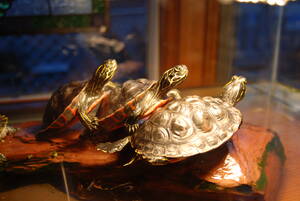
Reptiles especially keep warm by basking in the sun to raise their temperature or seeking shade to cool down. They also employ reduced metabolism in the cold to maintain their body and minimise energy usage when food is more scarce. Most reptiles do have body fat stores, usually within the coelomic cavity (abdominal cavity in essence) or sometimes in extremities like the tail. Leopard geckos store a lot of fat in their tails, for example.
Due to this, many ectothermic species are slower at night or early in the morning. They need to warm up before going about their day! They tend to be more active in the daytime although nocturnal species exist. Geckos are usually nocturnal and they wait for food to pass by rather than searching for it as this uses less energy.
Ectotherms can last much longer without food because they are capable of slowing down their metabolism when it is cold. However, if they are unable to find a suitable basking spot and heat, they can starve to death even if food is plentiful. They need to warm themselves to digest and metabolise their food – kind of like the sloths we mentioned earlier. Sadly I have seen this happen in captive reptiles – such as a snake whose basking lamp and heating system broke down after it had been fed and the prey began to rot and made the snake sick. Very sad.
This is the reason that reptiles are not found in the polar areas. Many that live in temperate regions will hibernate or ‘brumate’ over winter. Species that live in the equatorial areas like most of Africa, do not hibernate as there’s no need for it. It never gets cold enough.
Antifreeze
There are naturally occurring anti-freeze proteins. Yes, really. Some species of fish, amphibians and reptiles can freeze in the winter and wake up in the spring. They survive with the help of antifreeze proteins that prevent ice crystals forming in the body. These crystals would damage the organs and kill the animal without these proteins. Just like the radiator of a car!
Some plants also have this capability. Many of the cabbage related vegetables can do this like kale, spinach, brussels sprouts. Hellebores, pansies, cornflowers, poppies and lavender produce antifreeze proteins.

Romain Guy from Lyon, France, CC BY-SA 2.0 https://creativecommons.org/licenses/by-sa/2.0, via Wikimedia Commons
Interestingly the sacred lotus, an aquatic plant that grows in ponds and deltas, or in flood plains. It is the national flower of India and has the ability to regulate the temperature of its flowers just like an endothermic animal. This seems to be a way of attracting insect pollinators by promising a cosy environment, I suppose!
Species have adaptations to suit their native environments and make sure they can survive the conditions they live in. This is why introducing non-native species can be difficult and detrimental to the local ecosystem. Animals that live in colder climates will struggle when it is hot, and vice versa. That’s why huskies love being outside in the snow and ice, while a greyhound will hate it and usually require a coat of some kind to go outside in winter. Just like us, we don’t have much body hair to insulate us, which is one reason we wear clothes.
Hyperthermia
This is defined as overheating, where body temperature is elevated above normal. It is due to a failure in thermoregulation or temperature extremes beyond what the body can cope with. This is not the same as a fever, or pyrexia, which we’ll get to.
Hyperthermia is a medical emergency in both humans and animals as it can result in death and significant damage, particularly brain damage. Heat stroke where the body temperature is elevated from excessive heat exposure that overwhelms the body’s temperature regulation. Severe cases will result in blood pressure drops, confusion, dehydration and even seizures. Organ failure and death will result if not attended to.
Heat stroke is very serious, especially in young or elderly people. Dogs are also very vulnerable to it, especially the brachycephalic (flat faced breeds) like bulldogs. They struggle to pant enough to cool down because of their restricted airways and I have seen dogs die from heat stroke, or suffer permanent damage from it. PSA – do not leave dogs, young children or animals in a hot car in summer. Exertion in hot weather is also a risk for both people and animals so avoid long walks, running about or doing anything strenuous when it is excessively hot.
Hypothermia
The opposite – remember your prefixes. Hyper- means too high, while hypo- means too low. Hypothermia occurs when the body temperature drops too low and the body cannot maintain internal heat generation to sustain it. It can be serious and risks death in some cases too.
Mild cases will show confusion and shivering – this is muscle contractions to try and generate some heat. Once hypothermia progresses the shivering stops. Severe cases can result in hallucinations and a risk of death. People will often show paradoxical undressing in severe hypothermia. This is likely due to the blood flow. In cold temperatures, the peripheral vessels (arms and legs) contract to keep blood pressure and heat in the core of the body. They become exhausted and relax, allowing blood to flow and make the person feel warm, so they start stripping off. Which makes the whole thing worse. Very scary.
Hypothermia can be caused by exposure to cold weather, especially cold water immersion like falling through the ice of a frozen lake. Being wet increases heat loss from the skin. There are other factors that can impact temperature regulation. Low body fat, old age and low blood sugar increase the risk of hypothermia. So does alcohol intoxication – it’s not uncommon in winter for people to present with hypothermia after a night out where they have overindulged. Alcohol can make you feel warmer and thus not notice the cold.
It should be noted that the heart rate drops and respiratory rate also slows down. If you’ve watched Grey’s Anatomy, you will have heard the phrase: “They’re not dead until they’re warm and dead.” That is true, as even if there’s no detectable pulse, with aggressive rewarming and medical care, people can be revived. The same applies to some small animals where they can appear to be dead when cold but recover when warm – hamsters are notorious for this one! So you should always attempt to warm them up in case they can recover.
Fever
Finally, fevers are a different thing altogether. The body has it’s internal regulation system that keeps the temperature at a ‘set point’ in endothermic animals. The hypothalamus is responsible for this. In case of infection and an immune response, this set point is increased to raise the body temperature. Fever is thought to improve effectiveness of white blood cells and hinder the reproduction of pathogens like bacteria.
It’s a common symptom of illnesses, particularly infections. This can range from the common cold, where recovery will happen in a few days, and sepsis which is much more serious and requires intensive intervention. It is important to distinguish a fever from hyperthermia, as hyperthermia is much more life threatening.
Treating a fever may not always be necessary or recommended but there isn’t much evidence that treating the fever with antipyretics like paracetamol improves or affects outcomes in sepsis. Fever is uncomfortable and unpleasant to experience but it is rarely life threatening in itself, even if the cause is serious. Rarely young children can experience ‘febrile seizures’. Fever makes you miserable and can affect cognition. It is not the same as hyperthermia, though, and fevers do seem to be beneficial in aiding the body fighting off pathogens.
Regarding animals, normal temperatures vary by species. So the threshold for a fever is different in dogs to chickens. Normal human body temperature is accepted to be around 37°C or 98.6°F. Fever would be above 38°C or 100.4°F. In dogs the normal temperature is between 38.3°C to 39.2°C or 101°F to 102.5°F. Fever is above 39.4°C or 103°F. In chickens normal temperature is 40.6°C to 41.7°C (105°F to 107°F). Anything above 43°C or 110°F is a fever in this species.
Leave a Reply