Tag: storytelling

  • Fallout On Prime: Did They Retcon Fallout New Vegas?

    Fallout has been out for a while now, therefore it’s long past time for me to share my thoughts. Did Bethesda retcon Fallout New Vegas? I’ll be answering this question with my thoughts. This is a general review of the series and a discussion of the “retcon” of Fallout New Vegas and controversy among certain groups of Fallout fans. It does include some discussions of lore from the games and my opinions on the supposed retcon of Fallout. I will follow it up with an in-depth review of each episode.

    The Official Poster for Fallout on Amazon Prime

    This is a new medium for the Fallout series, and the latest in a long line of adaptations of video games. Video game adaptations have varying levels of success, from the questionable Street Fighter movie (a guilty pleasure of mine even if it is terrible) to The Last of Us. Fallout has been around for a long time and has millions of fans across the world. Be warned, there will be heavy spoilers ahead in this detailed review. If you’ve not watched yet, firstly, why? Secondly, go do that then come back to me.

    Finished Watching? Great!

    We all know adaptations can be very hit and miss, especially for established fans. Look at the MCU, the Deadpool movies, DC Universe and the X-Men movies. I’ll never forgive the hours spent in the cinema watching Batman V Superman. Lots of people are called Martha, it’s not that deep. I really wish for a specific amnesia that would just remove that experience from my brain.

    Anyway, the point is, when the show was first announced, I was cautiously optimistic about it. I love the Fallout series, if you haven’t already guessed by now. I was excited for this new kind of Fallout story, but there was a risk of it being a disaster.

    I’m a huge fan of Cats the Musical, I have been for 20 years. Yet, I still have not been able to bring myself to watch the 2019 CGI movie. I mean, if Andrew Lloyd Webber hated it, what chance did I have? So, I was worried about the same thing happening to Fallout.

    Luckily, it didn’t happen. I loved every minute of it, and I firmly believe it fits in nicely to this universe. Now, I am aware of the supposed “retcons” and I don’t agree that they even exist. It’s certainly possible some people are unable to understand the difference between implications and stated facts. I’ll get into this, as it comes up.

    The Chalkboard: A Retcon Or Not?

    Chalkboard in the Classroom of Vault 4

    I think some people who are criticising the show don’t seem to have watched it and are simply parroting the same statements they’ve heard elsewhere on the internet. You know, the “Bethesda hates New Vegas and they have completely ruined the story of New Vegas because it says 2277 on the chalkboard.” Apparently, they missed the arrow leading from 2277 to the mushroom cloud, meaning the explosion took place sometime after 2277.

    Todd Howard has confirmed that the nuking of Shady Sands took place after the events of New Vegas. Remember that the show takes place in 2296, which is 15 years after New Vegas and 9 years after Fallout 4. A lot can change in such a time frame. A lot can change in a month. Literally every Fallout protagonist drastically changes part of the Wasteland in the space of a few months.

    Obviously some of this is open to interpretation by viewers and fans. Guess what? That’s on purpose. Any good storyteller knows to omit certain details and let the audience reach their own conclusions. The NCR were not in great shape after the events of New Vegas, even if they got to keep the Dam. We don’t know exactly when the bombing happened, nor do we know how old our two non-ghoul protagonists are.

    Characters and Karma

    Fallout 3’s Karma Icons

    On to my overall thoughts. As I said, I loved it and have watched it several times since April. The story is interesting, and the three main characters are brilliantly written. I saw someone mention how each of them represents different Karma archetypes from the games, and I wholeheartedly agree with this interpretation.

    Lucy being the good karma, Maximus the neutral karma and The Ghoul the evil karma. They each have their own motivations and intentions, and their interactions over the course of the series really work. I love how Lucy is naïve about how the wasteland works and she struggles with how selfish people are. I love how naïve Maximus is about things like sex, clearly the Brotherhood don’t bother teaching their aspirants sex-ed.

    The Ghoul is obviously not naïve about anything, but he’s got a couple of centuries of experience on the other two. He’s been through the wringer and around the block a few hundred times. He’s clearly fighting off the feralization process, more successfully than many other ghouls. Sure, he seems to keep a good supply of these ‘vials’ to stave off the process but I think there’s more to it than that. We’ll get into the details later.

    NCR and The “Fall Of Shady Sands”

    NCR Sign From Ranger Station Charlie, Near Novac

    We can see that things haven’t gone well for the NCR, especially once we learn of the fate of Shady Sands. Again, this isn’t a retcon, because NCR was doomed to fail. Caesar thought so, Mr House thought so, Chief Hanlon thought so and Ulysses thought so too. NCR wasn’t this perfect utopia of democracy where everyone was happy and there were no issues. We know this, you can’t avoid hearing how exhausted and war-weary the NCR army is.

    “Patrolling the Mojave almost makes you wish for a nuclear winter,” is Fallout’s “I used to be an adventurer like you, then I took an arrow in the knee” meme. Get too close to a large group of troupers and you’ll hear an entire chorus of the line. These soldiers are tired. The NCR bases across the Mojave are not doing well. It’s obvious in New Vegas to almost everyone but the NCR brass, that they have bitten off more than they can chew.

    There are issues back home, corruption and bribery from the brahmin barons. Unrest and dissent, because citizens are beginning to chafe under the investments made in the name of holding the Dam. Mr House is so determined to make sure President Kimball survives his visit to the Dam because if he is assassinated, then House will take the blame for NCR losing the territory and NCR citizens will not come and spend their caps.

    The Fall of Shady Sands

    That means, to my mind, that the “fall” of Shady Sands is pinpointed as the point where political and social issues reached the point where the nation state of NCR began to fail. It really doesn’t matter what happened at the second Battle of Hoover Dam, even if the NCR won that fight, it’s entirely feasible that something happens afterwards that cements the downfall of Shady Sands and the NCR.

    Then of course, Hank MacLean comes along and wipes the city from the face of the earth and really cements the end of Shady Sands and NCR. This isn’t a new concept either, and all it takes is a visit to Camp Searchlight in the Mojave. Or Megaton after an evil Lone Wanderer is done with it. Or the Institute once the Sole Survivor is done destroying it. The Courier can literally nuke both NCR and Legion at the end of Lonesome Road.

    Vault-Tec – Did They Drop The Bombs?

    Vault-Tec Bilboard as seen in Fallout 4

    With that in mind, it’s not outside the realm of possibility that a Vault-Tec junior executive knows how to get his hands on some nuclear weapons. Barb Howard clearly states that Vault-Tec is prepared to drop the bombs themselves. It isn’t enough to confirm that Vault-Tec started the war, but I interpret it as her stating that the company is willing and able to do it.

    This means that Vault-Tec must have access to the means to start a nuclear war, so they must have stockpiles somewhere that their higher-ups know how to access and use. It’s clear that Vault-Tec have their own agenda and everything we learn proves that Vault-Tec see themselves as the only suitable leadership for humanity post-War. They want to be in control of everything and anyone who will not fall in line will be removed.

    The Big Meeting With Investors

    Robert Edwin House – CEO of RobCo

    Some people are up in arms about the people present at the big meeting with Barb and Bud. I disagree, we know most of these companies have already got business relationships with Vault-Tec and government and military contracts. Rob-Co tech is used in all the Vaults. Vault-Tec has connections to Big MT, so Frederick Sinclair being present makes sense.

    Vault-Tec is using their vaults to test out technology for space travel and colonisation of other planets, so working with REPCONN makes sense too. West-Tek are a big contributor to wartime tech, including the Power Armor and FEV.

    Additionally, we know that every experiment they mention took place in one of the Vaults. We know that Mr House has lofty goals in mind, using New Vegas to raise funds and start R&D with a view to launching colony ships into space. Cut and unused content from the cancelled ‘Van Buren’ project suggests the US Government and subsequently the Enclave had the same idea and the real purpose of the Vaults was to test different things to inform this plan.

    It’s entirely possible that Vault-Tec took on Project Safehouse in order to secure government funding and support. They have their own agenda entirely which they did not share with the government. We see official instructions from Vault-Tec informing Overseers to only take orders from Vault-Tec and not US military or government personnel.

    Vault-Tec absolutely could have been lying to the government and would have control over what systems the Enclave could have access to. They could easily have their own stuff hidden away and kept secret from everyone but the top level executives. That’s part of the interest, some stuff isn’t explicitly told so we have to figure it out ourselves.

    Anti-Feral Serum Vials

    The Ghoul – played by Walton Goggins

    The other “retcon” I’ve seen is the anti-feral vials that The Ghoul uses and trades Lucy for. When we first see his grave, there are IV bags hanging above it. It’s not clear to me if they are supposed to be this substance, or if it’s just Rad-Away. Rad-Away is labelled clearly in Fallout 4.

    There’s no cure or way to prevent ghouls turning feral in the games, so this is the ‘retcon’. It’s similar to the whole issue with Jet, invented post-War by Myron, according to Fallout 2. Fallout 4 mentions Jet existing pre-war. It’s possible that Myron rediscovered how to make it, or improved it. The anti-feral serum, only referred to as ‘vials’ in the show, does prevent the feralization process.

    I don’t believe this is a true retcon, because we don’t know how long this substance has existed. The most recent installment of the game, Nuka World, features a story about park workers who became ghouls and eventually turning feral, one by one. Rachel leaves to find a cure, but fails, and kills herself before she becomes feral.

    That doesn’t mean that nobody has discovered something that helps since then. Nine years is plenty of time for someone to discover it, especially a ghoul who has had a couple of hundred years to study organic chemistry and ghoul physiology. Maybe it’s been around a little while and hasn’t reached the east coast yet.

    What Are Your Thoughts?

    That’s my view on the supposed “retcons” that some people are complaining about. Based on what we know from the games, the TV show fits in nicely to my mind and is absolutely compatible with the lore of Fallout New Vegas. They haven’t even indicated which of the four endings is ‘canon’ and they probably won’t.  It just bothers me when people keep repeating the same things without really looking at the facts that we can verify from the show, the games and other official sources.

    What do you think? Did you enjoy the TV show? Do you think I’m wrong about the ‘retcon’ of Fallout New Vegas? As always, I encourage respectful discussion in the comments. To read more about Fallout New Vegas, I’ve got some articles discussing the story, starting here. To see where I’m getting my information from, I have a series covering the main story on YouTube, here.

  • Fallout Review: Episode One – The End

    Beginning at the End – Setting the Scene

    Welcome to my in-depth review of Episode One of Fallout. The first episode of Fallout on Prime has a lot of heavy lifting to do. Obviously a lot of the audience will be fans of the game, that’s a given. However, there’s going to be a lot of viewers who don’t play games and are unfamiliar with the universe of Fallout. This means that the first episode has to introduce the world, its history and the setting. As well as that, it must introduce our main characters, tell us a bit about them. It must set up the inciting incident of the new story it’s going to tell.

    Fallout has a divergent timeline to ours, from the 1950s, where technology moved in a different direction. It focused on harnessing atomic energy. Resource wars came to a head in 2067 and the US spent a decade fighting against China, before the bombs fell on the morning of the 23rd of October, 2077. The TV show takes place in 2296, almost 220 years after the bombs fell. That’s a lot of history to cover.

    Of course it would be easy to fall into the info-dump trap and spend an hour explaining everything that happened. Get Ron Perlman to read a summary of the history of Fallout. His voice is great, but this would probably turn off viewers, especially those who know the lore well and those who are just watching to see what it’s about. Instead, the show does a great job of introducing this world and gives us enough to start reaching some conclusions about what is going on. It does not overload us with information.

    The Prologue: The End

    We begin with “The End”. An odd place to start, perhaps, but the Fallout universe is post-apocalyptic science fiction so of course it begins with the end of the world. We open on a kids birthday party, with a man dressed as a cowboy showing off some rope skills and posing with a horse. Immediately it’s clear that this isn’t our modern world, the TV is not in colour and looks old. The fashion looks dated as well, very much 1950s style. Yet we see a domestic robot ready to serve.

    War and Nuclear Attack Fears

    Fallout has a very 50s “World of Tomorrow” vibe with clothing and music, which I love. We can see that the technology is more advanced than what we have in some ways, but it is also behind in other ways. We also get little hints about the war and fear of nuclear attack. Which the mother quickly hides by turning off the radio and changing the TV channel.

    “…negotiations were scheduled to continue today as the White house had no comments about the President’s whereabouts.”

    Radio announcement heard in the opening of Fallout on Prime

    We hear this just before the radio is turned off. It’s clear that people are asking where the President is, and are not reassured by the lack of any comments from the White House.

    “… between America and her adversaries crumbled this morning in Anchorage, Alaska. The spectre of nuclear war facing this nation for ten long years is finally…”

    News on tv in opening of Fallout on Prime

    One would assume the above quote ends in ‘over’ but the TV is turned off by the mother before we can hear the rest of it. Later, the weather anchor on TV stops his report, saying “I can’t do the weather when I don’t even know if there’s going to be a next week.” The mother mentions only thinking happy thoughts today and changes the channel for the kids to watch “Grognak the Barbarian”. Yes, that’s a Conan reference, Fallout is full of references and easter eggs to other media.

    There is forced cheerfulness but there’s clearly concern about the future and the outcome of the long war with China. Everyone’s drinking and celebrating, socialising happily. Watch how quickly it changes when the first shockwave hits and the host refuses to let anyone other his own family into the fallout shelter under the house. He punches the other man, their friendship dissolving suddenly in the face of nuclear devastation.

    Cooper Howard

    We also learn a bit about the cowboy entertainer, Cooper Howard. His daughter Janey is helping him at the party. The dads mutter about him working birthday parties because he has alimony to pay. This indicates he is separated from his wife or going through divorce. He refuses to do the ‘thumbs up’ gesture he’s apparently famous for.

    One of the men calls Cooper a ‘Pinko’, a term I had never heard of. It was used a lot during the Cold War in the 60s. It’s a derogatory term for someone that is left-leaning, socialist or light communist. Red is the colour we all know is associated with communism. We can deduce that there’s a lot of anti-communist feelings, due to the war against China, a communist country. So, a ‘Pinko’ would be like diet communist, or commie-lite.

    Thumbs Up: Why Didn’t You Do It?

    Janey asks her dad about the thumbs up gesture, and he reluctantly explains. The idea is, if you see a mushroom cloud from a nuclear bomb, you hold up your thumb. If the cloud is smaller than your thumb you are safe and should run in the opposite direction. If the cloud is bigger than your thumb, don’t waste your energy running. This isn’t accurate, but the advice gets around. Cooper mentions being told this in the Marines, so we also know he’s a veteran.

    We see Cooper on his horse, with his daughter heading for the hills while the other guests panic and flee. It’s a great opening, in my opinion. It tells enough about the state of America at this point in time and shows the end of the world. It doesn’t get bogged down in all the details or dump a megaton of exposition.

    There’s a lot of fun little easter eggs for game fans though. Such as Nuka Cola and Sunset Sarsaparilla bottles on a table. We see Grognak the Barbarian and the Ruby Ruins on TV. Of course, it’s also easy to assume that this was just an introduction to the universe. Of course all the people in the opening will be long dead when we’ve moved ahead 219 years. Keep that in mind.

    Lucy: Vault 33

    Lucy spends a bit of time introducing herself, essentially reading out her resume over the top of scenes of her life within the Vault. We can see everyone wearing the same blue and gold jumpsuits. There’s no long explanation of what the Vaults are, but we find Lucy is looking for a husband, but cannot marry anyone in 33 as she’s related to all eligible bachelors. There’s a Triennial trade with Vault 32 which is not really explained either.

    This highlights an issue with all of the closed off Vaults and any isolated community of people. Eventually without new blood coming in, the group will either need to engage in incest or die out. The Vaults are supposed to keep humanity alive to recolonise the surface when they deem it safe to do so, after all. They want heterosexual marriages to ensure ongoing population management, but obviously do not want to risk inbreeding. So they have this trade program where a ‘breeder’ can be traded to another vault in exchange for resources such as seeds and machine parts. Like a dowry, I suppose.

    There is obviously some incestuous relationships going on, as we see from a few comments Lucy makes and a conversation with Chet, the gate manager. Chet is Lucy’s cousin, so they can’t marry, although he confesses he loves her and it seems everyone knows this. Lucy responds in an interesting way:

    “Messing around with your cousin, it’s all well and good for kids, but it’s not a sustainable long-term sexual practice, you know?”

    Vault 32 Meeting

    They meet with the dwellers from Vault 32, which is connected to 33 by a tunnel leading from the farm area. They look a little different, if you look closely at them. A bit less clean-cut than the Vault 33 folks, and more scarred. It’s unclear if anyone notices this, but the eagle-eyed viewer might get the hint something’s amiss. Especially when they’re seated at the wedding reception and intermingled.

    Lucy’s brother, Norm, has definitely got a high Intelligence stat. He says nothing, but it looks like he suspects something is up. Even as Hank talks about what might be on the surface, as he explains that Lucy’s kids will be able to recolonise the surface. This is what the dwellers know, that they keep a population going through the generations for Reclamation Day, when they will go up to the surface and recolonise it.

    This is reflected in Lucy’s first conversation with her new husband. Again, it’s quite an odd one for a blind-date arranged marriage. She opens with “What’s your sperm count?” before going on to point out that “sperm is pretty important in perpetuating America.” It’s kind of laughed off and brushed aside.

    Wedding Gifts and Hand-Me-Downs

    Indeed when she shows Monty to their new living quarters, she talks about the hand-me-down items they’ve been gifted, such as a blender. You will also notice that she writes her name and the date on the inside of the wedding dress. The Vaults have limited space so there’s no room for large scale fabric manufacturing or fashion boutiques.

    A lot of things are hand-me-downs in the Vaults. We see this in Fallout 3’s opening too, when you attend your 10th birthday party and receive a Grognak the Barbarian comic book from Amata. She proudly states it has no missing pages and that she got it from her father’s old things. Nobody in Vault 101 is writing and printing new comics, so most non-food gifts must be like this. The same would go for things like wedding dresses.

    Back to Lucy, she is clearly not shy when it comes to sex and seems quite content. It’s only afterwards that she begins to suspect all is not as it seems. When Monty acts a bit odd, like wiping himself on the curtain (which is gross and weird). When he uses the blender as a glass for water, she gets up and grabs her Pip-Boy. This is a wrist mounted computer that has many functions, one of which is a Geiger counter.

    Lucy Is A True Fallout Protagonist

    The thing I like about Lucy is that she isn’t a damsel in distress. She’s a positive and kind person, for sure, but when Monty attacks, she doesn’t hesitate and is quite capable of fighting back. She’s smart and resourceful, making good use of the aforementioned blender to fend him off. She will kill and injure if she needs to, and that qualifies her to be a Fallout protagonist.

    Wounded, she grabs a stimpak before going to help the others against the raiders. She goes straight to the armory, but she grabs the syringer and gets to work, knocking out a handful of raiders. She’s willing to fight for her family and her vault.

    Gratuitous Violence Is Essential In Fallout

    Viewers might find the violence graphic and over the top, if they haven’t played the games. It is. Absolutely. Which is how it should be in Fallout. The classic games had some comical death animations and a dark sense of humour with the descriptions of combat outcomes. In the modern games, you have the hilarious death cameras and the Bloody Mess perk.

    I especially enjoyed the scene with Chet and the raider, who charges at him. Chet lets the door close on said raider, which obliterates him in spectacular fashion. It’s brilliant and very Fallout. This gratuitous violence juxtaposed with “Some Enchanted Evening” by the Castells.

    That’s the essence of playing Fallout, over the top violence with some classic 50s music in the background! Then we get to our inciting incident for Lucy’s story. Lee Moldaver, who led the raiders into Vault 33, takes Hank MacLean with her by force. This is a typical Fallout plotline. You lose something important, a dad, a child or a platinum chip.

    Maximus: The Brotherhood of Steel

    We go to meet our next main character, Maximus. It’s obvious that this group are military of some kind from the uniforms and dogtags. There’s clearly some bullying going on as well. Immediately there’s some hints of indoctrination when Dane says “Flesh is weak but steel endures.” This is a phrase they clearly hear and say often.

    Game fans will know quickly that this is the Brotherhood of Steel we’re dealing with, and clearly some kind of training facility. It’s unclear where this is but they’ve obviously either built or taken over a military base. The aspirants are sitting in a lecture, where the Scribe spells out what the Brotherhood are without excessive exposition. They collect, study and protect technology.

    Once the Prydwen arrives and we see the Knights in their Power Armor, the usual flashy show of force the Brotherhood are so fond of, we know something’s going on. Aspirant Dane is summoned and chosen to be a squire to Knight Titus. They seem excited to be going on this mission, and we see that Maximus is angry and jealous of them. (The character is non-binary and they/them pronouns are used in the show, even the Brotherhood can respect pronouns without drama. So you can do it too.)

    The next morning, Dane has been injured by razorblades stuck inside their boots. This is a real thing used as a bullying/hazing tactic. Maximus is dragged off and blamed for this. We cut away before it’s clear what is going to happen to him.

    Back to Vault 33

    Vault 33 efficiently clean up the mess of bodies, blood and damage from the raider attack. Lucy is treating her stab wound with a skin stapler, which is odd as the Vault should have a doctor but it does show she’s tougher than she might appear.

    The surviving vault dwellers hold a meeting, but nobody wants to hear about going to the surface to look for Hank. Norm tells Lucy that the council don’t want to find him, because they like being in charge. Lucy resolves to go out and find her father, getting Norm and Chet to help her get to the Vault’s external door. Again, this is a defining moment from the games, when you leave the starting area.

    It’s also a defining moment for Lucy’s character arc. She’s never been outside Vault 33 before, so she has no idea what to expect. It takes guts to venture out into an unknown world like this. As part of the heroes journey in any story, a key point is when the protagonist makes the choice to follow the thread of the story. A decision to pursue their goal. This is that moment for Lucy, and she is off to explore the wasteland. We see in the distance a Ferris wheel on a pier and can deduce that Vault 33 is located in Santa Monica.

    There’s a sweet little moment when Lucy and Norm hug before she leaves the Vault. It’s clear that family matters to her. Even though Norm seems uninterested in most things, he obviously loves his sister. It’s lovely to see, because the rest of this segment shows a very clinical approach to the aftermath of such a violent incident.

    Outside the Vault

    Lucy steps outside, blinded by the strong sunlight. This is again a callback to the games, as a similar thing happens at the beginning of Fallout 3, Fallout New Vegas and Fallout 4. It’s almost a cliché now. The first thing she sees on the ground is bones and skeletons. Human bones. Plenty of other debris and stuff as well, but it again serves to highlight that millions of people died in the Great War.

    The Vaults were only able to save about 0.1% of the population of America. Millions died on the surface. There are many fun and comical moments in the games and in the show, but there’s a lot of darkness too. A large number of skeletons are outside the Vault door at 33. You see the same in Fallout 3, outside Vault 101. Skeletons, with picket signs saying “Let us in, assholes,” and “We’re dying.”

    The opening of Fallout 4 is similar. We start in the Pre-War and run to the Vault. We pass a group of people, your neighbours, who don’t get in. Not even the sales rep gets in. You get in and your spouse asks what’s going to happen to those people outside the gate. The answer? They’re going to die. Brutal, but that’s the truth. Sure enough, when you leave Vault 111 again, there’s a bunch of human skeletons lying around near the gate.

    Lucy looks around, and steels herself for the journey ahead. She has no idea where to go, but her optimism is enough for now. She’s determined to find her father. She chooses to keep going.

    Maximus, Again

    We then cut back to Maximus, who is being interrogated and threatened with execution. We get a bit more of an idea about what the Brotherhood are like. Maximus ends up being given Dane’s position as Squire to Knight Titus. Which he’s quite happy about. An interesting quote from the Scribe (I’m assuming Head Scribe but we don’t really know who he is).

    This tells us plenty about what the Brotherhood believe and how they view violence. They seem to have become even more cult-like since we last saw them. The branding ceremony and everything seems to be new. There’s incense and ceremony, which really feels like zealotry or religious fanaticism.

    They are taking orders from the Commonwealth, which is the area around Boston in Massachusetts. So quite far away, and it does suggest that the East Coast chapter are now working with the West Coast chapters of the Brotherhood. They had separated in 2277 in Fallout 3, but when Arthur Maxson took over and brought the Brotherhood to the Commonwealth, things had changed. It’s interesting and I’ll talk more about this later.

    The mention of the Enclave prompts one of the aspirants to ask if the Enclave is real. The Enclave came from remnants of the US Government, and have been defeated a couple of times in the games. The Oil Rig was destroyed during Fallout 2, with only a handful of the remnants living in the Mojave area by 2281. Raven Rock and Adams Air Force Base would have been destroyed by the events of Fallout 3 and Broken Steel. We’ll see a bit more of them in the next episode.

    The Ghoul

    A new location. It’s unclear exactly where this is, but Honcho mentions California, suggesting they are not in California. Even so, he knows of Lee Moldaver, she did say that everyone knows who she is. Except us, but we’ll learn more about her later. These three men dig up The Ghoul, and this might be a new viewers first time seeing one.

    Ghouls are irradiated humans, instead of dying of radiation sickness, they have mutated. This causes some physical deformities, loss of skin, noses and hair, but they are healed by radiation and live extended lifetimes. Some ghouls end up with too much damage to their brains and become ‘feral’, mindless and aggressive to anything non-ghoul around them. It also seems that eventually all ghouls will become feral as time goes on. I’ll get into the ghoul ecology eventually in detail.

    The Junk Jet – A Classic Fallout Weapon

    It’s funny to see the Junk Jet being used with doll parts as ammo. This is a game reference, unsurprisingly. In Fallout 3 you could get schematics to make a weapon called the Rock-It Launcher, which used miscellaneous items like books, pre-war money and garden gnomes as ammunition. You could even fire cutlery and dishes from it. In Fallout 4 there’s a similar weapon known as the Junk Jet which let you fire junk items. Not the best weapon, but certainly highly entertaining to use garden gnomes to kill people.

    I was also amused at the bit about how feral ghouls can’t abide chickens. I have no idea where this comes from. There’s not a lot of instances of chickens in the games and when there is, any feral ghouls seem to attack most things equally. I guess it’s just a funny bit, especially when The Ghoul picks up the chicken and the guys panic. I assume he just overheard their conversation before they dug him up.

    We get some more gratuitious and over the top violence, which shows us that The Ghoul is really quite skilled in combat. He doesn’t give much away but seems angry that Honcho knows where he’s from, ‘originally’. This is alluding to who The Ghoul was before he became a ghoul, i.e. before the war. Most of the ghouls you meet in Fallout were alive before the war.

    Who Is The Ghoul?

    We still don’t quite know who The Ghoul is, unless you are astute and recognise Walton Goggins eyes and voice! Sure enough, he says a line that is a callback to the very opening of the episode.

    “Us cowpokes, we take it as it comes.”

    Indeed, this is Cooper Howard. Missing his hair and nose, his voice a bit more rough perhaps as well. Now we know, the opening wasn’t just a show of what happened when the bombs fell. It is important to one of our main characters. Cooper is still around, as a ghoul. We know he had a daughter, and a wife at one point. We know he was famous pre-War, and a veteran.

    My Overall Review of Fallout Episode One

    Overall, I love this episode. I think it really gives just enough information for newcomers to the series to grasp what’s going on, while still giving a compelling start to the new story. We get some background details and some good foreshadowing. There’s no huge exposition dump, which would run the risk of being boring and putting viewers off. But there’s also lots of little hints and references for fans of the games to notice.

    I love the three main characters. They are definitely fitting into the good, neutral and evil karma archetypes, which echoes the karma system from the games. In Fallout 3 and New Vegas, you have a karma level which changes based on your actions. You lose karma for stealing and murder, and you gain karma by helping people or giving to charity. The classic games had a reputation system too so people would know if you did something horrible and wouldn’t trust you.

    The Three Karma Archetypes

    Lucy is optimistic and clever, but she’s not completely incapable of fighting or killing if she has to. After all, every single mainline Fallout game lets you play as a male or female character, even the first game from 1997. We’re not going to lean into the sexist ‘damsel in distress’ who is too dainty to get blood on her hands or afraid to defend herself. The wasteland is an unforgiving place, full of dangerous creatures, dangerous people and dangerous environments. Lucy may be naïve about the surface, but she’s not incapable.

    Maximus is the neutral karma character, he’s clearly having a tough time with the bullying and whatnot but there’s definitely some selfishness there too. He says he did not cause Dane’s injury but asks if he was wrong for wanting it to happen to them. Considering they are the only person who acts friendly towards Maximus, it’s quite horrible to wish them ill, you know? Yet, Maximus gets what he wanted in the end. That’s the definition of the neutral karma, a very mercenary approach where you do what benefits your own goals first before thinking about others.

    The Ghoul is the evil karma character. Does that mean he’s a bad guy? Kind of. He’s clearly got his reasons and his motivations, which we will learn about through the series. He has no issues with killing or injuring people to get what he wants. He’s savvy and skilled, and he’s opportunistic. Is he the kind of guy that would detonate the bomb in Megaton? Yeah, I think he is, if it would get him closer to his goals or benefit him in some way to do so.

    Thank You For Reading My Review of Episode One

    If you want more information on the Fallout universe, subscribe below. You can also find videos on my YouTube channel covering a lot of the worldbuilding and storylines from Fallout. You can see my playlist on the Vaults here. For more articles on writing and on Fallout, check out my latest posts here.

  • Indirect Storytelling In Games

    Indirect Storytelling In Games

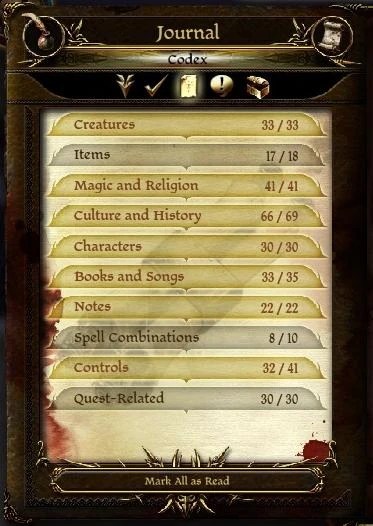
    Dragon Age Origins Codex

    Lore And Codex Entries

    One method of indirect storytelling in games involves finding bits of lore in the world. Examples include notes or voice recordings. Books, journals and emails on computers as well. This lore is not essential to the story, only giving background and additional details. This makes the world seem more real and adds interest to the game.

    It can be handled in different ways. For example, Dragon Age Origins has a codex where notes and books are recorded in your codex. You can read it at any time. This lore can lead you to secrets and side quests.

    In Fallout, you store notes in your Pip-Boy on paper or holotape. They point to unmarked side quests. In the Elder Scrolls games there are books you can find and read, and store in your player home.

    All of this expands on the history and details of the game world. It’s usually optional but for players like me who love exploring and learning everything about the lore, it’s a huge part of the appeal of these games.

    Side Quests

    I’ve mentioned side quests a few times. So, what are they? Side quests are extra quests that are not essential to progress the main story. They result in extra small stories, and reward the player with experience points, money or items. They can also improve your reputation in games that have some kind of reputation system, which can affect other parts of the story.

    For example, in Old World Blues in Fallout New Vegas, you can do a handful of simple side quests with the brains of the Think Tank. You can use your stats and skills to befriend all of the brains other than Dr Klein. You don’t have to, but if you do, it opens up the option of a peaceful resolution at the end of the main story. If the four of them are on side, you can talk Dr Klein down and avoid fighting them.

    There’s a common meta joke about video game protagonists being overly helpful. That every time you visit a new town, you go around and fix all the problems of the people in that town. A lot of RPG gamers are completionists who want to get everything that the game has to offer and will spend hours avoiding the main plot. Side quests and side stories improve immersion too, as the player is spending more time engaging with and learning about the game world.

    Thanks for reading. Next time we’re going to explore environmental storytelling and other ways games use indirect storytelling methods. Don’t forget to subscribe to get an update every time a post goes live!

  • Storytelling in Gaming – Introduction

    The Three-Act Structure

    I’m starting a new series of posts about storytelling in gaming. A lot of RPG plots follow the classic three-act structure of storytelling. This is for a good reason, as the structure is a common way to build and pace a story, regardless of the format it will be published in. Additionally, they often follow a version of the ‘Hero’s Journey’ plot structure.

    Video games provide a unique form of storytelling, as it is absolutely a ‘choose your own adventure’ kind of thing, especially with roleplaying games (RPGs). Many games have diverging storylines too, depending on choices made by the player. There’s varying degrees of success with this.

    The three act structure is laid out as the beginning, middle and end. The beginning is the first quarter of the plot and serves to introduce the world and the main character, as well as introducing the conflict and beginning to build the tension. It should end with a major event that pushes the main character to commit to the story.

    The middle part is the second and third quarters of the plot, and the ‘meat’ of the story. Tensions build and the stakes are raised, with a major event at the midpoint of the story. There’s often a period of recovery after this, before a third major event that forces both sides to decide to pursue the final confrontation.

    The third act is your ending. This is where we get the climax or resolution which answers the story question. The final confrontation happens and we find out if the main character achieves their story goal. There will then be some kind of winding down of the story afterwards. It is important that the ending makes sense and doesn’t rely on out of character behaviour or a deus ex machina solution.

    How to Evaluate A Storyline

    Over the next few posts, we are going to dive into the plots of some of my favourite RPGs, looking at how the game follows this structure. As well as evaluating and analysing the plot. We’ll look at the strengths and weaknesses of each plot, and how well the game tells the story.

    The questions to answer are about the main character, what their goal is and how it shifts as the story progresses. How do we work out who the villain is? How the plot answers the overall themes of the game. What are the consequences of the final resolution?

    We’ll look at motivation, for both the main character and the player. How well each game follows the “show, don’t tell” rule of writing. How we learn the information needed to decide how to approach the game.

    We’ll evaluate issues with the plot, like contrived circumstances forcing the player to do something they may not wish to do. Deciding who are the good guys and the bad guys. Whether the main character, the protagonist, is a hero or not. Does the player have the freedom to roleplay morality the way they want to.

    Which Games Are You Going to Cover?

    Glad you asked! I’ll be starting with my two favourite franchises, Fallout and Dragon Age. I love these games for different reasons, but I love them both a lot. Fallout has such a rich background and so much freedom of choice and how to shape the post-apocalyptic world. Dragon Age has some really amazing well-developed characters. So hopefully you’ll join me on this journey.

    I’ll be starting with the Fallout series, as the TV show is just around the corner and I’m very excited about it. I have an introductory video on my YouTube channel and I will be supplementing this blog with videos talking about some of the things I’ll be writing about so if you’re interested, I hope you’ll join me. My channel can be found here.

  • Fallout’s Inciting Incidents

    Fallout the whole story fallouts inciting incidents how to start a story

    How To Start A Story

    Today we’re going to look at Fallout’s inciting incidents, and how to motivate players and characters to follow the plot. The most important part of the beginning is the ‘inciting incident’. An event that sets your protagonist on the road to the main plotline. These can be major or minor events, but they have to trigger a change for your protagonist.

    You can begin your story before, during or after this incident, but it’s important to at least tell the reader that it happened. In video games, this is usually handled via an introductory cutscene. In the early days of videogames, the backstory was often included in the game manual. Of course this is less common now, so the game has to give you the backstory.

    So we’ll start at the beginning and work through the games in chronological order. Of course, we have to note that the series itself has a rather major inciting incident. The bombs. The nuclear war happened on the 23rd of October, 2077, wiping out 90% of life on the surface. A large number of people survived in underground Vaults. So bear this in mind, as it matters to every Fallout story we will be examining.

    Fallout – The Water Chip

    The first Fallout game came out in 1997. You begin with creating your character, known as “the Vault Dweller”, from Vault 13 located in southern California to the west of Shady Sands, a small town that would go on to be the capital of the New California Republic (NCR). The Vault is designed to support up to a thousand people, and will remain sealed for 200 years, to study the effects of prolonged isolation. It was supplied with an extra G.E.C.K. (Garden of Eden Creation Kit) instead of extra water chips, which were sent to Vault 8.

    In 2161, the Vault’s water purification chip started to malfunction leading the Overseer of the Vault to send people out into the wasteland to find a replacement, to no avail. The overseer chooses your character for this job. On the 5th of December 2161, the Vault Dweller leaves their Vault for the wasteland.

    At that point, the Vault has only 150 days of water reserves, which does put a time limit on success for the Vault Dweller. The game does implement this time limit as well, although you can extend the time limit through your actions in the Wasteland.

    Motivation?

    So what is the motivation? Vaults are generally safe and secure, if there’s no horrific experiment going on. The limited living space means that everyone needs to contribute to the community to ensure their survival. Your character has lived their whole life in this Vault, and may well have friends and family, but they want to help their Vault. Water is essential for life, after all, and in a radioactive wasteland, water purification is vital. So it makes sense to keep looking for a replacement water chip, to save their community, doesn’t it?

    Fallout 2 – Finding the Garden of Eden

    Fallout 2 takes place 80 years after the first game, in a village called Arroyo, in Oregon. Arroyo is suffering from a famine and a drought. The village was founded by the Vault Dweller, after they were exiled from Vault 13 due to spending too much time outside. A serious drought in 2241 leads the village elder to ask your character, the Chosen One to find a G.E.C.K. The Chosen One is a direct descendant of the Vault Dweller.

    The G.E.C.K. is a terraforming device that is capable of sustaining life in the wasteland, including seed, soil supplements, a cold fusion power-generator, matter-energy replicators, atmospheric chemical stabilisers and water purifiers. Each vault has two as standard (in the West Coast, at least) and the Elder believes that only a G.E.C.K. can save the village of Arroyo from starvation.

    Motivation?

    Again, your character’s motivation is very similar to Fallout’s protagonist. Your people are suffering from a shortage of an essential resource and are relying on you finding the one thing that could save them. It’s all about the preservation of life, and saving your community. Pretty motivating reasons to embark on this quest.

    Fallout 3 – Following in Daddy’s Footsteps

    Like Fallout, you start off as a vault dweller, but we’re on the East Coast of the USA, near Washington DC. You live in Vault 101, and you have a kind of prologue in this one, building your character through experiencing various events of your childhood. The game does actually start with your birth, and your mother dies shortly after. The protagonist is referred to as the Lone Wanderer.

    So, it’s just you and your dad, living in the Vault. Your father is the Vault’s doctor. One day, when you’re about 19 or so, your friend Amata wakes you up to tell you that the Vault’s security are looking for you because your father has left the vault. Vault 101 was to remain sealed forever. The experiment was to study the role of the overseer in a completely isolated community.

    Despite this, the Vault has opened a few times. The Vault did not have a G.E.C.K. but it was designed to be self-sustaining indefinitely. You have no idea why your dad left the vault, but after learning security are after you,  you end up escaping the vault to go and find him.

    Like previous Fallouts, you are leaving the safety of your home in search of something important. In this case, your only living family. He leaves a note with his friend Jonas, who you find dead during your escape. The note tells you not to follow him, and he hopes the Overseer will blame him entirely. That isn’t what happens though.

    Motivation?

    So what is your motivation here? You’ve left your home, given no real choice in that, so it’s only logical you would pursue the only person you know, your father. What else would you do? Fallout 3 is the series first open-world game, so you can absolutely find plenty to do other than follow the main story, but it’s only by searching for your dad that you’ll get into the nitty gritty of the main story, and learn about Project Purity and the major players.

    Fallout New Vegas: They Went That-a-way!

    Back to the west, this time we’re in Nevada, the Mojave wasteland. A desert with a brightly lit and bustling city now known as New Vegas. New Vegas is still Vegas, with casinos, exotic dancers and a bunch of reformed tribals running the place, with Mr House overseeing it all. The year is 2281, four years after the events of Fallout 3.

    You are the Courier, employed by the Mojave Express to deliver a Platinum Chip to the Strip. On route, a man in a snappy suit kidnaps you, aided by some Great Khans. Benny steals the chip, shoots you in the head and buries you in a shallow grave.

    Certainly, an interesting way to start a video game by killing the main character in the opening cutscene! Okay, not quite, a cheerful cowboy robot finds you and takes you to the local doctor for treatment. You are under contract to retrieve your lost package and deliver it to the client. That means you need to find this man, so you begin to follow his trail, asking people you meet along the way if they’ve seen him.

    In the background of all of this, seemingly unrelated to your situation, there’s obviously going to be a battle coming between the NCR and Caesar’s Legion. There’s talk of political issues in NCR’s home territory, but everyone wants control of Hoover Dam and the electricity it can provide. But first, you need to find Benny.

    Motivation?

    So, what’s your motivation here? Well, there’s two things. The first is your contract for the job. It’s pretty clear that if the package is stolen from you, you must get it back and ensure it gets delivered, and your employer will take no responsibility for any injuries, loss of life or costs of this. If you don’t complete the delivery, you won’t get paid, but you may also be hunted by mercenaries to recover the debt. You need money to live, after all.

    The other motivation is personal revenge. Being robbed and shot in the head is pretty unpleasant, one assumes, and it’s perfectly reasonable to be angry about it. So, perhaps you want revenge on Benny for doing this to you. Or maybe you want to understand why he did it. If you’re playing as a female character, perhaps you found this whole experience a turn-on? Not judging, I promise, but sleeping with Benny is absolutely an option when you do track him down, for a female character.

    Fallout 4: Out of Time

    Fallout 4 is next and we’re back on the East Coast, namely the Commonwealth of Massachusetts, or just the Commonwealth. Boston is an important city in the history of the US, as well as being home of several major universities. Nearby Salem is famous too. Interestingly, this game has a prologue set on the day the bombs fell. The protagonist has a set backstory, an army veteran for the male, or a lawyer for the female.

    You begin the game in a cosy family home, taking care of your infant son, Shaun, when the bombs come and force you to the Vault, Vault 111. Where you’re all cryogenically frozen. At some point, you are defrosted to witness someone in a hazmat suit and a grizzled merc take your baby and shoot your spouse. You’re then refrozen, for an unknown period of time, but likely 60 or so years, then defrosted again.

    Motivation?

    Everyone else in the Vault is dead, leaving you, the Sole Survivor, to get out of the Vault and go off in search of your missing child. That’s your motivation, revenge for your dead spouse, and to find your kidnapped child. Which makes sense, and the game tries really, really hard to evoke some emotions about this whole situation.

    For me, it kind of falls flat, we know so little about our spouse, and it’s hard to feel a strong connection to a baby that can’t even talk, when you’ve spent basically no time living in this version of the world. The voice acting is a bit overdone, especially the male protagonist, and by the time you get to the point of finding the mercenary, even they have all but stopped talking about Shaun. The opening of Fallout 4 is probably the least effective at highlighting the inciting incident and making the player want to follow the story, but don’t let that put you off, it does get much better once you get into the meat of the story, I promise.

    Who Did It Best?

    So, who did it best? I think for me, Fallout 3 and New Vegas pulled it off the best. Fallout 3, you’re kind of forced to leave the Vault. I remember in my first playthrough, I really wanted to know why my dad left the Vault. So I followed along to get some answers.

    My first time playing Fallout New Vegas, the opening was quite a shock. It was definitely a bold choice, having your main character be shot at point blank range like that. So again, I wanted answers. Why did Benny feel the need to kill me, when he’d already stolen what he wanted from me? What was so special about the Platinum Chip?

    I haven’t played 1 and 2 as much, the games are so old now, it takes a bit of work to get them to run on newer machines, and I haven’t managed to set them up on my new PC yet. But I do feel the inciting incidents set up the games pretty well, to get you into the story.

    What I didn’t like

    For me, Fallout 4 is the weakest in this regard. My first playthrough, I felt the urgency when the report of the bombs falling came through and the rush to the Vault. I wasn’t surprised by the cryopods in the Vault, but it sets up the twist with Shaun. You don’t know how much time has passed. After learning that, I found it quite difficult to really care that much about him. So it doesn’t work as well to motivate me to find this baby. There’s settlements to help, farms to build, raiders to kill, settlements to help and of course settlements to help. Yeah, I know, it’s an old meme, but Preston Garvey is really pushy about his radiant quests, that never end. You get sidetracked and distracted.

    What are your thoughts? Let me know in the comments! I’d love to hear other people’s perspectives on it. I am going to hold off talking about the TV series on Prime for now, just to avoid spoilers since it’s so new. But I loved it, and I’m rewatching it as I write this. So once it’s been out a while, I’ll definitely talk about it.

    Thanks For Reading!

    Thanks for reading, congratulations for making it to the end of this long post about Fallout’s inciting incidents. I hope it was interesting. I am going through Fallout New Vegas on my Youtube channel and analysing the story in depth, so if you’d like to join me on there to hear me talk about the games, you can find it here.

  • Sunday Check-In: 22 Sept 2024

    Sunday Check-In: 22 Sept 2024

    Snoozy Miss Echo

    Welcome to my first Sunday Check-In. Every week I will post a check-in and corresponding vlog to keep you all updated on what I’ve been up to. Expect writing updates, reading reviews and sneak previews of my work in progress.

    For the vlog, you can find it on YouTube here. Don’t forget to subscribe if you want regular updates!

    My Work In Progress

    Word count update: 76, 041 words and 30 Chapters currently in my first draft

    I’ve been working on world building too and I have fleshed out the main characters and finished off their profiles. The world map is done. I’ve been working on fleshing out the details of the Spirits, the deities of the world. There’s a sketched out version of the Creation myth and I will be working on fleshing out the mythology completely.

    I’m doing a lot of world building because I’m hoping to write more stories in this world in the future. Also I really like world building! Knowing the lore and the background to my writing makes it easier for me to write.

    My plan is to get the first draft done by the end of October. If I do this, I’ll take a break from it and work on another novel I have in mind. Then I can come back to the second draft and feel refreshed on it.

    I’m thinking about writing some short stories, including maybe some of the myths and things. Maybe some short stories of my main characters too, and sharing them on my blog and even Wattpad or something. Let me know if that’s something you’d be interested in!

    My Reading

    As for what I’ve been reading, I recently read two books I remembered from childhood and really loved. I’m not sure why they came to mind but I decided to reread them. ‘Witch Child’ and ‘Sorceress’ by Celia Rees. I loved them when I first read them, but they had more impact on me now as an adult.

    I think perhaps it’s because I’m more aware of the history of the United States, and the impact that European settlers had on the Native Americans. The impact of religion, of disease and eventually war.

    The fear of witchcraft, which was a symptom of the oppression of women.  Women with knowledge were not to be trusted. Native American so-called ‘savages’ were not to be trusted. The story of Mary is one full of fear and heartbreak, but also love and self-discovery.

    I highly recommend these books, even for adults. It’s an emotional story but it’s worth your time.

    I’m currently reading ‘ When the Moon Hatched’ by Sarah A Parker. I’ve just reached the half-way point so things are beginning to get really interesting. I’m enjoying it so far, and I am curious to see where it’s going to go next.

    The main character is complex, somehow both really likeable and frustrating at the same time. She’s absolutely flawed in some ways and that’s always a good thing for a main character. I’ll report back when I’ve finished it to give a proper review.

    About My Characters

    Every week I’ll reveal a little bit about my characters or my setting. Since I was speaking of the traits and flaws of the main character in the book I’m reading, I thought I would share a bit about my main character, Shaine.

    Shaine is a kind-hearted and empathetic person. She is also very curious and loves learning new things, she’s an academic at heart. However her strong sense of justice and firm moral compass can lead her to be judgemental and overly critical of people who do things she doesn’t really approve of.

    This leads to some conflict and tension between her and Alonso. He’s an assassin and she judges him harshly for his chosen vocation. On this journey, they get to know each other better and she begins to realise she was wrong about him.

    Plans and Goals

    I’ve planned out a schedule for my content next week so look out for some blog posts talking about story telling methods in video games. On YouTube, Tuesday will be the continuation of the Old World Blues series. Thursday will be covering Vault 75. Saturday is for the Science of Fallout series and will be on Nightstalkers.

    I’m also slowly making progress on putting together resources to help writers when it comes to animals and medical subjects. It’s going to take me some time, but I am hoping it’ll be helpful. It’d be nice for my knowledge to not completely go to waste, you know? That said, if there’s a particular subject you’d like to see, or even just a question you have, let me know and I’d be more than happy to help.