Integument is a word that many people don’t know. It comes from Latin for integumentum – a covering. So the integumentary system of an animal is skin and related structures like hair, feathers, horns or claws.
It’s an organ system, believe it or not, and it has many roles. It acts as a physical barrier to protect your insides from the outside. It helps regulate water, temperature, excretion of waste and senses of pain, pressure, touch and temperature.
There are specialised structures in different species. Hair, feathers, horns, claws and shells are all part of the same system and the one thing that they have in common is a protein called keratin. I bet you’ve heard of that one.
Keratin is a strong fibrous protein that creates filaments. It doesn’t easily dissolve in water or organic solvents, otherwise bathing would be impossible. The toughest layers of skin and nails is created through cornification – where keratin is produced and the cells are filled with it, losing their nuclei and organelles.
Keratin is combined with collagen and elastin to give it strength and flexibility. It’s amazing stuff, really. Birds and reptiles have even tougher skin layers made up of keratin called beta-keratins, that make up their feathers, beaks, claws and scales.
Even things like the horn of a rhinoceros are made of keratin. So it can serve purposes like defence and the ability to climb, run, swim and fly. So let’s see what the outside does and why it matters.
Fur/Hair
Almost all mammals grow hair or fur. It can be waterproof and the pigmentation provides camouflage but its main role is temperature regulation. There are different types of hair with different purposes.
Most fur coats have two kinds, guard hairs that are good at keeping water reaching the skin and the undercoat that acts like an insulating blanket. See huskies and wolves.
Wool is a thick, soft coat that often curls like sheep. Spines are a very stiff guard hair type that is used for protection like we see in porcupines and hedgehogs. They are very sharp.
Specialist Hairs

One of the most interesting hair types is vibrissae. Most people know these as whiskers like what Miss Echo has on her face, eyebrows and behind her wrists. These are sensory hairs that give information about the environment and help in navigating through small spaces or darkness. Each whisker is connected to a nerve ending, which is why we don’t generally like cutting the whiskers.
Hair grows in a cycle and often it reaches a certain length then falls out. A certain amount of hair falling out is normal for most species and the hairs are usually replaced. This cycle is managed hormonally by the thyroid hormones and sex hormones especially. For some animals there is a seasonal component where the coat changes, like many arctic animals change from grey or brown to white in the winter.
Not all mammals have hair, or much hair. Naked mole-rats are weird little guys and they are naked, hence the name. They do have whiskers though. Elephants and rhinos are also hairless. Some mammals are born hairless and it grows in as they develop, while others are born haired. Humans of course typically have hair on their heads and a fine downy hair on the rest of the body. At puberty, hair grows in new places like the underarms and pubic region, as secondary sexual characteristics and this is driven by increased levels of the sex hormones.
Nails and Claws
Nails and claws are specialised keratin structures at the end of toes and fingers. True claws and nails grow from the very last bone in the digit. Claws are curved and hooked, while nails are flat like in humans.
Many predatory animals have retractable claws, particularly cats. This means they can hide the claws inside their paws and extend them for use. Their claws are used for traction and to help hold onto prey.
Nails that are big enough to bear weight on are hooves. Ungulates like horses, cows, sheep etc have these. They are still made of keratin but can be very tough. They keep growing and need regular trimming in domesticated ungulates.
Most reptiles have claws on their feet and they can be very sharp and strong. Snakes generally do not, as they lack limbs, but some of the ‘older’ boids in evolutionary terms possess single claws on either side of the vent scale as remnants of their lost limbs. Because snakes evolved to have limbs then evolved to lose them. Boa constrictors are a great example and they have these ‘spurs’ as well as little bits of vestigial pelvis bones.
Birds also have claws and use them for grip. In birds of prey, they are called talons and are their primary method of hunting. They need to use the talons to catch their prey. If you have to handle a bird of prey safely, you need to get control of the feet as they will do much more damage with their talons than with their beaks.
Scales
Reptilian skin is a bit more complicated. They are covered in scales or scutes with different shapes and sizes. Their skin is a lot tougher than mammalian skin and the patterns and shapes vary significantly by species.
Lizard scales might have modifications like spikes or ridges on them for defense. A single species can have different kinds of scales on different parts of their body. Like iguanas.

Snakes are entirely covered in scales and they use them for movement as well. They lack eyelids and the eyes are covered with a transparent scale called a ‘spectacle’ which goes cloudy when they shed. Reptiles periodically shed their skin. Snakes do it in one piece, while lizards tend to flake off in bits.
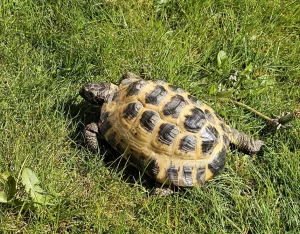
Chelonians like tortoises and turtles have scutes, thicker pieces of armor plating. Crocodilians also have these and you can see similar things on bird’s feet. These plates really do act like armour, but it is important to note that tortoises can feel you touching their shell, it’s not dead tissue and it’s not detachable.
To Be continued
Next week we’ll continue in this topic by looking at more specialised features including feathers, horns and antlers and how they function. After that, we’ll be looking at skin wound and healing.
Leave a Reply