Let’s talk about storytelling in gaming. A lot of video games tell a story in some fashion. These stories can be extremely simple and linear, or they can be massively long and complex. One of the more important aspects of video game stories is that you, as the player, can ‘choose your own adventure.’
Who remembers the ‘choose your own adventure’ books? Where you made a decision at the bottom of the page, and the book told you to turn to a specific page. Thus you got a different story every time based on making different choices. This is how most video game stories work too. It is something players value, especially in role-playing games and narrative focused action games.
Why Story Matters
Just like watching a movie or reading a novel, a compelling and engaging story makes a huge difference in games. After all, if you make a video game, presumably you want people to buy it and play it. So you need to keep players interested and engaged to keep them playing your game.
People play video games for much the same reason as they enjoy reading fiction or watching movies and TV shows. They want an experience, an escape from their real lives for a while. The main difference is that gamers are actively involved, controlling the protagonist’s actions and making decisions.
If a story is boring, or seems like nonsense, this breaks the immersion and the player loses interest. They may stop playing, and probably won’t buy the sequel. So it’s important that narrative driven games have a storyline that players want to follow. Of course, some games like Tetris don’t really need a complex plot.
Mundane Simulation Games
There has been a huge rise in simulation games in recent years. It’s fascinating that games where you repeatedly carry out a mundane task have become so popular. As an example, Power Wash Simulator, developed by FuturLab and published by Square Enix, has overwhelmingly positive reviews on Steam. Unsurprisingly, the point of the game is to power wash things and clean them.
There is a story, a simple one but it’s enough to flesh out the game and make it feel interesting. You are opening a power-washing business and you start by cleaning your work van. You then get new jobs after each one you take on, and during the jobs you get text messages to add a little flavour. There’s an upgrade system, where you spend money you’ve earned on buying better power-washing equipment and clothing. So it sounds boring and mundane, you’re just power-washing things, but its very relaxing to play and satisfying to clean up all that dirt. Little bits of flavour text allow you to get to know the world of the game and keep it interesting. So it’s clear that you don’t always need a big complex storyline to keep players interested.
The House Always Wins, because House is determined to make sure he does. As we work with Mr House, we can question him about his plans for the future. He explains that he will use the additional power from Hoover Dam to further improve his technology. He wants to be an autocrat, the Chief Executive of the Free Economic Zone of New Vegas. Eventually, he wants to send humans out to colonise other worlds.
Give me 20 years, and I’ll reignite the high technology development sectors. 50 years and I’ll have people in orbit. 100 years, and my colony ships will be heading for the stars to search for planets unpolluted by the wrath and folly of a bygone generation.
Robert edwin house, 2281
The NCR will fail, in his mind, as all democracies do. He does not want to be worshipped as a god or have absolute control over people. He wants to use Vegas to fund his plans. The dam is essential for its power, which he will still supply NCR with, for a price.
The Courier must eliminate the Brotherhood of Steel, as House knows they will not tolerate him or his work. The Omertas have dangerous plans, so an intervention is essential. Other than that, House is happy to leave things as they are. The Boomers are valuable allies due to their weaponry, so getting them on side is also helpful.
You’ll Know It When It Happens
On top of a couple of easy tasks, installing override chips in substations and whatnot, there’s a problem. President Kimball, president of NCR, is due to visit Hoover Dam. House knows that there’s a high chance the Legion will attempt an assassination. House needs Kimball alive, because he will be blamed when House ousts the NCR from the region. If Kimball is dead, NCR will blame House and the citizens won’t visit and spend their money.
Mr House has a real ability to assess statistics and anticipate what will happen. These projections allow him to plan and manipulate things to his liking. We must stay on side with NCR until the last moment. Only once the Legion are dealt with, will House inform the NCR of the terms of their surrender. His army of Securitrons don’t leave much room for argument.
What Happens When The House Wins
House plans to fix up the monorail to the Strip and get it working on time. The ending slide states that the Securitron army took over both the Dam and the Strip, pushing out both the Legion and the NCR. Mr House continues to run the Strip in his own way. The streets are described as being ‘orderly, efficient and cold.’
The Courier lives a life of luxury at the Lucky 38, although the description varies based on your karma level. House is proud of a good karma Courier, while he fears an evil karma one. He sends Victor to Goodsprings as a gift, and as a spy. Other companions and factions may have different endings depending on the side quests completed.
House is very upfront about his intentions and while there is clearly some benefits to his rule over Vegas, there are also downsides. Ultimately he is still all about making a profit from people. He doesn’t want to control every aspect of peoples lives, but he wants a monopoly over technology and resources. That’s why he wants rid of the Brotherhood of Steel.
You can see the ending on my YouTube here.
Conclusion
Thanks for reading. I had never finished a Mr House ending before making this series on YouTube and here. It was interesting, and I enjoyed getting to know this man a little more. Given his inclusion in the TV show, I’m hoping we’ll find out more in Season 2 of that as well. What do you think about Mr House? Was he a good choice for leading New Vegas forward? I’d love to hear what you think.
To see the in-game details, you can find my videos on my YouTube Channel. Next up we’re going to be covering the Legion side of things. This should be interesting, as the Legion are the ‘bad guys’ in New Vegas, but there’s more to them than first meets the eye. So hopefully you’ll join me for that. If you’re interested in reading more, I’ve already covered the Independent ending, here.
This is the series of quests Mr House gives you in Act 2 of Fallout New Vegas. So what does “the house always wins” actually mean? It’s a phrase that is often used around gambling, especially gambling in casinos. So thematically, it fits well with a game set in Vegas. It means that no matter how much you might win in a casino, the ‘house’ will still make more money than they lose.
It’s true. Owning a casino is extremely lucrative, people spend hours feeding money into slot machines, buying chips and losing at roulette. Casinos employ a number of techniques to keep you playing as well. I’ve been to Vegas and I noticed that you couldn’t really see windows or doors from the casino floor. There were no clocks either. This means you don’t notice the passage of time.
They also bring you free drinks, as long as you keep playing and tip the waitstaff. Every win you get, no matter how small, gives you a hit of dopamine. Dopamine is the neurotransmitter that is like a reward, so it compels you to keep playing to win more. It’s no wonder that gambling addiction is a thing that can ruin someone’s life.
What About Mr House?
Robert Edwin House was born on the 25th of June 2020, making him 261 years old in New Vegas. He was orphaned at the age of 2 when his parents were killed in a freak accident. His half-brother Anthony cheated him out of his inheritance. He went on to study at CIT (Fallout’s version of MIT) and founded RobCo in 2042, to astounding success. By 2050, he was worth $30 billion.
Mr House is of the old world. Before the bombs, he was an extremely successful businessman and engineer. His technology was used all over, and really stands the test of time. Think about how many computer terminals and Pip-Boys are still functional, over 200 years after the bombs fell.
Mr House is from Vegas, his brother ran a tool factory in the area. Anthony House stole the inheritance from Robert, and became extremely paranoid. He clearly loves the city and the profitability of having casinos, even in the post war world. He needs this profit to realise his dreams for the future of humanity.
House’s Plan To Win
If you work with House, you will eventually learn about his intentions and his long term plans for Vegas. His plan is to eventually have people going into space and colonising other worlds. He wants to set up a tech autocracy with him at the head, as a chief executive. House does not intend to control every aspect of peoples lives nor be worshipped as a god.
“The city’s economy is a blast furnace in which can be forged the steel of a new rail line, running straight to a new horizon.”
Robert house, 2281
He thinks the NCR is doomed to fail because it is a democracy that is emulating the old world. That is a good point, as clearly the pre-War world failed, or else the nuclear apocalypse wouldn’t have happened. He does believe himself immune to corruption, which is an interesting take.
“If you want to see the fate of democracies, look out the windows.”
If you ask a lot of questions, you do learn quite a bit about House. He is shrewd and strategic. He understands politics, he understands people and he understands money. All of this on top of his tech abilities.
RobCo Technology
It’s clear that Mr House is a genius when it comes to technology. There is a huge list of products made by RobCo that you can find all over the Wasteland. I’ll link to the list here, but it includes the Pip-Boy, the Protectron robot, computer terminals and Liberty Prime. A portrait can be found in Camp Golf, of House standing in front of Liberty Prime, or a prototype.
He has also created a life support system that allows him to control his network. This has kept him alive since the bombs fell. He doesn’t have access to the secret bunker at the Fort, nor Hoover Dam. This is because he needs the Platinum Chip the Courier was supposed to deliver. The chip was meant to reach him in the afternoon of the 23rd of October, 2077… So it didn’t make it since the bombs fell that same morning.
House had predicted the nuclear war would happen, and he had made preparations to protect Vegas from the nukes. The chip contained the upgrade for the operating system, needed to prevent all the nuclear bombs from hitting the city.
Post-War
House still managed to protect Vegas from most of the bombs. But this put a massive strain on the system without the OS upgrade. He had to struggle with reduced power and system inefficiencies, even spending a long time in a coma. Yet, he got through it and woke up in 2138. He waited and planned, holding on until the right moment to reveal himself.
This happened in 2274, when his Securitrons rolled out of the Lucky 38, after the NCR finding Hoover Dam. House recruited three tribes living in Vegas and they became the Three Families, rebuilding and running casinos on the Strip. He signed a treaty with the NCR, granting them McCarran Airport and protecting the Strip.
At one point, House offered a gamble to the dwellers living in Vault 21, the Vault directly under the Strip. The experiment there was to resolve all issues and conflicts with gambling or games of chance. House won the gamble and took ownership of Vault 21, stripping it of technology. He intended to fill the vault with cement. Sarah Weintraub convinced House to leave the top section of the Vault and allow her to run it as a hotel.
All the while, House was still searching for the Platinum Chip. Eventually it was found in Sunnyvale, and the Mojave Express was contracted to deliver the chip to the Lucky 38. Five other couriers had packages of related items, like a pair of fuzzy dice. This was to mask the importance of the Platinum Chip.
Ain’t That A Kick in The Head
Once again, the chip was delayed. This time it was the leader of the Chairmen, one of the three families, Benny. Benny found out about the chip, and used a modified Securitron to get data from the system. So caught the Courier, shooting them in the head and burying them in a shallow grave in Goodsprings.
House found out from Victor, a Securitron House planted as a spy and was angry that Benny had betrayed him. Yet he waited, and watched to see if the Courier would take revenge and get the chip back. He is keen to work with you if you succeed.
If you don’t want to work with House, then you will end up killing Mr House or disabling him. NCR and the Legion want House out of the picture and disconnected from his network. Yes Man needs to be installed on the network, so again you must kill or disconnect House.
If you kill him, you will receive a note titled ‘A tragedy has befallen all mankind’, which is House’s obituary. He has written it himself. It’s not finished, because he doesn’t think he’ll need it any time soon. It’s a long one, and very arrogant, even stating that he is mankind’s only hope of long-term survival.
Thanks for reading. Next time we’ll dig into Mr House’s plans for some of the smaller factions and what he makes you do. Hopefully you’ll join me for that. I’ve got coverage of the Mr House Act 2 and 3 on YouTube, so you can find that here.
One method of indirect storytelling in games involves finding bits of lore in the world. Examples include notes or voice recordings. Books, journals and emails on computers as well. This lore is not essential to the story, only giving background and additional details. This makes the world seem more real and adds interest to the game.
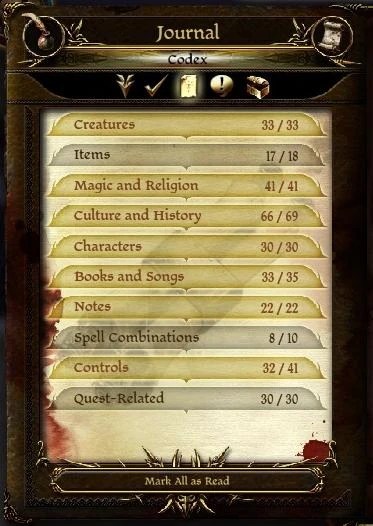
It can be handled in different ways. For example, Dragon Age Origins has a codex where notes and books are recorded in your codex. You can read it at any time. This lore can lead you to secrets and side quests.
In Fallout, you store notes in your Pip-Boy on paper or holotape. They point to unmarked side quests. In the Elder Scrolls games there are books you can find and read, and store in your player home.
All of this expands on the history and details of the game world. It’s usually optional but for players like me who love exploring and learning everything about the lore, it’s a huge part of the appeal of these games.
Side Quests
I’ve mentioned side quests a few times. So, what are they? Side quests are extra quests that are not essential to progress the main story. They result in extra small stories, and reward the player with experience points, money or items. They can also improve your reputation in games that have some kind of reputation system, which can affect other parts of the story.
For example, in Old World Blues in Fallout New Vegas, you can do a handful of simple side quests with the brains of the Think Tank. You can use your stats and skills to befriend all of the brains other than Dr Klein. You don’t have to, but if you do, it opens up the option of a peaceful resolution at the end of the main story. If the four of them are on side, you can talk Dr Klein down and avoid fighting them.
There’s a common meta joke about video game protagonists being overly helpful. That every time you visit a new town, you go around and fix all the problems of the people in that town. A lot of RPG gamers are completionists who want to get everything that the game has to offer and will spend hours avoiding the main plot. Side quests and side stories improve immersion too, as the player is spending more time engaging with and learning about the game world.
Thanks for reading. Next time we’re going to explore environmental storytelling and other ways games use indirect storytelling methods. Don’t forget to subscribe to get an update every time a post goes live!
Welcome to my in-depth review of Episode One of Fallout. The first episode of Fallout on Prime has a lot of heavy lifting to do. Obviously a lot of the audience will be fans of the game, that’s a given. However, there’s going to be a lot of viewers who don’t play games and are unfamiliar with the universe of Fallout. This means that the first episode has to introduce the world, its history and the setting. As well as that, it must introduce our main characters, tell us a bit about them. It must set up the inciting incident of the new story it’s going to tell.
Fallout has a divergent timeline to ours, from the 1950s, where technology moved in a different direction. It focused on harnessing atomic energy. Resource wars came to a head in 2067 and the US spent a decade fighting against China, before the bombs fell on the morning of the 23rd of October, 2077. The TV show takes place in 2296, almost 220 years after the bombs fell. That’s a lot of history to cover.
Of course it would be easy to fall into the info-dump trap and spend an hour explaining everything that happened. Get Ron Perlman to read a summary of the history of Fallout. His voice is great, but this would probably turn off viewers, especially those who know the lore well and those who are just watching to see what it’s about. Instead, the show does a great job of introducing this world and gives us enough to start reaching some conclusions about what is going on. It does not overload us with information.
The Prologue: The End
We begin with “The End”. An odd place to start, perhaps, but the Fallout universe is post-apocalyptic science fiction so of course it begins with the end of the world. We open on a kids birthday party, with a man dressed as a cowboy showing off some rope skills and posing with a horse. Immediately it’s clear that this isn’t our modern world, the TV is not in colour and looks old. The fashion looks dated as well, very much 1950s style. Yet we see a domestic robot ready to serve.
War and Nuclear Attack Fears
Fallout has a very 50s “World of Tomorrow” vibe with clothing and music, which I love. We can see that the technology is more advanced than what we have in some ways, but it is also behind in other ways. We also get little hints about the war and fear of nuclear attack. Which the mother quickly hides by turning off the radio and changing the TV channel.
“…negotiations were scheduled to continue today as the White house had no comments about the President’s whereabouts.”
Radio announcement heard in the opening of Fallout on Prime
We hear this just before the radio is turned off. It’s clear that people are asking where the President is, and are not reassured by the lack of any comments from the White House.
“… between America and her adversaries crumbled this morning in Anchorage, Alaska. The spectre of nuclear war facing this nation for ten long years is finally…”
News on tv in opening of Fallout on Prime
One would assume the above quote ends in ‘over’ but the TV is turned off by the mother before we can hear the rest of it. Later, the weather anchor on TV stops his report, saying “I can’t do the weather when I don’t even know if there’s going to be a next week.” The mother mentions only thinking happy thoughts today and changes the channel for the kids to watch “Grognak the Barbarian”. Yes, that’s a Conan reference, Fallout is full of references and easter eggs to other media.
There is forced cheerfulness but there’s clearly concern about the future and the outcome of the long war with China. Everyone’s drinking and celebrating, socialising happily. Watch how quickly it changes when the first shockwave hits and the host refuses to let anyone other his own family into the fallout shelter under the house. He punches the other man, their friendship dissolving suddenly in the face of nuclear devastation.
Cooper Howard
We also learn a bit about the cowboy entertainer, Cooper Howard. His daughter Janey is helping him at the party. The dads mutter about him working birthday parties because he has alimony to pay. This indicates he is separated from his wife or going through divorce. He refuses to do the ‘thumbs up’ gesture he’s apparently famous for.
One of the men calls Cooper a ‘Pinko’, a term I had never heard of. It was used a lot during the Cold War in the 60s. It’s a derogatory term for someone that is left-leaning, socialist or light communist. Red is the colour we all know is associated with communism. We can deduce that there’s a lot of anti-communist feelings, due to the war against China, a communist country. So, a ‘Pinko’ would be like diet communist, or commie-lite.
Thumbs Up: Why Didn’t You Do It?
Janey asks her dad about the thumbs up gesture, and he reluctantly explains. The idea is, if you see a mushroom cloud from a nuclear bomb, you hold up your thumb. If the cloud is smaller than your thumb you are safe and should run in the opposite direction. If the cloud is bigger than your thumb, don’t waste your energy running. This isn’t accurate, but the advice gets around. Cooper mentions being told this in the Marines, so we also know he’s a veteran.
We see Cooper on his horse, with his daughter heading for the hills while the other guests panic and flee. It’s a great opening, in my opinion. It tells enough about the state of America at this point in time and shows the end of the world. It doesn’t get bogged down in all the details or dump a megaton of exposition.
There’s a lot of fun little easter eggs for game fans though. Such as Nuka Cola and Sunset Sarsaparilla bottles on a table. We see Grognak the Barbarian and the Ruby Ruins on TV. Of course, it’s also easy to assume that this was just an introduction to the universe. Of course all the people in the opening will be long dead when we’ve moved ahead 219 years. Keep that in mind.
Lucy: Vault 33
Lucy spends a bit of time introducing herself, essentially reading out her resume over the top of scenes of her life within the Vault. We can see everyone wearing the same blue and gold jumpsuits. There’s no long explanation of what the Vaults are, but we find Lucy is looking for a husband, but cannot marry anyone in 33 as she’s related to all eligible bachelors. There’s a Triennial trade with Vault 32 which is not really explained either.
“My reproductive organs are intact, my hygiene well maintained and yet I have been unable to find a suitable marriage partner. At least one I’m not related to. And we have rules about that for a reason.”
Lucy MacLean, Vault 33 Dweller
This highlights an issue with all of the closed off Vaults and any isolated community of people. Eventually without new blood coming in, the group will either need to engage in incest or die out. The Vaults are supposed to keep humanity alive to recolonise the surface when they deem it safe to do so, after all. They want heterosexual marriages to ensure ongoing population management, but obviously do not want to risk inbreeding. So they have this trade program where a ‘breeder’ can be traded to another vault in exchange for resources such as seeds and machine parts. Like a dowry, I suppose.
There is obviously some incestuous relationships going on, as we see from a few comments Lucy makes and a conversation with Chet, the gate manager. Chet is Lucy’s cousin, so they can’t marry, although he confesses he loves her and it seems everyone knows this. Lucy responds in an interesting way:
“Messing around with your cousin, it’s all well and good for kids, but it’s not a sustainable long-term sexual practice, you know?”
Vault 32 Meeting
They meet with the dwellers from Vault 32, which is connected to 33 by a tunnel leading from the farm area. They look a little different, if you look closely at them. A bit less clean-cut than the Vault 33 folks, and more scarred. It’s unclear if anyone notices this, but the eagle-eyed viewer might get the hint something’s amiss. Especially when they’re seated at the wedding reception and intermingled.
Lucy’s brother, Norm, has definitely got a high Intelligence stat. He says nothing, but it looks like he suspects something is up. Even as Hank talks about what might be on the surface, as he explains that Lucy’s kids will be able to recolonise the surface. This is what the dwellers know, that they keep a population going through the generations for Reclamation Day, when they will go up to the surface and recolonise it.
This is reflected in Lucy’s first conversation with her new husband. Again, it’s quite an odd one for a blind-date arranged marriage. She opens with “What’s your sperm count?” before going on to point out that “sperm is pretty important in perpetuating America.” It’s kind of laughed off and brushed aside.
Wedding Gifts and Hand-Me-Downs
Indeed when she shows Monty to their new living quarters, she talks about the hand-me-down items they’ve been gifted, such as a blender. You will also notice that she writes her name and the date on the inside of the wedding dress. The Vaults have limited space so there’s no room for large scale fabric manufacturing or fashion boutiques.
A lot of things are hand-me-downs in the Vaults. We see this in Fallout 3’s opening too, when you attend your 10th birthday party and receive a Grognak the Barbarian comic book from Amata. She proudly states it has no missing pages and that she got it from her father’s old things. Nobody in Vault 101 is writing and printing new comics, so most non-food gifts must be like this. The same would go for things like wedding dresses.
Back to Lucy, she is clearly not shy when it comes to sex and seems quite content. It’s only afterwards that she begins to suspect all is not as it seems. When Monty acts a bit odd, like wiping himself on the curtain (which is gross and weird). When he uses the blender as a glass for water, she gets up and grabs her Pip-Boy. This is a wrist mounted computer that has many functions, one of which is a Geiger counter.
Lucy Is A True Fallout Protagonist
The thing I like about Lucy is that she isn’t a damsel in distress. She’s a positive and kind person, for sure, but when Monty attacks, she doesn’t hesitate and is quite capable of fighting back. She’s smart and resourceful, making good use of the aforementioned blender to fend him off. She will kill and injure if she needs to, and that qualifies her to be a Fallout protagonist.
Wounded, she grabs a stimpak before going to help the others against the raiders. She goes straight to the armory, but she grabs the syringer and gets to work, knocking out a handful of raiders. She’s willing to fight for her family and her vault.
Gratuitous Violence Is Essential In Fallout
Viewers might find the violence graphic and over the top, if they haven’t played the games. It is. Absolutely. Which is how it should be in Fallout. The classic games had some comical death animations and a dark sense of humour with the descriptions of combat outcomes. In the modern games, you have the hilarious death cameras and the Bloody Mess perk.
I especially enjoyed the scene with Chet and the raider, who charges at him. Chet lets the door close on said raider, which obliterates him in spectacular fashion. It’s brilliant and very Fallout. This gratuitous violence juxtaposed with “Some Enchanted Evening” by the Castells.
That’s the essence of playing Fallout, over the top violence with some classic 50s music in the background! Then we get to our inciting incident for Lucy’s story. Lee Moldaver, who led the raiders into Vault 33, takes Hank MacLean with her by force. This is a typical Fallout plotline. You lose something important, a dad, a child or a platinum chip.
Maximus: The Brotherhood of Steel
We go to meet our next main character, Maximus. It’s obvious that this group are military of some kind from the uniforms and dogtags. There’s clearly some bullying going on as well. Immediately there’s some hints of indoctrination when Dane says “Flesh is weak but steel endures.” This is a phrase they clearly hear and say often.
Game fans will know quickly that this is the Brotherhood of Steel we’re dealing with, and clearly some kind of training facility. It’s unclear where this is but they’ve obviously either built or taken over a military base. The aspirants are sitting in a lecture, where the Scribe spells out what the Brotherhood are without excessive exposition. They collect, study and protect technology.
Once the Prydwen arrives and we see the Knights in their Power Armor, the usual flashy show of force the Brotherhood are so fond of, we know something’s going on. Aspirant Dane is summoned and chosen to be a squire to Knight Titus. They seem excited to be going on this mission, and we see that Maximus is angry and jealous of them. (The character is non-binary and they/them pronouns are used in the show, even the Brotherhood can respect pronouns without drama. So you can do it too.)
The next morning, Dane has been injured by razorblades stuck inside their boots. This is a real thing used as a bullying/hazing tactic. Maximus is dragged off and blamed for this. We cut away before it’s clear what is going to happen to him.
Back to Vault 33
Vault 33 efficiently clean up the mess of bodies, blood and damage from the raider attack. Lucy is treating her stab wound with a skin stapler, which is odd as the Vault should have a doctor but it does show she’s tougher than she might appear.
The surviving vault dwellers hold a meeting, but nobody wants to hear about going to the surface to look for Hank. Norm tells Lucy that the council don’t want to find him, because they like being in charge. Lucy resolves to go out and find her father, getting Norm and Chet to help her get to the Vault’s external door. Again, this is a defining moment from the games, when you leave the starting area.
It’s also a defining moment for Lucy’s character arc. She’s never been outside Vault 33 before, so she has no idea what to expect. It takes guts to venture out into an unknown world like this. As part of the heroes journey in any story, a key point is when the protagonist makes the choice to follow the thread of the story. A decision to pursue their goal. This is that moment for Lucy, and she is off to explore the wasteland. We see in the distance a Ferris wheel on a pier and can deduce that Vault 33 is located in Santa Monica.
There’s a sweet little moment when Lucy and Norm hug before she leaves the Vault. It’s clear that family matters to her. Even though Norm seems uninterested in most things, he obviously loves his sister. It’s lovely to see, because the rest of this segment shows a very clinical approach to the aftermath of such a violent incident.
Outside the Vault
Lucy steps outside, blinded by the strong sunlight. This is again a callback to the games, as a similar thing happens at the beginning of Fallout 3, Fallout New Vegas and Fallout 4. It’s almost a cliché now. The first thing she sees on the ground is bones and skeletons. Human bones. Plenty of other debris and stuff as well, but it again serves to highlight that millions of people died in the Great War.
The Vaults were only able to save about 0.1% of the population of America. Millions died on the surface. There are many fun and comical moments in the games and in the show, but there’s a lot of darkness too. A large number of skeletons are outside the Vault door at 33. You see the same in Fallout 3, outside Vault 101. Skeletons, with picket signs saying “Let us in, assholes,” and “We’re dying.”
The opening of Fallout 4 is similar. We start in the Pre-War and run to the Vault. We pass a group of people, your neighbours, who don’t get in. Not even the sales rep gets in. You get in and your spouse asks what’s going to happen to those people outside the gate. The answer? They’re going to die. Brutal, but that’s the truth. Sure enough, when you leave Vault 111 again, there’s a bunch of human skeletons lying around near the gate.
Lucy looks around, and steels herself for the journey ahead. She has no idea where to go, but her optimism is enough for now. She’s determined to find her father. She chooses to keep going.
Maximus, Again
We then cut back to Maximus, who is being interrogated and threatened with execution. We get a bit more of an idea about what the Brotherhood are like. Maximus ends up being given Dane’s position as Squire to Knight Titus. Which he’s quite happy about. An interesting quote from the Scribe (I’m assuming Head Scribe but we don’t really know who he is).
“Violence is merely a tool. We use it to bring order to the wasteland. But violence against a Brother of Steel is a sign of weakness.”
This tells us plenty about what the Brotherhood believe and how they view violence. They seem to have become even more cult-like since we last saw them. The branding ceremony and everything seems to be new. There’s incense and ceremony, which really feels like zealotry or religious fanaticism.
They are taking orders from the Commonwealth, which is the area around Boston in Massachusetts. So quite far away, and it does suggest that the East Coast chapter are now working with the West Coast chapters of the Brotherhood. They had separated in 2277 in Fallout 3, but when Arthur Maxson took over and brought the Brotherhood to the Commonwealth, things had changed. It’s interesting and I’ll talk more about this later.
The mention of the Enclave prompts one of the aspirants to ask if the Enclave is real. The Enclave came from remnants of the US Government, and have been defeated a couple of times in the games. The Oil Rig was destroyed during Fallout 2, with only a handful of the remnants living in the Mojave area by 2281. Raven Rock and Adams Air Force Base would have been destroyed by the events of Fallout 3 and Broken Steel. We’ll see a bit more of them in the next episode.
The Ghoul
A new location. It’s unclear exactly where this is, but Honcho mentions California, suggesting they are not in California. Even so, he knows of Lee Moldaver, she did say that everyone knows who she is. Except us, but we’ll learn more about her later. These three men dig up The Ghoul, and this might be a new viewers first time seeing one.
Ghouls are irradiated humans, instead of dying of radiation sickness, they have mutated. This causes some physical deformities, loss of skin, noses and hair, but they are healed by radiation and live extended lifetimes. Some ghouls end up with too much damage to their brains and become ‘feral’, mindless and aggressive to anything non-ghoul around them. It also seems that eventually all ghouls will become feral as time goes on. I’ll get into the ghoul ecology eventually in detail.
The Junk Jet – A Classic Fallout Weapon
It’s funny to see the Junk Jet being used with doll parts as ammo. This is a game reference, unsurprisingly. In Fallout 3 you could get schematics to make a weapon called the Rock-It Launcher, which used miscellaneous items like books, pre-war money and garden gnomes as ammunition. You could even fire cutlery and dishes from it. In Fallout 4 there’s a similar weapon known as the Junk Jet which let you fire junk items. Not the best weapon, but certainly highly entertaining to use garden gnomes to kill people.
I was also amused at the bit about how feral ghouls can’t abide chickens. I have no idea where this comes from. There’s not a lot of instances of chickens in the games and when there is, any feral ghouls seem to attack most things equally. I guess it’s just a funny bit, especially when The Ghoul picks up the chicken and the guys panic. I assume he just overheard their conversation before they dug him up.
We get some more gratuitious and over the top violence, which shows us that The Ghoul is really quite skilled in combat. He doesn’t give much away but seems angry that Honcho knows where he’s from, ‘originally’. This is alluding to who The Ghoul was before he became a ghoul, i.e. before the war. Most of the ghouls you meet in Fallout were alive before the war.
Who Is The Ghoul?
We still don’t quite know who The Ghoul is, unless you are astute and recognise Walton Goggins eyes and voice! Sure enough, he says a line that is a callback to the very opening of the episode.
“Us cowpokes, we take it as it comes.”
Indeed, this is Cooper Howard. Missing his hair and nose, his voice a bit more rough perhaps as well. Now we know, the opening wasn’t just a show of what happened when the bombs fell. It is important to one of our main characters. Cooper is still around, as a ghoul. We know he had a daughter, and a wife at one point. We know he was famous pre-War, and a veteran.
My Overall Review of Fallout Episode One
Overall, I love this episode. I think it really gives just enough information for newcomers to the series to grasp what’s going on, while still giving a compelling start to the new story. We get some background details and some good foreshadowing. There’s no huge exposition dump, which would run the risk of being boring and putting viewers off. But there’s also lots of little hints and references for fans of the games to notice.
I love the three main characters. They are definitely fitting into the good, neutral and evil karma archetypes, which echoes the karma system from the games. In Fallout 3 and New Vegas, you have a karma level which changes based on your actions. You lose karma for stealing and murder, and you gain karma by helping people or giving to charity. The classic games had a reputation system too so people would know if you did something horrible and wouldn’t trust you.
The Three Karma Archetypes
Lucy is optimistic and clever, but she’s not completely incapable of fighting or killing if she has to. After all, every single mainline Fallout game lets you play as a male or female character, even the first game from 1997. We’re not going to lean into the sexist ‘damsel in distress’ who is too dainty to get blood on her hands or afraid to defend herself. The wasteland is an unforgiving place, full of dangerous creatures, dangerous people and dangerous environments. Lucy may be naïve about the surface, but she’s not incapable.
Maximus is the neutral karma character, he’s clearly having a tough time with the bullying and whatnot but there’s definitely some selfishness there too. He says he did not cause Dane’s injury but asks if he was wrong for wanting it to happen to them. Considering they are the only person who acts friendly towards Maximus, it’s quite horrible to wish them ill, you know? Yet, Maximus gets what he wanted in the end. That’s the definition of the neutral karma, a very mercenary approach where you do what benefits your own goals first before thinking about others.
The Ghoul is the evil karma character. Does that mean he’s a bad guy? Kind of. He’s clearly got his reasons and his motivations, which we will learn about through the series. He has no issues with killing or injuring people to get what he wants. He’s savvy and skilled, and he’s opportunistic. Is he the kind of guy that would detonate the bomb in Megaton? Yeah, I think he is, if it would get him closer to his goals or benefit him in some way to do so.
Thank You For Reading My Review of Episode One
If you want more information on the Fallout universe, subscribe below. You can also find videos on my YouTube channel covering a lot of the worldbuilding and storylines from Fallout. You can see my playlist on the Vaults here. For more articles on writing and on Fallout, check out my latest posts here.
Fallout has been out for a while now, therefore it’s long past time for me to share my thoughts. Did Bethesda retcon Fallout New Vegas? I’ll be answering this question with my thoughts. This is a general review of the series and a discussion of the “retcon” of Fallout New Vegas and controversy among certain groups of Fallout fans. It does include some discussions of lore from the games and my opinions on the supposed retcon of Fallout. I will follow it up with an in-depth review of each episode.
The Official Poster for Fallout on Amazon Prime
This is a new medium for the Fallout series, and the latest in a long line of adaptations of video games. Video game adaptations have varying levels of success, from the questionable Street Fighter movie (a guilty pleasure of mine even if it is terrible) to The Last of Us. Fallout has been around for a long time and has millions of fans across the world. Be warned, there will be heavy spoilers ahead in this detailed review. If you’ve not watched yet, firstly, why? Secondly, go do that then come back to me.
Finished Watching? Great!
We all know adaptations can be very hit and miss, especially for established fans. Look at the MCU, the Deadpool movies, DC Universe and the X-Men movies. I’ll never forgive the hours spent in the cinema watching Batman V Superman. Lots of people are called Martha, it’s not that deep. I really wish for a specific amnesia that would just remove that experience from my brain.
Anyway, the point is, when the show was first announced, I was cautiously optimistic about it. I love the Fallout series, if you haven’t already guessed by now. I was excited for this new kind of Fallout story, but there was a risk of it being a disaster.
I’m a huge fan of Cats the Musical, I have been for 20 years. Yet, I still have not been able to bring myself to watch the 2019 CGI movie. I mean, if Andrew Lloyd Webber hated it, what chance did I have? So, I was worried about the same thing happening to Fallout.
Luckily, it didn’t happen. I loved every minute of it, and I firmly believe it fits in nicely to this universe. Now, I am aware of the supposed “retcons” and I don’t agree that they even exist. It’s certainly possible some people are unable to understand the difference between implications and stated facts. I’ll get into this, as it comes up.
The Chalkboard: A Retcon Or Not?
Chalkboard in the Classroom of Vault 4
I think some people who are criticising the show don’t seem to have watched it and are simply parroting the same statements they’ve heard elsewhere on the internet. You know, the “Bethesda hates New Vegas and they have completely ruined the story of New Vegas because it says 2277 on the chalkboard.” Apparently, they missed the arrow leading from 2277 to the mushroom cloud, meaning the explosion took place sometime after 2277.
Todd Howard has confirmed that the nuking of Shady Sands took place after the events of New Vegas. Remember that the show takes place in 2296, which is 15 years after New Vegas and 9 years after Fallout 4. A lot can change in such a time frame. A lot can change in a month. Literally every Fallout protagonist drastically changes part of the Wasteland in the space of a few months.
Obviously some of this is open to interpretation by viewers and fans. Guess what? That’s on purpose. Any good storyteller knows to omit certain details and let the audience reach their own conclusions. The NCR were not in great shape after the events of New Vegas, even if they got to keep the Dam. We don’t know exactly when the bombing happened, nor do we know how old our two non-ghoul protagonists are.
Characters and Karma
Fallout 3’s Karma Icons
On to my overall thoughts. As I said, I loved it and have watched it several times since April. The story is interesting, and the three main characters are brilliantly written. I saw someone mention how each of them represents different Karma archetypes from the games, and I wholeheartedly agree with this interpretation.
Lucy being the good karma, Maximus the neutral karma and The Ghoul the evil karma. They each have their own motivations and intentions, and their interactions over the course of the series really work. I love how Lucy is naïve about how the wasteland works and she struggles with how selfish people are. I love how naïve Maximus is about things like sex, clearly the Brotherhood don’t bother teaching their aspirants sex-ed.
The Ghoul is obviously not naïve about anything, but he’s got a couple of centuries of experience on the other two. He’s been through the wringer and around the block a few hundred times. He’s clearly fighting off the feralization process, more successfully than many other ghouls. Sure, he seems to keep a good supply of these ‘vials’ to stave off the process but I think there’s more to it than that. We’ll get into the details later.
NCR and The “Fall Of Shady Sands”
NCR Sign From Ranger Station Charlie, Near Novac
We can see that things haven’t gone well for the NCR, especially once we learn of the fate of Shady Sands. Again, this isn’t a retcon, because NCR was doomed to fail. Caesar thought so, Mr House thought so, Chief Hanlon thought so and Ulysses thought so too. NCR wasn’t this perfect utopia of democracy where everyone was happy and there were no issues. We know this, you can’t avoid hearing how exhausted and war-weary the NCR army is.
“Patrolling the Mojave almost makes you wish for a nuclear winter,” is Fallout’s “I used to be an adventurer like you, then I took an arrow in the knee” meme. Get too close to a large group of troupers and you’ll hear an entire chorus of the line. These soldiers are tired. The NCR bases across the Mojave are not doing well. It’s obvious in New Vegas to almost everyone but the NCR brass, that they have bitten off more than they can chew.
There are issues back home, corruption and bribery from the brahmin barons. Unrest and dissent, because citizens are beginning to chafe under the investments made in the name of holding the Dam. Mr House is so determined to make sure President Kimball survives his visit to the Dam because if he is assassinated, then House will take the blame for NCR losing the territory and NCR citizens will not come and spend their caps.
The Fall of Shady Sands
That means, to my mind, that the “fall” of Shady Sands is pinpointed as the point where political and social issues reached the point where the nation state of NCR began to fail. It really doesn’t matter what happened at the second Battle of Hoover Dam, even if the NCR won that fight, it’s entirely feasible that something happens afterwards that cements the downfall of Shady Sands and the NCR.
Then of course, Hank MacLean comes along and wipes the city from the face of the earth and really cements the end of Shady Sands and NCR. This isn’t a new concept either, and all it takes is a visit to Camp Searchlight in the Mojave. Or Megaton after an evil Lone Wanderer is done with it. Or the Institute once the Sole Survivor is done destroying it. The Courier can literally nuke both NCR and Legion at the end of Lonesome Road.
Vault-Tec – Did They Drop The Bombs?
Vault-Tec Bilboard as seen in Fallout 4
With that in mind, it’s not outside the realm of possibility that a Vault-Tec junior executive knows how to get his hands on some nuclear weapons. Barb Howard clearly states that Vault-Tec is prepared to drop the bombs themselves. It isn’t enough to confirm that Vault-Tec started the war, but I interpret it as her stating that the company is willing and able to do it.
This means that Vault-Tec must have access to the means to start a nuclear war, so they must have stockpiles somewhere that their higher-ups know how to access and use. It’s clear that Vault-Tec have their own agenda and everything we learn proves that Vault-Tec see themselves as the only suitable leadership for humanity post-War. They want to be in control of everything and anyone who will not fall in line will be removed.
The Big Meeting With Investors
Robert Edwin House – CEO of RobCo
Some people are up in arms about the people present at the big meeting with Barb and Bud. I disagree, we know most of these companies have already got business relationships with Vault-Tec and government and military contracts. Rob-Co tech is used in all the Vaults. Vault-Tec has connections to Big MT, so Frederick Sinclair being present makes sense.
Vault-Tec is using their vaults to test out technology for space travel and colonisation of other planets, so working with REPCONN makes sense too. West-Tek are a big contributor to wartime tech, including the Power Armor and FEV.
Additionally, we know that every experiment they mention took place in one of the Vaults. We know that Mr House has lofty goals in mind, using New Vegas to raise funds and start R&D with a view to launching colony ships into space. Cut and unused content from the cancelled ‘Van Buren’ project suggests the US Government and subsequently the Enclave had the same idea and the real purpose of the Vaults was to test different things to inform this plan.
It’s entirely possible that Vault-Tec took on Project Safehouse in order to secure government funding and support. They have their own agenda entirely which they did not share with the government. We see official instructions from Vault-Tec informing Overseers to only take orders from Vault-Tec and not US military or government personnel.
Vault-Tec absolutely could have been lying to the government and would have control over what systems the Enclave could have access to. They could easily have their own stuff hidden away and kept secret from everyone but the top level executives. That’s part of the interest, some stuff isn’t explicitly told so we have to figure it out ourselves.
Anti-Feral Serum Vials
The Ghoul – played by Walton Goggins
The other “retcon” I’ve seen is the anti-feral vials that The Ghoul uses and trades Lucy for. When we first see his grave, there are IV bags hanging above it. It’s not clear to me if they are supposed to be this substance, or if it’s just Rad-Away. Rad-Away is labelled clearly in Fallout 4.
There’s no cure or way to prevent ghouls turning feral in the games, so this is the ‘retcon’. It’s similar to the whole issue with Jet, invented post-War by Myron, according to Fallout 2. Fallout 4 mentions Jet existing pre-war. It’s possible that Myron rediscovered how to make it, or improved it. The anti-feral serum, only referred to as ‘vials’ in the show, does prevent the feralization process.
I don’t believe this is a true retcon, because we don’t know how long this substance has existed. The most recent installment of the game, Nuka World, features a story about park workers who became ghouls and eventually turning feral, one by one. Rachel leaves to find a cure, but fails, and kills herself before she becomes feral.
That doesn’t mean that nobody has discovered something that helps since then. Nine years is plenty of time for someone to discover it, especially a ghoul who has had a couple of hundred years to study organic chemistry and ghoul physiology. Maybe it’s been around a little while and hasn’t reached the east coast yet.
What Are Your Thoughts?
That’s my view on the supposed “retcons” that some people are complaining about. Based on what we know from the games, the TV show fits in nicely to my mind and is absolutely compatible with the lore of Fallout New Vegas. They haven’t even indicated which of the four endings is ‘canon’ and they probably won’t. It just bothers me when people keep repeating the same things without really looking at the facts that we can verify from the show, the games and other official sources.
What do you think? Did you enjoy the TV show? Do you think I’m wrong about the ‘retcon’ of Fallout New Vegas? As always, I encourage respectful discussion in the comments. To read more about Fallout New Vegas, I’ve got some articles discussing the story, starting here. To see where I’m getting my information from, I have a series covering the main story on YouTube, here.
Let’s talk about the Yes Man ending of Fallout New Vegas. The phrase “No Gods, No Masters,” really highlights the point of this ending. Your aim is to secure an independent New Vegas free of external rule. This means expelling both the Legion and the NCR.
The interesting thing about this ending is the flexibility. Siding with Yes Man gives the Courier the most freedom to handle situations and factions the way they want. Join the Brotherhood of Steel, or destroy them? Upgrade the Securitrons at the Fort or destroy them? Yes Man is a sycophant by design, so he can’t say anything negative about your choices, even if he wanted to.
Dealing with the Legion
Progress far enough with Yes Man’s Wildcard quests and you will fail “Beware the Wrath of Caesar” and the Legion will no longer work with you. More than that, they want revenge and will send hit squads after you. The Legion are not very tolerant of those who would work against them.
This means you will most likely fight the final Battle on the side of NCR, fighting against the Legion as you make your way across Hoover Dam. Eventually you will reach the Legate’s camp and prepare to confront the Butcher of the East. Here’s where there’s a problem.
You Must Have Frontal Lobe Damage
At the beginning of the game, you use a machine to set your SPECIAL statistics. Afterwards, Doc Mitchell will make a comment depending on your most extreme stat. For most players, it’s likely to be him muttering about you suffering frontal lobe damage, due to having the lowest possible Charisma stat of 1. There’s a reason for this.
New Vegas, like all the Fallout games, uses stat and skill checks to determine your success in certain actions. Things like pickpocketing, repairing a broken machine or convincing an NPC through speech checks. In Fallout 3, the chance to succeed was calculated using your Speech skill level and a Charisma multiplier, which means even with high skills and stats, there was a chance to fail the most difficult checks.
Along came New Vegas, where they got rid of the Charisma multiplier, so your chance to succeed was simply determined by having your skills above a certain threshold. This meant that Charisma is pointless. This is purely game mechanics, but it matters because you can still max out Speech at 100 points and pass any speech check in the game.
So you confront Legate Lanius, the Butcher of the East. A man so fearsome and violent, he turned on his own men when they refused to fight any more. And a Courier with the lowest possible Charisma can talk him out of the Mojave by telling him that NCR is too big for the Legion to hold, if they want to hold on to their territory to the East as well.
You don’t have to, of course, if you’d rather just fight him. But the thing everyone loves about this game is the freedom of choice at every turn. You can complete the entire game as a pacifist, killing nothing. You can kill every NPC in the game, except Yes Man. Killing Caesar does not stop you from completing the game on the side of the Legion. No, really.
You And What Army?
You’ve dealt with Legate Lanius, whichever way you chose to do so. The Legion will leave the Dam alone. Fantastic work. On your way out of the camp, the gate is blown off its hinges and a handful of NCR Rangers approach, along with General Oliver. Like Lanius, you have probably heard this guys name mentioned but you don’t meet either of them until the endgame.
General Oliver is impressed and wants to clone you to defeat all of NCRs enemies. Until you tell him that the NCR is not welcome in Vegas any longer and you will be taking charge of the Dam. Or, if you destroyed the Securitrons at the Fort, you will have sabotaged the Dam so nobody wants it. Yes Man appears behind the General, who is angry and threatens you. Again, you could fight, but the other option is to have Yes Man throw him off the Dam.
Afterwards, Yes Man tells you he found a software upgrade for himself, to be more assertive, so he’ll be out of commission for a while. You are left to see an ending slideshow of the outcome of your actions throughout the game. Every faction you had dealings with will get a slide, as will any companions you recruited. The ending they get depends on how you handled things.
The thing I like is that no matter what, no ending is 100% perfect. I find the independent ending the best for the Mojave, but there is still some chaos following the second Battle of Hoover Dam. Goodsprings also does well out of this ending. Others, maybe not so much, depending on what you chose to do.
No Masters – My Thoughts
For me, I like this ending the best for Vegas, as I said. The Legion are clearly the villains, and the NCR represents a society that is as vulnerable to corruption as our current society. Mr House wants to resurrect the Old World to his liking, resurrecting capitalism. A world he did very well out of.
The residents of Vegas don’t really seem to want an outside power coming in and taking over. The Dam produces far more electricity than Vegas needs, but if we allowed the NCR to continue to use it, would they demand more and more of it as their territory grew? At what point would we end up with a system where the power must be paid for, and private companies would start profiting and excluding people who couldn’t pay.
Both Legate Lanius and General Oliver state that this isn’t over, assuming you didn’t fight them. Clearly they have no intention of letting Vegas be, so there’s always a risk of another conflict. War, war never changes. Men do, by the roads they walk. The road has ended for this Courier, so next time we’ll be returning to the crossroads and venturing into Alternative Universe B, where we decide to side with Mr House.
Thanks for reading. If you want to follow along with me in the game, I’ve got full coverage on my YouTube Channel, which you can find below. The video that matches this article is here. I’m also working on some science episodes, covering Wasteland entomology. The first episode, covering Cazadores, drops tomorrow. I’d love it if you would check it out.
So we’ve got to the Strip and dealt with Benny. We have to think about who we want to work with and decide the fate of the Mojave. For the most part, each of the four options want us to deal with the same things, but in different ways. I’ll cover each of the four options one by one. It may seem a bit repetitive but the options and outcomes are different for each. We’ll start with Wild Card, the Yes Man Route.
Wild Card: Change in Management
In order to secure an Independent Vegas, you need to get rid of Mr House and install Yes Man onto the mainframe. Once you have your hands on the Platinum Chip you can get down to where Mr House actually is. He’s used technology to keep himself alive all these years.
You have to disconnect him from his systems, although you don’t need to kill him, opening his life support chamber will result in his death eventually due to exposure to germs. You will be able to kill him if you choose to and he publishes an obituary he had written for himself. He expresses a preference to be killed rather than just disabled from his cerebral control system.
Once this is done, you can go back to Yes Man and install him on the network. This gives him access to everything on the network. Then you have a lot of work to do to prepare for the fight for Hoover Dam.
Wild Card: You And What Army?
This quest is centred around the secret vault under Fortification Hill, the Fort where Caesar’s Legion are set up. Luckily you get an invitation from Caesar himself to go and meet with him. Yes Man wants you to use the Platinum Chip to upgrade the Securitrons to the new OS. Caesar wants you to destroy whatever you find in the bunker.
You get given your gear back and go into the Bunker at the Fort. There’s a few aggressive robots to deal with, then you get the choice of upgrading or destroying the securitron army. If you choose to destroy it, you get attacked by some sentry bots and Yes Man makes many passive aggressive comments about it. Upgrading it gives you the better outcome though.
Luckily the noise of the upgrade makes Caesar think you did as he wished and you can leave without any problems. Your next task is to meet with a bunch of smaller factions and get them on board or out of your way.
Wild Card: Side Bets
Side Bets is a multi stage quest where you must meet with some smaller factions and decide what to do with them. On the Yes Man path you have the option of ignoring all of them. Or recruiting all of them to be on your side.
The Boomers
The Boomers are a group who left Vault 34 and settled at Nellis Airforce Base. They bombard anyone who gets close with long range missiles and heavy artillery. If you work with them and complete their quest, Volare, then you will have air support in the battle for Hoover Dam! The B52 Bomber from Lake Mead gets fixed up.
The Brotherhood of Steel
The Brotherhood of Steel are equally as wary of outsiders and it takes a lot of work to get in their good graces. You can get both the Brotherhood and the NCR to agree to a truce, with the Brotherhood then aiding in the battle for Hoover Dam. This means working for the NCR for a bit as well and keeping Elder MacNamara in place. If you choose to help Paladin Hardin become Elder, there is no possibility of a truce with the NCR.
The Great Khans
The Great Khans are a tribe that are based in Red Rock Canyon. They have a long history of enmity with the NCR. During the game they are on the verge of joining the Legion. You can get them to break this alliance and either convince the Khans to attack the dam or to leave and seek glory elsewhere.
The White Glove Society
The White Glove Society and the Ultra-Luxe have some issues going on due to their history of cannibalism. A brahmin rancher’s son is missing, and one of the leaders of the society wants them to return to cannibalism. You have a few options, including offering one of your own companions in place of the rancher’s son. or convincing a man named Carlyle St Clair to go to them and become their ‘dinner guest of honour’.
The Omertas
The Omertas in Gomorrah are planning something. You can help Cachino stop what the bosses are planning or you can help the bosses attack the Strip. Either way, you will be able to tell Yes Man and this will complete the Side Bets quest.
By this point, the NCR and the Legion know you are not working for them. The Legion will become hostile to you, but NCR won’t unless you have done something to damage your reputation with them. NCR won’t officially work with you but if they don’t hate you, you will be allowed to do You’ll Know It When It Happens.
You’ll Know It When It Happens
This is optional for the Yes Man route, but it seems that House thought it was important to ensure that the President of NCR survived. There’s a planned visit from President Kimball and it is highly likely the Legion will attempt to assassinate him. You will be tasked with helping to prevent this.
There’s a number of things you can do, from spotting and killing snipers to catching a fake engineer planting a bomb on the vertibird. Deal with one of them and tell Ranger Grant, and he will cut the visit short and ensure the President gets away safely.
Wild Card Finishing Touches
Finally you are tasked with installing an override module near Hoover Dam, so the securitrons outside of the Strip can be controlled. This is at the El Dorado substation. The NCR will warn you away, and if they see you they will turn hostile. But they can be fooled by an NCR disguise or using a Stealth Boy.
After this, you are asked to convince the Followers of the Apocalypse to help the full region of Vegas. This means you need to reach idolised status with the Followers.
The Eve of Battle
You’re at the point of no return now. You need to finish off any side quests and tie up any loose ends before you go forward. The battle is imminent. The Yes Man route is interesting because it really has very few restrictions on how to approach it. You can ignore all the small factions, destroy the securitrons and refuse to help prevent the assassination of the President. Yes Man doesn’t like it, even if he can’t complain about it.
You can have the smaller groups on your side and have an army of upgraded combat robots at your back. You can keep the NCR on side for the most part, as well as the Strip itself. Fallout New Vegas. Because the story really is what you make of it. Your character can be any kind of person you want. There is so little of the Courier’s back story that is set in stone.
Thanks for reading. Next up we’ll talk about Mr House’s route and how it differs from the Yes Man route. I hope you’ll join me for that. For more details on all of this, you can find my playthrough on YouTube here.
The most dangerous and insidious problem in a post-war nuclear wasteland is radiation. Fallout makes good use of radiation as a constant threat. The explosion and shockwave do the most damage up front, obviously, but that’s over in a few minutes. If you’ve survived that part, then the rads might get you instead.
So what is radiation and why is it so bad? Radiation is emitted energy formed of waves or particles. It’s all around us, and we rely on several forms of radiation in day to day life. Sound waves and visible light are forms of radiation, which our senses have evolved to make use of. Plants use light to create energy by photosynthesis. Radio waves allow communication. Ultrasound and x-rays are used all the time in medical settings.
That all sounds good, right? It is, but not all radiation is safe. We know now that excessive exposure to UV light in sunlight increases the risk of skin cancer significantly. Yet UVB light exposure is important for producing vitamin D in our skin.
X-rays are used for diagnostic testing in hospitals, but excessive exposure can damage the thyroid, the reproductive organs and increase the risk of cancers. Some of the people who experimented with X-rays in the early days of its discovery ended up suffering hair loss, burns, cancers and even death.
Nuclear Warfare
Many elements of the periodic table are radioactive, such as uranium, plutonium, caesium. This means that they produce radiation. The energy contained in these elements can and has been harnessed for many purposes. Nuclear fission was discovered in 1938, atoms could be split to produce energy and a chain reaction. The first nuclear reactor was used in 1942 in Chicago.
The reactor was developed as part of the Manhattan Project, the Allies plan to create atomic bombs. If you know your history, you know that this was in the middle of World War II. You will also know that just three years later, atomic bombs were used against Japan in Hiroshima and Nagasaki.
These bombs killed up to 146,000 people in Hiroshima and up to 80,000 in Nagasaki over the next few months. Beyond this, many more were injured and died from burns, radiation sickness, illness and malnutrition. The impact was massive. Radiation exposure increases the risk of cancer formation and birth defects, which we have seen time and again.
Effects of Radiation on Humans
Have you heard of the ‘Radium Girls’? They were women who worked in a factories painting luminous watch faces and hands from around 1917. The glow in the dark paint contained powdered radium. They were told it was harmless, and were told to put the brushes in their mouths to make a fine point of the bristles. They also used the paint on their nails, faces and teeth.
The companies scientists and chemists used protective equipment to prevent any exposure, while the women using the paint did not. Dental issues were the first to arise among the painters, with ulcers, tooth loss and failure of extraction sites to heal noted by dentists. Later, anaemia, bone fractures and necrosis of the jaw were reported, known as ‘radium jaw’ now. The women also reported loss of menstruation and inability to conceive, confirming the effect radiation can have on the reproductive organs.
The first dial painter died in 1923, after her jaw fell off. Yes, really. More illnesses and deaths followed. The companies pushed for doctors to blame other causes such as syphilis, an STI, to damage the women’s reputations. Thankfully, the man who invented the paint died in 1928 from the same issue, affecting his hands due to handling the radium. This proved that the radium was responsible, and paved the way for increased health and safety legislation in the workplace.
So what was going on? Acute radiation sickness is the culprit. High levels of exposure for a short period of time will cause illness quicker than low levels of exposure. Chronic exposure will lead to different illnesses. But let’s go over the known symptoms and effects of radiation exposure.
Radiation Sickness (Acute Radiation Syndrome)
Total dose higher than 0.7Gy (70 rad) within a few minutes. There are three types, depending on the body system involved. Parts of the body with rapidly dividing cells are more vulnerable, including the bone marrow and the gastrointestinal system.
Haematopoietic – the bone marrow. Blood cells come from the bone marrow. There are cells there dividing constantly. Radiation damages these cells, leading to aplastic anaemia. Blood cells stop being produced to replace the what is lost naturally. Infection is a risk because white blood cell numbers drop. You will also see anaemia due to reduced red blood cells, and bleeding disorders due to lack of platelets. Wound healing is delayed.
Gastrointestinal. This follows higher doses, 600-3000 rad. The person will experience nausea, vomiting, loss of appetite and abdominal pain. The gut is constantly renewing it’s inner lining, so again, rapidly dividing cells are present. Without aggressive treatment such as bone marrow transplant, death is common at this level of exposure.
Neurovascular – the nervous system. Typically this happens at doses above 3000 rad, but it can be seen as low as 1000 rads. Neurological symptoms include dizziness, headaches, reduced consciousness and even seizures. These symptoms within a few hours with no vomiting, is almost always fatal even with aggressive treatment.
Radiation Burns
Skin changes after irradiation are common. Redness and itching will show up a few hours after exposure. Reddening, blistering and ulceration will develop over a few days to weeks. The skin can regenerate, but high doses on the skin can cause permanent damage and hair loss. This is why it’s called a radiation burn.
We know a lot about these effects due to the discovery of x-rays, the Radium Girls, the bombs in Hiroshima and Nagasaki, the nuclear plant accidents in Chernobyl in 1986, Tokaimura in 1997 and 1999 and Fukushima in 2011.
Chronic Radiation Exposure
Chronic exposure to radiation can increase the risk of cancer and damage the DNA of the body’s cells, leading to mutations which could affect offspring. We are all exposed to some degree of radiation. There is background cosmic radiation, as well as the sunlight. Even bananas are radioactive, although it is far too low to cause any issues and it is physically impossible to eat enough bananas in a short enough time to cause radiation poisoning.
For this reason, there are regulations about maximum annual exposure limits to ionising radiation in the workplace. These limits may depend on the type of workplace. Monitoring exposure is essential in certain jobs. When I worked as a vet, we had dosimeters to wear when doing x-rays to monitor our exposure. We also had annual inspections of our equipment to ensure it was safe.
Radiation In Fallout
So, we know what happens in the real world with radiation. What about in the game? Conveniently we always have a Pip-Boy with a built in Geiger-counter. This detects radiation. The lethal limit for rads is 1000 Rads. Reach that level and you will die. This fits quite neatly with what we discussed relating to acute radiation syndrome, as anything above 1000 rad seems highly likely to be fatal.
The Fallout universe at least has RadAway and Rad-X available, to treat radiation sickness and increase your radiation tolerance respectively. You do have to assume, however, that most people not safely locked away in a vault, will be suffering from some degree of radiation sickness.
Most food and water has radiation. It hangs around in the environment for a long time. There’s a good account of the immediate days after the bombs fell at Germantown Police Headquarters, where a nurse is caring for some people suffering radiation sickness. Her journal entries document the aftermath of the bombs and the radiation effects.
In most settlements in Fallout, we don’t see a lot of children. While this could be because of a lack of resources and safety, it is likely that radiation is affecting conception and birth rates. We know that exposure can run the risk of birth defects, and damage to the reproductive organs.
What About Ghouls?
That’s the interesting thing. Ghouls were human, and after prolonged exposure to radiation, they changed. You can see that most ghouls have lost their hair, and there are extensive changes to their skin and eyes. They become immune to radiation, even healed by it or able to discharge it from their bodies in the case of Glowing Ones.
While some ghouls retain their memories and ability to think and speak, a lot end up ‘feral’. We also learn that most ghouls seem to eventually end up becoming feral after a couple of hundred years. This process is documented in Kiddie Kingdom in Nuka-World.
We don’t really know why some go feral immediately and some don’t. It could be an inherent resistance to radiation or some other factor. Some of the ghouls from Nuka-World, who were employees who sheltered at the park after the bombs, are searching for a cure for the ‘affliction’. Most people just think that it’s a thing that happens to ghouls eventually. This is why they are often excluded from society and ostracised.
Ghoulification prolongs the persons life for over two hundred years is surprising, when radiation is usually more likely to reduce expected life span. So there must be something different about the people who become ghouls. Ghouls are created deliberately, such as Eddie Winters and Hancock in Fallout 4. We also know that odd things can happen with ghoulification, like with Harold who is a ghoul that has a tree growing out of him, that eventually takes over his body.
Uranium Fever
We can conclude that a lot of thought has gone into the design of the games to account for radiation. Radiation presents a real danger in the world of Fallout. So keep an eye on that geiger counter as you explore the wasteland and grab any RadAway you can find!
For more science and story analysis of Fallout, watch this space. I will also be covering this topic in a video on YouTube, linked below. Any thoughts? Comment below. Thanks for reading and I’ll see you all next time! YouTube video is now live and can be found here.
Welcome to the bug section! The title is a little misleading, I know. Fallout games are a bit on the buggy side, especially the modern ones. But as part of my exploration of the science of the Fallout series, I wanted to cover some wasteland entomology.
Why? There’s a lot of them. Insects are a common enemy around the wasteland. Most of them are fairly weak, but some can get the better of you. Insects are a vital part of our ecosystem, and there are billions and billions of them.
It’s often said that cockroaches will survive a nuclear blast, and they do have higher resistance to radiation than humans. Fallout has embraced this, and included many insect enemies to face off against in the wasteland. So let’s get into some facts and explore wasteland entomology.
Cazadores
Renee Grayson from Las Vegas, USA, CC BY 2.0 <https://creativecommons.org/licenses/by/2.0>, via Wikimedia Commons
One of the most dangerous insects, cazadores are all over the Mojave wasteland, and plague the wastelanders. They have a nasty venom and are fast moving flying enemies. The name ‘cazador’ means hunter in Spanish. Their appearance is distinctive, with a dark green iridescent body and brilliant orange wings.
Cazadores are mutated Tarantula Hawk Wasps (Pepsinae spp.) which are native to the south west of the US. They eat tarantulas, hence the name, and as one of my lovely YouTube commenters informed me, they implant their eggs into tarantulas, so the young can feed when they hatch.
The real world tarantula hawk wasps have an extremely painful sting. The Schmidt Sting Pain Index is a rating system for insect stings, with 1 being the least painful and 4 the most. The tarantula hawk wasp shares grade 4 with the likes of the bullet ant. The pain is intense but short lived, only lasting a few minutes.
Source of the Cazadores
Cazadores did not mutate and evolve naturally. Instead, they came from Big MT. Dr Borous made them in the Z-14 Pepsinae DNA Splicing Lab. He denies the fact that they have escaped and are now breeding all over the place. They have been very successful as a species.
There is a Legendary Cazador in Silver Peak Mine, near Jacobstown in the mountains. It is larger and tougher than the standard cazador. You can find a unique one in the Z-14 lab, known as Specimen 73. Giant cazadores may be encountered in Zion Canyon, in the Honest Hearts DLC. Keep some anti-venom on hand when travelling in New Vegas, in case you encounter these awful creatures.
Another common insect pest in Fallout is the Giant Ant. These ants are classified as black Carpenter Ants, according to a research terminal from the Enclave. So they are of the genus Camponotus, most likely Camponotus pennsylvanicus.
They are called carpenter ants because they build nests inside wooden structures, both natural and man-made. Unlike termites, they do not eat the wood, instead piling up sawdust outside. They are scavengers, eating whatever they can find, especially sweet liquids like honey and nectar.
One interesting thing these ants do is farm. That’s right, humans are not the only species to have invented agriculture. Carpenter ants farm aphids, protecting them from predators and in exchange, feed on a ‘honeydew’ secretion from the aphids.
Ants use pheromones to communicate and work altruistically, bringing food back to the queen and her drones. They have perfected their team work. They are considered a pest as they can do significant damage to wooden structures.
Giant Ants of Fallout
In the Fallout universe, like all of the insects, the ants have grown in size massively. Worker ants are about the size of a large dog, while the soldier ants are almost the same size as a human. The queens are huge, with an extremely large and pulsating abdomen, so she can keep laying eggs.
They are aggressive, and will attack humans on sight, usually in groups. In Fallout New Vegas, you can see a little set piece where a group of ants have taken down a large radscorpion. The queens can spit acid from range. They are not venomous, at least, but there is a subset of ants that have evolved a unique ability.
Fire Ants
Not to be confused with the actual species of fire ants, I’m talking about giant ants in Fallout that can breathe fire! Visiting Grayditch in DC, or the El Dorado dry lake, you will meet the fire ants. It’s weird that it happened twice.
The Grayditch fire ants are a result of a misguided scientist, Dr Lesko, attempting to restore the ants to their normal size. He cut a few corners and messed with FEV, creating a mutagen that made the ants breathe fire. You need to stop it, during the quest “Those!”. Lesko shows little remorse, even knowing Bryan Wilks lost his father.
The ‘pyrosis’, as Lesko terms it, probably comes from flammable saliva secretion ignited by a spark from the mandibles. Which isn’t completely outside the realm of possibility, as living things can produce flammable substances. Plenty of microbes such as yeast, can produce ethanol, something humans take advantage of.
The Mojave fire ants probably mutated and evolved separately from the DC ones. It’s unclear what caused it, but there’s always a possibility they were exposed to FEV. There are also geckos that can breath fire in the area.
If you go to Canterbury Commons in the Capital Wasteland, you will see a scene play out between two cosplayers. The AntAgonizer is a comic-book supervillain from Hubris Comics. A woman named Tanya Christoff has adopted her persona, and tamed a bunch of ants. She is now terrorising the town, and fights with the Mechanist. Another wastelander who created a costume from a comic-book character to be a superhero.
The quest, “The Superhuman Gambit” involves dealing with these two people, as they are upsetting the townsfolk. If you ask around, you can learn that she read a lot of comics as a child. Her family were killed by giant ants, and she decided to become the AntAgonizer and tame the ants to do her bidding.
You can get her amazing costume, either by killing her or talking her round. The quest is very interesting, as you can find some information in Hubris Comics related to the AntAgonizer character that helps you resolve this quest peacefully. She’ll stand down and give you her amazing outfit!
Looking for more Wasteland Entomology?
Thanks for reading. This is the first part of the series on Wasteland Entomology. For more and to see these creatures in action, I’ve got some videos on YouTube, you can find them below. Next week we will be covering radroaches and some of the other flying insects, so hopefully you’re looking forward to that.