It’s been a while, but I’m back to writing again. I’ve been away for a while, due to a few things in my personal life. I’m a chronic illness girl, unfortunately, and my health has been pretty bad the last few months. I’ve not been able to work on things I want to. Things have improved a little and I am in the process of starting some new treatment for my autoimmune condition which will hopefully make a difference going forward.
So, what can you expect going forward? I’m working on getting back into my writing and editing work. I have been able to write more on my novel, and I am about two thirds through the first draft which is exciting. I am hoping to have the second draft finished by summer. I’ve also got an idea for another book in the works.
For the blog, I am going to continue covering proofreading and editing topics, and I am going to delve into storytelling and characters as well. I would like to write about how storytelling works outside the world of books, particularly in video games. I’d also like to cover some more controversial topics, such as diversity and LGBTQIA+ representation in stories.
I am considering setting up a newsletter as well, to keep everyone updated on my progress in my writing and other things I’ve been up to. I would like to eventually start producing video content on my socials and on YouTube. I’ll be talking about my favourite characters, stories and analysis of effective techniques in different media formats. With the new Fallout TV series in April, I will start with talking about one of my favourite video game franchises a lot! Watch this space!
Follow along for updates and subscribe to the blog to get an update whenever a new post goes up.
On Monday we talked about the protagonist of the story. Today we look at their opposition, the antagonist. Villains are always antagonists, but not every antagonist is a villain. Essentially the antagonist is the one who is working against your protagonist and getting in their way.
The antagonist does not need to be a person, you can see other things creating obstacles for your protagonist, whether it is rules or a force of nature or something like that. If it is a person, then generally they’ll do something to affect your protagonist, whether on purpose or not. Essentially they are involved in the challenge your protagonist needs to overcome.
Villain
The classic antagonist is the villain of the piece. The tyrannical leader, the arch-enemy of your hero or a criminal who is doing something morally reprehensible. Not all villains are pure evil, though. Some are, for the sake of power, hatred, greed or pure chaos and destruction. You know the kind who tend to go: “Bwahahahaha, you’ll never beat me, hero!”
However, some villains are not so clear cut. We can even end up feeling sympathy for them. They could have a reason for doing what they do, and their actions might well be understandable. We may not be able to justify their actions, but we can perhaps understand their reasons for making the choices they do. This is what’s known as a ‘sympathetic villain’ and a good example is Magneto from X-Men. His experiences in a concentration camp taught him how evil humans were, and convinced him that mutants were always going to be worth saving over humans.
Non-Human Antagonists
As mentioned, not all antagonists are people. A force of nature or even fate itself can be the antagonist. Your protagonist may need to get an artifact from a hidden cave, but when he gets there the cave has collapsed. This could be natural deterioration or an earthquake that has made the task more difficult. Then nature itself is playing the role of the antagonist.
It could also be a creature or beast of some kind that is just trying to do what it does. Godzilla is a classic example. Society itself makes for a good antagonist, as seen in the Hunger Games trilogy. We see President Snow as the villain, but really, it’s the entire society and setting that is the real problem. We see Katniss realise this at the end, which is why she chooses to walk away from it all.
Be Your Own Antagonist
One of the most interesting versions is where the protagonist is their own antagonist. It’s quite common in storytelling, where the conflict is internal within the protagonist. They are holding themselves back in some way, be it due to their own grief or some flaw of theirs that they need to learn to overcome. You can see this in the narrator in the Tell-Tale Heart by Edgar Allan Poe.
Of course, you’ll find that usually this type of antagonist isn’t the only antagonist of the story. There may well be external forces as well, and it forces your protagonist to deal with their own internal conflict while also facing an external problem.
Conclusion
So that covers antagonists and the different kinds you might encounter in stories. I hope that it was helpful. On Friday we’ll take a look at secondary characters, those that support your protagonist and antagonist and give more life to your stories. I hope you’ll join me for that. Until next time!
The main character is called the protagonist. This is the main focus of the story, it is their journey we are reading about. We learn the most about the protagonist, and we witness their development as they navigate the plot. You can have more than one protagonist, of course, that’s perfectly okay to do. Especially if it’s a romance novel or if romance is a big part of the storyline, you will generally have two protagonists in your story.
So, the protagonist is the hero? Not always. Every hero is a protagonist in their own story, but not every protagonist is a hero. A hero is a specific kind of protagonist. Typically their actions save the girl/town/world/galaxy or whatever setting you have going on. Some of the best stories have a clear hero, from Odysseus and Beowulf to Luke Skywalker and Katniss Everdeen.
Of course, there has been a surge in comic book movies in the last 15 years, with Marvel and DC both bringing many of their superheroes onto the silver screen. Each of their heroes has their own stories going on, with the larger group movies intersecting these stories at different points to tie them all together.
Anti-Hero Protagonist
Not every protagonist has the typical qualities that make them a hero. Indeed, some of them actively don’t want to be seen as a hero (looking at you, Deadpool.) This is referred to as an ‘anti-hero’ protagonist, see the Wikipedia page here. An antihero will have qualities that are considered less than heroic, where they do the morally right thing but for reasons that are morally ambiguous. They often have traits associated with the ‘Dark Triad’ of personality traits.
The Dark Triad is a set of personality traits that are considered non-pathological but offensive in psychology. This includes aspects of narcissism (pride, a lack of empathy), Machiavellianism (manipulation and exploitation) and psychopathy (impulsivity, selfishness.) Some psychologists even add a fourth trait, sadism, the enjoyment of cruelty and the suffering of others.
The antihero is very popular in modern media, a lot of people will root for the antihero and it can be seen in the success of a number of movies and TV series. Modern anti-heroes include Deadpool, but characters like Tony Soprano, Dr Gregory House and Walter White are all antihero protagonists as well.
A Step Too Far? The Villain Protagonist
The next step up is to make the protagonist the villain. This is where the morally questionable actions are not justified in any way so it is clear that they are the ‘bad guy’. A good modern example is in the video game Undertale, which has a great meta-narrative about video game protagonists in general.
Usually in an RPG, you assume you fight monsters to gain experience and money. Undertale rewards you for not doing this and remaining pacifist throughout the game. You can complete a ‘Genocide’ run where you kill everything you come across and eventually no monsters come near you.
Choose to do this, and you become the villain of the story. To the point where the main antagonist supports you, and one of the major characters calls you out on it and tries to stop you. I won’t go into too much detail to spoil it, although I imagine most people know the story by now. But the game punishes you for becoming the villain, with a lot of the best content gone.
Conclusion
Thanks for reading about protagonists with me. On Wednesday we’ll look at antagonists and their functions in fictional narrative, and why they can be the more interesting characters at times. I hope you’ll join me for that. Subscribe below to get notified when a post goes live, and find me on my social media channels. If you want to read more on characters, take a look at this post here. Until next time!
Let’s talk about character relationships. As the quote in the title says: ‘No man is an island.’ What does that mean? Every single person has some kind of relationship that connects them to other people. Even a hermit living in a cave in the middle of nowhere will have relatives or something somewhere in the world. It takes two people to make a baby, so everyone has biological parents.
That’s not to say everyone has relationships with their biological parents. Adoption, being orphaned or just cutting them out of your life because they were horrible people, there’s many reasons. Outside blood relatives, we have friends, partners, people we work with, all kinds of connections with people. For many of us, the people we choose to keep around us are the most important.
“The blood of the covenant is thicker than the water of the womb.”
Remember that? Most people know the shortened version which is supposed to tell us that familial bonds are more important than those we make ourselves, but the true quote has the opposite meaning. So, when it comes to your character, relationships are important. We need to know the kind of people they associate with and why. So it’s an important aspect of character creation.
Family
Consider your characters family. Who are their parents? Do they have siblings? Is there another family member important to them, like a grandparent or aunt or cousin? What is the relationship like now, and is that different from when the character was younger? What kind of influence did these relatives have on the character and how has it helped shape their personality?
It’s worth detailing this in the early history section, but I also like to add a section dedicated to important relationships in my character profiles. For example Shaine, my protagonist in my current novel, had a great relationship with her parents. Her upbringing was full of love and support and she learned a lot from both of her parents. Alonso on the other hand, never met his parents at all. His father was a ‘client’ of his mothers, and his mother died shortly after he was born. Another character introduced later on has a sibling he has lost contact with and wants to find.
I’m not suggesting you build a huge family tree and go back ten generations (unless this is important to your plot!) but if you really want to, you can. At the very least though, you should have at least the relatives your character has met during their lifetime and a little bit about the relationship, how they got along, if there was any conflict there, that kind of thing.
Friends
Friends are important. They are the family we choose, in a way. Even the most introverted person will have a couple of people they consider friends. Most of us will have different kinds of friends. Close friends we can trust with anything, work friends we get on well with at our jobs, more casual friends we hang out with in groups. Your characters should have the same thing. At least a couple of people who really matter to them.
Depending on your plot, you might not include these friends within the story but they could be there in the background. If they are involved, it’s a good way to demonstrate certain aspects of your main characters. Of course, there’s always room for your main character to make new friends along the way, and also for them to outgrow old friends as the plot changes them and makes them shift their priorities.
It’s okay to let go of old friendships if they no longer work for you. That applies in real life as well as in your characters lives. People change, life happens and sometimes you need to move on. I have had to make this decision in the past, and it’s tough but sometimes it’s best for both of you.
Romance and Love
Not everyone has to have a romantic partner. The single life can work perfectly well for some people. Others will have a partner, or have had long term partners in their past. Some people may have had a number of short casual relationships. All of these are valid. Bear in mind that not every relationship is going to be what some people consider ‘conventional’. Polyamory is a thing in real life, so it can absolutely exist in fiction. Different sexualities and relationship types are always a good thing to incorporate but make sure you understand what you’re doing so that you can represent these relationships accurately. Polyamorous relationships, where there are more than two partners, are built on trust and open communication. It should not be used as an excuse to cheat without getting into trouble for it.
It’s okay for your main character to have an established romantic relationship of some kind at the start of the book. Even if you are writing a romance. It’s also okay for them to be single and looking for a romance, or not looking. It all depends on the genre and plot. Obviously for romance stories, the development of a relationship is the whole point of the plot. In other genres, a romantic subplot of some kind adds some interest for the reader and it’s realistic. Even in a fantasy novel, a group of adventurers spending weeks together travelling for example, feelings can develop and it gives your readers something to root for.
Back to my current novel in progress, I haven’t decided if Shaine is going to find a romance subplot or not, but Alonso’s history comes back to bite them. He is pansexual, and he was in a long term relationship with another assassin. They had quite a messy breakup, and Alonso moved on, but his ex comes back to surprise him. It’s a minor detail, but it impacts how the surprise is handled and affects the characters. He may also find himself interested in a strapping young man they stumble across. We’ll have to see!
Conclusion
So remember to have a think about some of the important relationships in your characters life and include it in your characters profile as well as dropping it into the story where it makes sense to do so. These character relationships are important. The key thing for your readers is relatability and realism. Characters that are like real people, respond in ways that while maybe not optimal, are understandable and are relatable are the ones your reader will get really excited about.
That’s all for this week. Apologies that this one is a day late, but starting next week, I’d like to look in depth at some character archetypes and what they can bring to your stories, so hopefully you’ll join me for that. Subscribe below to get an email when a new post is live and follow me on social media for updates and behind the scenes. Until next time!
Every character is a person (even if they’re not human!) and that means they have a personality that is uniquely theirs. Just like in real life, everyone has a handful of personality traits that dictate how they behave, how they speak and how they react to situations. For your main and supporting characters, you need to flesh this out quite a bit to make them real people that your readers will love, or love to hate, or feel some kind of way.
There needs to be a balance too. Personality traits can be generally divided into positive and negative traits. Every character should have some of each kind. Yes, your good guys need to have negative traits, and yes, your villains need to have positive traits. Don’t treat this as a box-ticking exercise either, the traits need to feel realistic and make sense in the context of your character’s history.
Where Do I Start?
Think about the characters role in the story. Are they a protagonist, with a goal to reach by the end of the plot? What is their goal? What do they need to overcome to achieve this goal? Then you can think of what traits they should have in order to attain this goal. Are they determined, so they will stop at nothing to reach their goal? Are they analytical, meaning they will assess and calculate the best plan possible? If they need help from someone, are they friendly and charismatic enough to convince this person to help them out?
Remember that even positive traits will have some downsides. Someone who is very determined can also be stubborn, refusing to change things based on new information or advice. Someone who is very friendly might not endear themselves to someone who is very antisocial and wary of strangers. Relate it back to the character’s history as well. Why are they so determined? Why are they so suspicious?
Negative traits can also have upsides. A character who is very suspicious and mistrustful will be harder to take advantage of or fall into a trap by trusting someone. The downside is obviously that they are very guarded and find it hard to form relationships with other people. This kind of trait comes from a past where they have been betrayed by people they trusted or mistreated by a parent or partner.
How To Show Personality Traits
When you’re writing prose, you obviously don’t want to list the traits of your character when you first introduce them. Remember what I talked about before, about introducing a new character. This is where the old ‘show, don’t tell’ advice comes into play. Personality traits will come with associated behaviours and responses. A mistrustful person will ask questions and not take what people say at face value. They will keep people at arms length and avoid revealing much personal detail in conversations.
Someone who is friendly will make small talk with people. They will speak kindly, offer up some information about them freely and make a point of remembering people’s names. They will smile a lot and have open body language, keep their promises and stop to help someone without being asked.
Tone of voice and language choices will indicate personality traits in dialogue. People who are shy will speak quietly, hesitate and use filler words or sounds a lot more and will avoid speaking up in a group situation. A character who is surly and grouchy will snap at people, use one-word responses and commonly be sarcastic and snarky.
Remember that your characters may change over the course of the story and this should be reflected in how they act. One of the major plot points should be your protagonist overcoming a major character flaw in order to reach their goal. It might also be a big thing for your antagonist to overcome their negative traits in some way and see the error of their ways.
Resources and Methods
There’s a ton of good resources out there to help with this aspect of character creation. There’s also a few ways to approach character creation, so you should find the one that works best for you. It might help to plan out the character’s background a bit first. Then you can make a list of their positive and negative traits, relating them to early experiences and even making notes on behaviours and how they speak which will show these traits. You can then refer back to these notes when you are writing to make sure you are staying in character. It’s also important to compare these lists for your characters to highlight possible sources of conflict or relationship development between them that you can include in your writing. Because it’s not fun if the characters get along perfectly well all the time!
A few resources I have found are readily available online. There’s a series of books available as ebooks called Writers Helping Writers, by Angela Ackerman and Becca Puglisi. The Negative Trait Thesaurus and the Positive Trait Thesaurus are both really useful for this. There are chapters discussing how to write and use these traits for your characters and how to build characters, as well as a huge list of traits with definitions, possible causes, behaviours, thoughts, emotions, positive and negative aspects and examples. They also cover how a character can overcome a flaw and how a trait might cause conflict with other characters. These are so useful, and they have a bunch of other books covering settings, emotions and obstacles. I highly recommend them. You can check out their site here and find links to purchase their books. (Not an affiliate ad! I just really find their books helpful.)
Conclusion
Thank you for reading. I hope this has been a helpful introduction into personality traits and how to choose them. A good well rounded personality makes for a great and engaging character to read about. On Friday, we’ll take a look at relationships between characters, because as the saying goes, “No man is an island.” Subscribe below to get notified when that post goes live. Until next time!
This week, I would like to talk about character development. As an author, you should know your characters inside out, everything about them and all the skeletons in their closet. The best way to write genuine, believable characters is to make sure you know them inside out. For today, we’re going to look at character backgrounds and history.
Everyone has different methods, however, a lot of people get bogged down in their name, their appearance and a list of merits and flaws. That’s all important stuff, don’t get me wrong, but it is important to know their background. Every single one of us has a unique personality and pattern of behaviour. Our experiences shape who we are. All the good and bad things that happen to us, shape us into who we are. With every new experience, we change a little bit more. We learn from what happened before and we choose our behaviour accordingly.
What Happened To You?
One thing I like to do with my characters is write out a full and detailed bio for them. I’ve done this for years, I spent a lot of my early adulthood writing fanfiction and written roleplay. Anyone who has been one one of these roleplay message boards will have done a character application. The longest section should be the history section. A breakdown of the important events in that characters life, and the effect that these events had.
What this should do is explain their traits and their behaviours. Someone who has been bullied or abused early in life is not going to trust easily. Someone who grew up sheltered and hidden away from the world is likely to be gullible and easily led astray. What led them to the career choices they made? Why are they good at fighting? Were they trained, or did they learn by having no choice but to fight for survival? Do they have secrets or skeletons in their closet?
The history should lead up to who the character is at the beginning of the story. You then continue this throughout the story, shaping the character as the experiences of the plot continue to shape them. A lot of what you will write in the history section will not be included in the book, but little mentions here and there will make your character feel real to your reader. If it helps explain why your character does something a particular way, or why they react to a situation in an unexpected way, all the better. Here is a little bit from one of my character’s background in my current WIP.
How Alonso Became An Assassin
The young elf had spent his whole life in this brothel. He had been born here, his mother had died a couple of days after he was born. The women raised the orphans as a group, putting them to work in some fashion as soon as they were capable. At age seven, Alonso was responsible for cleaning, basic food preparation and clearing up dishes from the bar room.
The owner of the brothel was a horrible man, He was loud, temperamental and violent. Alonso hated him, as did the majority of the brothel’s inhabitants. One of the girls was cooking the owner’s meal in the kitchen one night. Alonso had been collecting glasses and plates from the bar room and was standing on a crate by the basin, washing them.
The owner had been served his meal, but was not happy as the bread had been burnt a little on the edge. Alonso could never understand complaining about food, unless it was rotten. The brothel owner cared. Alonso winced as the door flew open, banging loudly against the wall.
“How dare you burn my food, wench!” the man’s booming voice seemed to come from everywhere at once.
The girl screamed and begged, and Alonso turned, he couldn’t help it. Big blue eyes widened in shock as he watched the man grab the girls wrist, holding her hand in the fire until her skin began to crack and blister. She squealed in pain, begging for him to stop, apologising, struggling. The man held her there for what seemed like hours, although it was really less than a minute, before letting her go and storming out again. One of the other girls ran to her side, helping her up and taking her outside to put cold water on the burn.
Alonso’s eyes narrowed, tiny fists clenched tightly. His heart was racing, his chest felt tight. A voice came from the doorway, and it took him a second to recognise his own name.
“Alonso, boy, fetch the master’s drink,” the barman called.
An idea came to him, and Alonso followed outside, trying not to hear the poor girls sobs. He looked around, finally finding what he was looking for. There was a plant that grew outside, it had looked tasty enough, but Alonso had made that mistake once. It was poison, not deadly, but enough to put a child like him in bed for a week. He ripped off a few of the leaves, sneaking back into the kitchen and grinding them up, adding the sap to the pitcher of ale the master used before filling it. He took it out to the bar, and one of the others took it up to the master’s room.
Alonso went back to work, finishing washing the dishes and taking himself to bed afterwards. The master was absent the following day and the next few days were peaceful and pleasant. All seemed well until one night. He was shaken awake in the early hours of the morning, to find the old matron kneeling over his pile of rags.
“Come on, boy, wake up. Quickly now!”
“What’s going on?”
“Pack your things, boy. I saw what you did, but the master will find out when he recovers. I’ve been watching you, young one. If you come with me now, you can make something of yourself. If you don’t, he will put you out on the streets, if he doesn’t kill you first.”
Alonso shook his head. “I don’t understand.”
“You will. But you must leave with me now, boy.”
“Okay, Matron,” Alonso said, gathering the handful of possessions he had, a knitted blanket his mother had made, a book of children’s stories and a handful of coins he’d managed to save, delivering letters. Little did he know, this was only the beginning of a colourful career as a deadly assassin.
Alonso Cabiella’s history, by E stewart
Discussion
You don’t need to write it as prose like this, I just thought it would be fun to write it like that so you could see it. You should know these details. Even if you don’t explicitly mention them. Having a summary of important events of your characters past will help you keep them genuine and figure out how they would respond to the situations the plot is going to put them into.
The example above; is the story of how Alonso was recruited by the Assassin’s Guild is the example. In my world, the guild like to acquire them as children, should they show good potential. They go to a boarding school for education and training until adulthood. After that, they are apprenticed to experienced assassins to begin work. The old matron works as a contact for the guild, and she had already suspected Alonso fit the bill, the incident where he poisoned the brothel owner as revenge for the girl was what confirmed it. The quick thinking, resourcefulness and using his own knowledge and experiences to decide what to do.
Conclusion
I’d love to hear your thoughts on this, and if there’s any particular examples of this that you really like. Look out for more on character development later this week. For more, subscribe below and follow me on my social media channels for more updates. For other posts covering characters take a look at these: here and here.
Sensitivity readers and controversy. Like any other famous person who has become a household name, controversy is almost an inevitability. Being so well known means that every single word and action that is made public, is available for scrutiny and criticism. Roald Dahl is no different to many other authors. He has been accused of anti-semitism and racism during his lifetime. Other well known authors have faced the same, and some of them deserve it more than others perhaps.
Some of these things are easily debatable, some less so. The issue I’m going to discuss today is something that happened earlier this year, back in February. The publisher of Roald Dahl’s works, Puffin Books, hired sensitivity readers to review all of his books and edit them. This has been met with both support and criticism, and certainly from what we know, Roald Dahl himself would not have been happy about the majority of these changes.
What is a Sensitivity Reader?
Sensitivity readers are hired to review works of literature for anything that could cause offence or be considered stereotypes or bias and recommend edits to remove these. See here for the Wikipedia definition. When I first heard of this, I was pretty upset. I am by no means saying that we shouldn’t be careful of bias and stereotyping in writing, and anything that is blatantly racist or discriminatory should be edited. However, upon seeing the revisions made, I found myself quite angry about some of them.
Don’t get me wrong, there’s a few things that are problematic, especially when seen through a modern lens. They’ve always been problematic, but now it is easier to call out these issues and address them. That said, there’s a line, and crossing that line can lead you into ‘performative activism’ territory. Making changes to look like you care and you’re doing something, but you’re not really changing things. Like trying too hard to show you’re not racist or ableist or homophobic to the point of singling out the people in these marginalised communities.
When we are combating prejudice and bias, it is vitally important to make sure we are not silencing the people that we are supposed to be supporting. As a white person, I cannot understand what it is like to be black, and I cannot truly understand racism from the perspective of someone who has experienced that. Often these performative activist types are doing just that, claiming they know better and diminishing the voices of the people who are facing these discriminations and prejudices.
The Revisions
The Oompa Loompas have been one of the bigger controversies. They are the workers in Willy Wonka’s Chocolate Factory. They were originally written as black African Pygmies and obviously there are serious overtones of colonialism and slavery. Dahl did rewrite them as white skinned in 1972. This, I have no problem with, and I would hope nobody else does. That’s a change that needed to be made.
African Tortoises
However, in Esio Trot, a story that centres around a tortoise, the author’s note at the beginning talks about how garden tortoises were very common pets when Dahl’s children were young. It mentions how they were imported into England by the thousand until a few years ago when this was made illegal. It states that most of them were from North Africa, and this was apparently changed to ‘all over the world’, citing racism.
The problem for me? That’s not racism. It’s a fact. A lot of them came from the Mediterranean, including Egypt (which is in North Africa). Species like the Leopard Tortoise, the Greek Tortoise (also known as the common tortoise and the spur-thighed tortoise) which are found all across North Africa, the Mediterranean and the Middle East.
Gender
Another one I found very odd was in the Fantastic Mr Fox, where the character of Small Fox was changed from male to female. Small Fox being Mr Fox’s child. This just seems baffling to me, because it makes no difference to the narrative, and just sounds like performative anti-sexism to me. They also removed the adjective ‘black’ from the description of a couple of tractors. I could understand if it was used in reference to a person, but tractors? Why is that problematic? Did a John Deere complain about racially profiling farming machinery?
Final Thoughts
I agree that there needs to be sensitivity in literature and authors and publishers do need to be cautious. However, I definitely believe a lot of these revisions are performative, unhelpful and pointless. Changing to gender neutral language and removing the word ‘queer’, which has obviously changed definition since these books were written, absolutely. But randomly switching the gender of a character for no reason? Avoiding saying anything came from Africa in case it is seen as racist?
It’s a step too far in my opinion. Especially given that Roald Dahl is no longer around to have any involvement in these decisions. They waited over 30 years to do this, as he died in 1990. We need to be aware of situations where people may be offended, but we also need to listen to the people who actually belong to the groups who are being discriminated against. Let the LGBTQIA+ community speak for themselves, let BIPOC people speak for themselves. Those of us who are not these people should be elevating their voices, not talking over them.
Language is always evolving. Society is always changing too, not always for the better. Things are better but there is still a long way to go, and we have moved backwards. Instead of focusing on literature and changing nursery rhymes, perhaps we should be focusing more on dealing with the inherent issues. For an interesting take on tokenism, I’d recommend watching South Park Season 25 Episode 2: “The Big Fix.”
Conclusion
Thanks for reading. I know this is a controversial topic and I don’t claim to have all the answers or know everything. Feel free to join the conversation and tell me what you think. Subscribe for more updates and find me on my social channels.
One thing I mentioned on Monday was about how some of the subject matter of Roald Dahl’s work is a little dark. Even in the children’s books, he didn’t shy away from showing that not everything in the world is sunshine and rainbows.
The other giants in the BFG literally eat children. Miss Trunchbull threw a child over a fence by her hair. The Grand High Witch sings an entire son about how her poison would result in hundreds of children being turned into mice, being killed by mouse traps and the teachers sweeping them up.
A Product of Our Time
My generation is no stranger to this kind of darkness. Bambi, the Lion King, Watership Down, anyone? Parents may want to shelter their children from this kind of thing, but it’s important to remember that in real life, horrible things happen all the time. People die, disasters happen, cruelty exists in our world.
I will never forget coming home from school on September the 11th, 2001 to find my dad watching the news on TV. Seeing those towers collapse, watching the rising death toll as rescue efforts continued. Hard to believe that was almost 22 years ago now.
The Covid pandemic has been a huge collective trauma for all of us. Just last week there were massive wildfires causing horrific destruction in Hawaii. Floods, earthquakes, nuclear disasters like in Fukushima. War. Murders, sexual assaults, women and children going missing from Native American communities. Political unrest.
Dark Humour
Some people will find humour amid the darkness in our lives, others will be highly offended by it. Dark humour is a coping mechanism though, and it can be a way for some people to self-regulate their emotions to cope when things are stressful or upsetting. I have a very dark sense of humour, and many of my former colleagues in veterinary medicine do too. When you work in such a stressful, demanding and emotionally charged environment, a little dark humour can make it easier to cope.
That brings me to the particular short story I want to talk about today. This comes from a compilation of Roald Dahls short stories called ‘Tales of the Unexpected Volume 1.’ I have had this book for years, and I first read the story in English class in high school. It’s called ‘Lamb to the Slaughter.’
Lamb to the Slaughter
I’ll summarise the story briefly, but you can read it here. A housewife is preparing for her husbands arrival home from work. It is established early on that her husband is a senior policeman and that she is pregnant. He is very dismissive of her and he tells her something. It is not outright stated what he says but it is implied that he plans to leave her.
She decides to prepare the evening meal, despite his protests, and fetches a leg of lamb from the freezer. He tells her again not to make supper for him and she swings the frozen leg of lamb at the back of his head, killing him. She puts the meat in the oven, tidies up her appearance and goes to the grocery shop to purchase vegetables and a dessert. She returns home to find him dead, and calls the police. They investigate and ask her questions, even going to the grocery shop to ask the shopkeeper.
The detectives inform her that her husband was killed by a large blunt object, almost certainly made of steel. They search for the weapon but find nothing. One of the detectives notices the meat still in the oven. She persuades them to eat the meal, all the while discussing the weapon and how it must still be here somewhere. Hearing this from the other room, she begins to giggle.
My Thoughts
I love this story. It is darkly funny, amusing that she manages to get the police officers to help her dispose of the evidence. Throughout the story, we get to see her thoughts as she deals with the events of the story. She goes into autopilot, after learning that her husband was planning to leave her while she was pregnant. After she kills him, she becomes very cold and calculating, planning everything just right to give herself an alibi.
When the police come and investigate, they are kind to her and she seems to be banking on them not suspecting a woman such as her to be capable of striking a killing blow. Her alibi checked out, so they think it unlikely to be her.
The ending is left vague, on purpose, to my mind. It ends with one of the officers stating ‘”Probably right under our very noses. What do you think, Jack?” And in the other room, Mary Maloney began to giggle.’
So what happened next? Did they hear her? Did they realise she could have done it with the frozen leg of lamb? That she had talked them into disposing of the murder weapon for her? That’s for the reader to decide. Was she justified in what she did?
You could argue she was. She clearly loved him, and was very much blindsided by what he told her. We don’t find out why he was leaving her, whether he was having an affair or there was another reason. When she returns home from the shop, she becomes genuinely upset, her tears are real and that makes her innocence more believable to the police. Yet, by the end, she is laughing.
Conclusion
That about covers this short story. I’m not sure what it says about me as a person, but it demonstrates how effective well written short stories can be. I am far from the only person to be entertained by these darker stories either. Horror is a very popular genre in books, movies and video games. True crime is also incredibly popular. We shouldn’t completely shy away from these dark topics. What are your thoughts?
On Friday, we’ll be digging into a controversial topic about Roald Dahl’s work from earlier this year. In the meantime, I’ve got plenty of other content on the blog to keep you going, and you can find me on my social media channels as well. Don’t forget to subscribe to get an email when each new blog post goes live. Until next time!
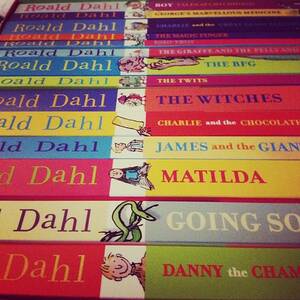
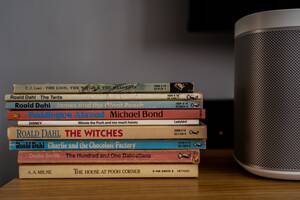
Roald Dahl, a childhood favourite. I’ve always been a big reader. As a child, I consumed so many books. Like many people my age, my first foray into the horror genre was the Goosebumps books by RL Stine. My particular favourite author was Roald Dahl. I’ve certainly read every children’s book he ever wrote, and a fair amount of his adult short stories too. My favourites were Charlie and the Chocolate Factory, its sequel, the Great Glass Elevator, The Witches and the BFG. I actually wore out my first copy of the BFG and needed a replacement.
I’m Not Alone
I know I’m not alone in loving these stories. They are immensely popular and a real institution in popular media. There have been movies made of most of these books, with varying degrees of success. Matilda has a successful movie, West End and Broadway musical, and a movie of the musical. Charlie and the Chocolate Factory has had two brilliant, yet very different movies made. I liked the Tim Burton and Johnny Depp film, and I will die on this hill.
Roald Dahls books have a particular appeal, and I think now, as an adult, I can understand why. I don’t know if these books shaped my sense of humour and personality, or I liked them because they aligned with these aspects of myself. What I do know is that there is often some dark undertones in these books. They don’t paint adults as these perfect people who are always right and should be respected automatically because they are older.
There’s a dark humour in a lot of the stories. Bad things can happen, and it’s sometimes funny when a bad person has something horrible happen to them. Particularly the rewrites of classic nursery rhymes and fairy tales with vastly different endings.
Messages
There’s a common theme in all of his children’s books. People who are abusive, gluttonous, greedy or cruel get what they deserve at the hands of the good child protagonist, often helped by a ‘good’ adult. The antagonists are usually adults, although children who start to show these dislikeable qualities are often punished for this in some way. Let’s look at an example.
Matilda
Let’s look at Matilda. Matilda is immediately shown as different from her family. Her father is a dishonest salesman who cheats people to make money. Her mother is spoiled and enjoys a lavish lifestyle. They show clear favouritism to their son, Michael, because he’s like them. They don’t have time for books or learning. Matilda loves reading and she has to do it in secret. Her family treat her like an outcast. They don’t even let her go to school until she insists on it.
At school, Matilda shows that she is exceptionally gifted and bright. She learns of the headmistress, Miss Trunchbull, the main antagonist of the story. Miss Trunchbull is the worst kind of teacher, she hates children and is mentally and physically abusive towards them. Extreme punishments for the most minor infractions to her extremely strict school rules.
Contrast her with Miss Honey, Matilda’s teacher. She’s the good adult, who takes Matilda under her wing and allows her to thrive. Yet, she lives in fear of Miss Trunchbull, her aunt, who raised her. Matilda discovers her telekinetic abilities, and uses them to great effect to get revenge on Miss Trunchbull, scaring her off and allowing Miss Honey to reclaim her family home and live a happier life. Matilda convinces Miss Honey to adopt her so she can leave her family and stay, going on to live a good life.
Interpretation
So what can we learn from this? Not all adults are good people. Plenty of them are cruel and horrible. We should learn to accept people for who they are, and encourage their talents and abilities, not force them to suppress them. Everyone has a fear or weakness. You should stay with people who care about you and want to help you, and walk away from those who mistreat you.
Children are often told to listen and obey, do what they’re told without question and have respect for their elders, no matter what. Roald Dahl is showing us a different side, that we shouldn’t have to remain stuck in the status quo, and accept these things without question. It’s a powerful message, dressed up in a fantastical story about a girl with special abilities.
It certainly had a big impact on me, I saw a lot of myself in Matilda as a child. I loved reading and learning, and was made to feel like an outcast because of it. I endured years of bullying at school, because I had a teacher who singled me out as being smarter than everyone else in my class. This experience has had a lasting impact on me, but these books were a huge comfort. Now, as an adult, I am trying to find myself again and learning to be proud of who I am and my abilities.
Conclusion
I’ll leave you with this thought for now. I’d like to dig a little deeper into this and look at more of Roald Dahl’s work, including my favourite adult short story of his, A Lamb to the Slaughter. I also plan to address the recent controversy surrounding his work and give my perspective on it. The revisions made for ‘sensitivity’ by the publisher, and why I think the majority of changes are utterly ridiculous and performative. So be prepared for that later this week. To learn more, check out the Wikipedia page here. To read up on this years controversy regarding the revisions made to these classic books, check here.
Feel free to weigh in on this, I’m interested to see how others have interpreted these stories and what other people think of it. Comments are open. To read more, you can subscribe via email below, and as always, my social media channels are there if you want more. See you next time!
You’ll remember that before we talked about breaking the rules of grammar within dialogue. That’s totally okay to do but when it comes to how we format and punctuate the dialogue itself within the text, there are important rules that must be followed. This is essential for making sure your dialogue is easy to read and follow. You don’t want your readers getting confused on who is saying what. So here’s the rules and tips for formatting and punctuating your dialogue.
Paragraphing
When writing dialogue, it is essential that the dialogue starts in a new paragraph. Even if it is just one or two words. After that, each new speaker gets a new paragraph. This applies whether you have two speakers or ten. So for a conversation between three characters, let’s call them Dave, Steve and Karen, you would format it like this.
Dave
Steve
Karen
Steve
Karen
Dave
This way it is clear that a different person is speaking for each line of dialogue. This also means you can reduce the use of dialogue tags a bit.
If a character is saying a lot at once, a longer monologue, you may choose to break it up into paragraphs. In this case, you should open each paragraph with quotation marks but only the end of the dialogue on the last paragraph should have closing quotation marks. This makes it clear that the preceding paragraphs are part of the same dialogue.
Quotation Marks
Direct dialogue must be enclosed in quotation marks. The general convention is to use double quotation marks – ” – these ones. Although in UK English it is also correct to use single quotation marks – ‘ – for direct dialogue. Either method is correct, but whichever one you use, make sure you’re consistent with it throughout the text.
For quotes within dialogue, these should be enclosed in quotation marks that are different from the ones you use for dialogue. So if your dialogue is contained within double quotation marks, you should use single quotation marks for quotes within dialogue, and vice versa.
“He literally said, ‘That’s not what’s going on.’ That’s what he said to me.”
or
‘He literally said, “That’s not what’s going on.” That’s what he said to me.’
Commas
When introducing dialogue, you should use a comma before the opening quotation marks. If you are ending the sentence containing the dialogue with a dialogue tag, the comma goes at the end of the dialogue before the closing quotation marks.
Steve said, “It wasn’t me.”
“It wasn’t me,” Steve said.
Remember that dialogue tags are part of the sentence. If the word after the closing quotation mark is not a proper noun, it does not need to be capitalised. Even if you end the dialogue with a question mark or exclamation mark. If you are not adding a dialogue tag at the end after the closing quotation mark, then the dialogue should end with a full stop (period) not a comma. Unless it is a question or requires an exclamation mark. You can see this in the above examples.
Interruptions and Trailing Off
During natural conversations, people will trail off or interrupt each other. That’s normal, especially during conversations that are emotionally charged. How can you show this in written dialogue, especially when you need a new line for a new person speaking? Two pieces of punctuation can help with this.
For interruptions, the best thing is a dash. Not just any dash, the em-dash. The em-dash is called this because it is the longest dash, the width of a capital M. They’re not easy to find on most keyboards, because they should be used sparingly.
They look like this: —
The keyboard shortcut is ctrl + alt + dash key. There may be different ones on different software programs.
“So, then I—“
“Hey! You better come quick!”
For trailing off, where the speaker stops speaking because they’ve realised something or lost their train of thought, you need the ellipsis. The infamous triple dots…
Depending on the style guide you use, there may or may not be spaces between the dots. The Chicago Manual of Style uses spaces between the dots . . .
Ellipses should be used only where necessary. It’s not uncommon for them to be overused. That gets tedious to read very quickly, and if they’re used too much, they lose their impact very quickly.
Conclusion
So that’s how to format and punctuate your dialogue. I hope you find it helpful. Go forth and write your dialogue effectively! Thank you for reading. Next week I’m going to start with some writing analysis posts, taking a look at some of the themes and subjects covered by pop-culture and examining how the writing explores these themes. Starting with one of my favourite TV shows of all time, Buffy the Vampire Slayer, and the spin-off, Angel. I’m also planning to challenge myself a bit with writing some short stories and flash fiction to get the creative juices going as I work on my novel.
If you want to be notified when the next post goes live, subscribe below. Follow me on my social media links for updates and behind the scenes ongoings. As always, I’m available for proofreading and editing work, so if you want to chat about working with me, get in touch here.